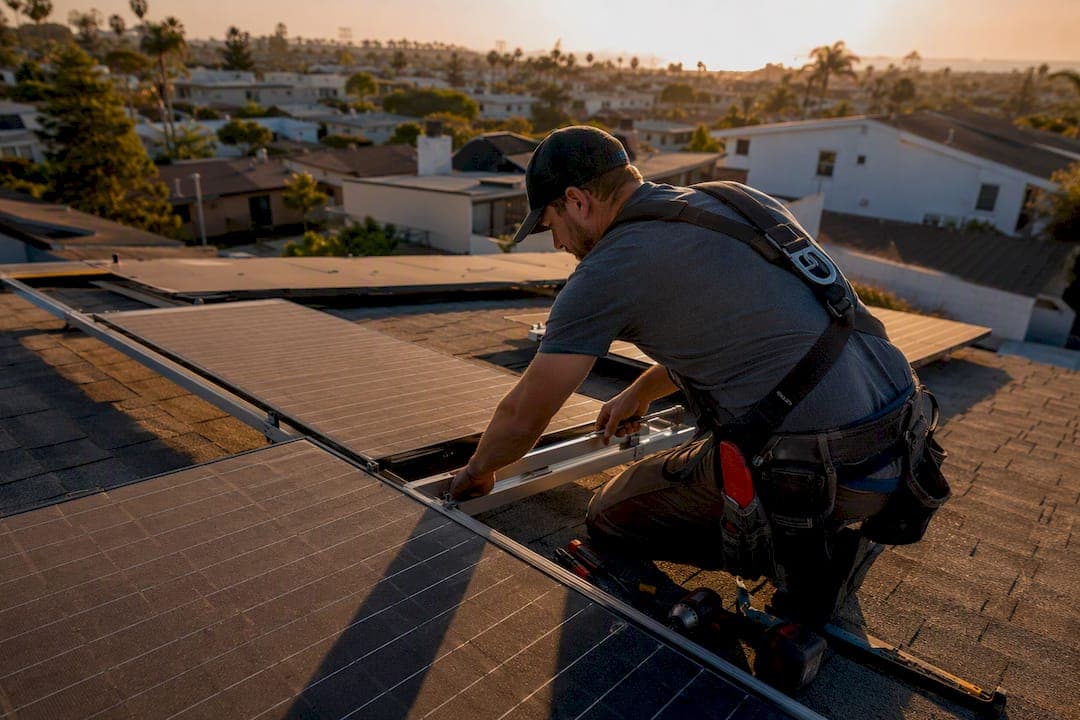
For most San Diego homeowners who plan to stay put, buying beats leasing on almost every financial measure that matters. A solar lease can still make sense if you can't use the federal solar tax credit, don't have cash for an outright purchase, or plan to move within a few years. But the leasing landscape shifted after the 2025 federal tax-credit changes, and leased systems are owned by a third party, not you.
Before signing anything or listing a home with panels already leased:
- Request the full lease agreement, including escalator terms and buyout pricing at multiple points in the contract.
- Talk to a local real estate agent about how the lease will affect a future sale.
- Compare the proposed lease payment against your actual SDG&E bill history, not a sales estimate.
TL;DR:
- Lease payments can increase annually by 2% to 5%, potentially exceeding SDG&E rates over the 20 to 25-year term, reducing long-term savings.
- Transferring a lease to a new buyer typically requires qualification, and if the buyer declines, a buyout or system removal may be necessary before sale.
- The federal solar tax credit and ownership incentives remain with the system owner, meaning leasing companies claim these benefits instead of the homeowner.
- Short-term leasing benefits include no upfront costs and maintenance handled by the provider, but ownership generally offers higher lifetime savings and resale value.
- Homeowners should thoroughly review lease terms, escalator rates, buyout costs, and insurance requirements before signing or listing with leased panels.
Table of Contents
- How Does a Solar Lease Work in San Diego?
- Is Leasing or Owning Solar Better for San Diego Homeowners?
- How Does a Solar Lease Affect Selling Your Home?
- What Questions Should You Ask Before Signing a Solar Lease?
- How Does Jeff Protect Seller Equity When Panels Are Leased?
- What Are the Environmental Benefits of Leasing Solar in San Diego?
- Does a Solar Lease Affect Home Insurance in San Diego?
- Why Local Guidance Matters More Than National Solar Advice
- How Jeff Sells San Diego Helps With Leased Solar Homes
- Key Takeaways
- Sources
How Does a Solar Lease Work in San Diego?
A solar lease means a company installs panels on your roof and keeps ownership of the system. You pay to use the electricity it generates, either through a fixed monthly lease payment or a per-kilowatt-hour rate under a power purchase agreement (PPA). The distinction matters: a lease charges you a flat fee regardless of output, while a PPA charges based on how much power the panels actually produce that month, which fluctuates with San Diego's marine layer and seasonal sun angle.
Because the leasing company owns the hardware, it also claims the federal solar tax credit and any state incentive tied to ownership. That's the trade-off at the center of every solar lease decision. You get panels with little or no money down, and the company keeps the tax benefit that would otherwise be yours if you financed or paid cash.
Most residential leases and PPAs in San Diego run 20 to 25 years, with an annual escalator, typically 2% to 5%, built into the payment. Maintenance and repairs generally fall to the leasing company for the life of the contract, according to SDG&E's financing comparison chart, which is one real advantage over ownership if a panel fails or an inverter needs replacing.
Here's the sequence most leases follow:
- The provider assesses your roof, shading, and average SDG&E usage.
- You sign a lease or PPA with a locked-in rate and escalator schedule.
- The company installs, owns, monitors, and maintains the system.
- You pay monthly, either a flat lease fee or a usage-based PPA charge.
- At the end of the term, you typically renew, buy the system, or have it removed.
Pro Tip: Ask specifically whether you're being offered a lease or a PPA. Sales reps sometimes use the terms loosely, and the payment structure changes your monthly bill exposure significantly.
Is Leasing or Owning Solar Better for San Diego Homeowners?
Leasing wins on upfront cost. Some providers offer $0-down installation with production guarantees built into the contract, an approach Palmetto highlights in its San Diego market pages. You avoid financing a purchase, maintenance is someone else's problem, and you can start offsetting SDG&E charges almost immediately after activation.
That's where the advantages mostly end. Local contractor analysis of San Diego solar economics finds that ownership typically delivers substantially higher lifetime savings and adds measurable home value, while leased systems tend to produce smaller lifetime returns and often add little to nothing to resale value. That gap compounds over a 25-year lease term, especially with an escalator clause chipping away at your monthly savings every year.
Where leasing falls short:
- You forfeit the federal tax credit and any ownership-based incentive.
- Appraisers and buyers generally don't credit a home for panels you don't own.
- A lease can complicate or slow a sale if the buyer doesn't qualify to assume it.
- Escalators mean your "locked-in" rate rises annually, sometimes faster than SDG&E's own rate increases.
Where leasing helps:
- Little or no upfront cost.
- Maintenance and repairs are the provider's responsibility.
- Immediate reduction in grid electricity use from day one.
San Diego's solar resource is strong enough that most well-sited systems, owned or leased, generate meaningful offset against SDG&E's tiered residential rates. But the payback math differs enormously by ownership structure. SDG&E's own comparison chart frames this plainly: leases trade long-term equity for short-term simplicity, and buyers should understand which side of that trade they're actually on before signing.
How Does a Solar Lease Affect Selling Your Home?
A leased system doesn't just follow you into a sale, it follows the contract's rules, and those rules vary by provider. Two paths typically apply: the buyer assumes the lease, or you buy out the remaining contract before or at closing. Either route adds a step that a home without a lease simply doesn't have.
- Transfer to the buyer. This requires the buyer to qualify, usually through a credit check similar to what the leasing company originally required of you. If the buyer's credit doesn't clear, the transfer stalls.
- Buyout before listing. You pay off the remaining lease balance so the home sells free of the obligation. This costs more upfront but removes a wrinkle from negotiations entirely.
- Negotiated credit at closing. Some sellers offer a buyer credit equal to part of the lease's remaining cost, splitting the burden rather than eliminating it.
Buyer qualification is the real friction point. Not every buyer wants to inherit a 15-year payment obligation with an escalator clause, and some lenders factor the lease payment into the buyer's debt-to-income calculations, which can shrink your pool of qualified buyers at the exact moment you need maximum interest in the property.
Practitioner experience in San Diego real estate transactions shows that when a buyer won't assume the lease and won't accept a credit, the seller is often the one left arranging a buyout or, in rare cases, a system removal, sometimes on a tight escrow timeline. That's not a detail to discover during a 30-day closing window. Sellers who get ahead of it, by pricing in a buyout or preparing transfer paperwork before listing, close faster and negotiate from a stronger position. A seller disclosure checklist built for San Diego transactions should specifically account for leased equipment, since it changes what you're legally required to tell a buyer upfront.
What Questions Should You Ask Before Signing a Solar Lease?
Get these answers in writing before you sign anything or list a home with an existing lease attached:
- What's the exact escalator percentage, and does it compound annually or apply to the original rate?
- What's the buyout cost at year 5, year 10, and year 15, not just "current balance owed"?
- Is the lease transferable, and what credit threshold does a buyer need to assume it?
- Is there a production guarantee, and what happens if the system underperforms it?
- Who pays for panel removal and roof repair if the buyer won't assume the contract?
- Does homeowner's insurance need to be notified, and does the lease require specific coverage?
Run the math against your real SDG&E bills, not the salesperson's projection. If your average monthly bill is $180 and the proposed lease payment starts at $150 with a 4% annual escalator, your "savings" shrink every single year while SDG&E's own rate changes independently.
Pro Tip: Treat any door-to-door or high-pressure sales pitch as a red flag on its own. Industry reporting consistently advises taking your time, reading the entire contract, and comparing offers through a trusted local installer before committing to anything.
How Does Jeff Protect Seller Equity When Panels Are Leased?
When a leased system sits on a home I'm listing, I frame it honestly with buyers rather than hoping it doesn't come up during the walkthrough. Buyers respond better to transparency than to a surprise addendum three weeks into escrow.
- I request the full lease document early, before listing, so there are no timeline surprises.
- I evaluate the buyer pool and neighborhood, some areas skew toward cash buyers who won't want a payment obligation attached, others toward buyers comfortable assuming a lease if the rate is competitive.
- I negotiate seller credits or a pre-sale buyout when a transfer looks likely to shrink the buyer pool too much.
- I collect production guarantees, escalator schedules, and transfer paperwork as part of standard seller disclosure prep, not as an afterthought.
A leased solar system isn't a dealbreaker in a San Diego sale, but treating it like a footnote instead of a negotiation point is how sellers leave money on the table.
What Are the Environmental Benefits of Leasing Solar in San Diego?
San Diego averages well over 260 sunny days a year, which makes almost any rooftop solar system, leased or owned, a meaningful reducer of household reliance on the regional grid. Leasing lowers the barrier to that reduction. Homeowners who can't afford an upfront purchase still get access to clean generation immediately, which matters at scale when you consider how many single-family homes across San Diego County have roof space sitting unused.
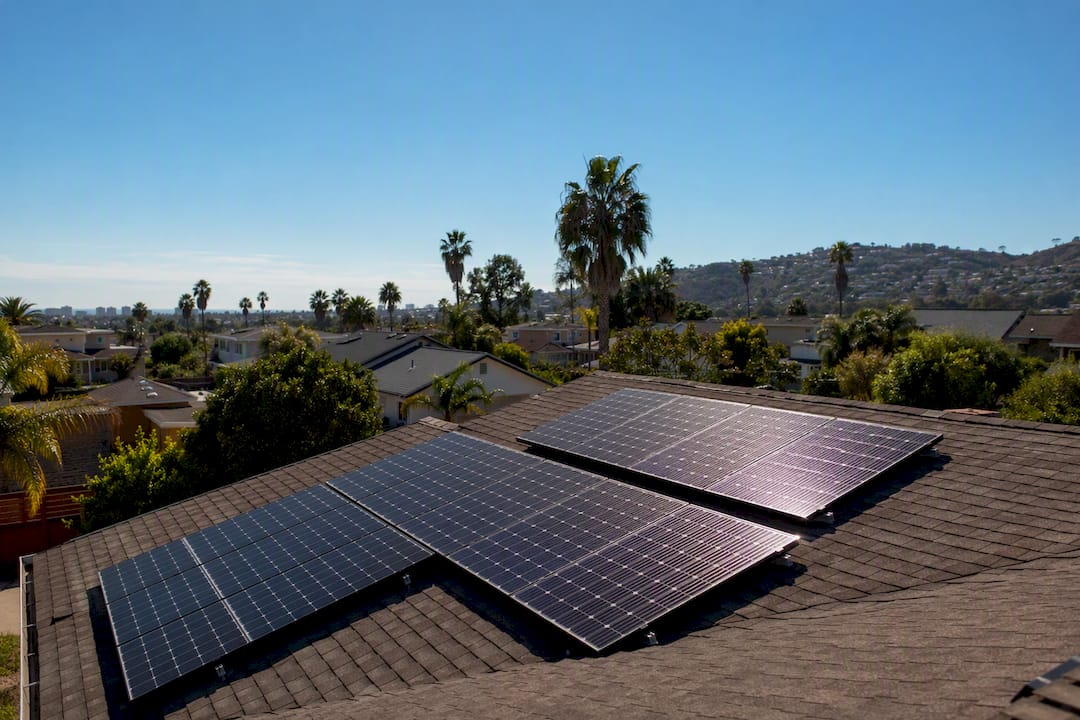
The environmental case for leasing doesn't differ from the case for ownership in terms of output. A leased system on a south-facing roof in Rancho Bernardo generates roughly the same clean energy as an identical owned system next door. What leasing changes is who benefits financially from that generation, not how much carbon offset the panels actually deliver.
There's a real argument that leasing accelerates adoption faster than cash-only purchasing would. Removing the upfront cost barrier gets panels installed on homes that would otherwise wait years to save for a cash purchase or qualify for financing. In a region where electricity demand keeps climbing with summer heat and EV charging, more rooftop generation coming online sooner, regardless of ownership structure, reduces strain on the broader grid during peak demand periods.
The tradeoff is durability of impact. An owned system tends to stay in place longer since the homeowner has direct financial incentive to maintain it for the full 25-plus year lifespan. Leased systems sometimes get removed or replaced when contracts end or transfer disputes arise during a sale, which can interrupt the environmental benefit at exactly the point a home changes hands.
Does a Solar Lease Affect Home Insurance in San Diego?
Yes, and it's a detail many homeowners overlook until a claim or a home sale forces the question. Because the leasing company retains ownership of the panels, your homeowner's insurance policy needs to reflect that a third party's equipment is attached to your roof.
Most insurers require notification when solar panels, leased or owned, are installed, since the added roof load and equipment value can affect both coverage and premium calculations. With a lease, the leasing contract typically specifies insurance requirements you must maintain, and some agreements require you to name the leasing company as an additional insured party or loss payee on your policy. Skip that step and you could find a claim denied or delayed exactly when you need it processed quickly.
Roof damage claims get more complicated with leased panels attached. If a windstorm damages your roof and the panels need temporary removal for repair, the leasing company's contract usually dictates who coordinates that removal and who pays for it, terms that vary significantly by provider. Some leases hold the company responsible for equipment damage and removal costs; others push that burden back to the homeowner if the contract's language is vague.
Before listing a home with a lease, or before signing one, ask your insurance agent directly whether your current policy already accounts for the leased equipment, and confirm with the leasing company whether they require specific coverage minimums. This is one of the quieter details that surfaces during underwriting on a home sale, and it's far easier to resolve before a buyer's lender flags it during their own insurance review.
Why Local Guidance Matters More Than National Solar Advice
Most national solar content treats leasing and buying as a simple math problem: compare the monthly payment to your utility bill and pick the lower number. That framing misses what actually determines the outcome for a San Diego homeowner, which is what happens when you sell.
The post-2025 tax-credit shift pushed more providers back toward leasing precisely because it lets them retain the credit while marketing a lower monthly number to homeowners. That's a rational business decision for the provider. It's not automatically the better deal for you, particularly if you plan to sell within the lease term rather than ride it out for 20 years.
The advice I'd prioritize differently than most generic guides: don't evaluate a lease against your current SDG&E bill alone. Evaluate it against your specific timeline in the home. A homeowner planning to stay 15 or more years should weigh ownership heavily, since the long-term economics favor buying in nearly every local analysis. A homeowner planning to move within five years should scrutinize transfer clauses far more than the monthly rate, because that's the term that will actually get tested.
— Jeff
How Jeff Sells San Diego Helps With Leased Solar Homes
Selling or buying a home with a leased solar system attached isn't something you should navigate through the fine print alone. Jeffsellssandiego works directly with San Diego sellers to pull the lease documents, review escalator and buyout terms line by line, and figure out whether a transfer, a pre-sale buyout, or a negotiated buyer credit protects your equity best, before the home ever hits the market.

For sellers, that means having disclosure paperwork ready, buyer-qualification language drafted for offers, and a negotiation strategy for lease-related credits worked out ahead of time rather than improvised mid-escrow. For buyers, it means understanding exactly what you'd be assuming before you write an offer on a home with panels already leased. If you're weighing a sale, start with a home valuation and consultation to see how a leased system factors into your specific listing strategy. If you're buying, the buyer's guide walks through what to check before making an offer on a solar-leased property.
Key Takeaways
Ownership beats leasing on long-term savings and resale value for most San Diego homeowners, but leases still solve real cash-flow and tax-liability problems for the right buyer.
| Point | Details |
|---|---|
| Ownership wins long-term | Buying typically delivers higher lifetime savings and measurable home value versus leasing. |
| Leases shift tax benefits | The leasing company, not the homeowner, claims the federal tax credit under a lease or PPA. |
| Escalators erode savings | Annual increases of 2% to 5% mean a leased payment rarely stays cheaper than SDG&E rates forever. |
| Selling requires a plan | Buyers must qualify to assume a lease, so buyouts or credits often need negotiating before closing. |
| Get local guidance early | Jeffsellssandiego reviews lease terms and disclosure paperwork before a leased-solar home lists. |
Sources
For homeowners who want to dig into the primary data behind this guide:
- Solar Electric System Financing Comparison Chart | San Diego Gas & Electric
- Tax credits for solar panels are available, but the catch is you can't own them | KPBS Public Media
- San Diego, CA Solar: 2026 Costs, Incentives & Savings
- Solar Financing Options: Buy vs Lease for San Diego Residents