
Most sellers hear the word "disclosure" and feel a knot form in their stomach. The fear is understandable: what if revealing a problem kills the deal? But the role of real estate disclosure is almost the opposite of what sellers fear. It is a legal safeguard, a trust-builder, and in California, a non-negotiable obligation. Whether you are buying or selling in San Diego, understanding what disclosures do, what they require, and what happens when they go wrong is the kind of knowledge that protects you long after escrow closes.
Table of Contents
- Key Takeaways
- The role of real estate disclosure in California law
- Why disclosures benefit buyers and sellers alike
- Legal risks of incomplete or false disclosures
- Best practices for buyers and sellers in San Diego
- My take on disclosures after years in San Diego real estate
- Work with a San Diego agent who knows disclosure inside and out
- FAQ
Key Takeaways
| Point | Details |
|---|---|
| Disclosure protects both parties | Sellers avoid post-closing lawsuits, and buyers make informed decisions with full property knowledge. |
| California has strict TDS requirements | The Transfer Disclosure Statement is mandatory for virtually all residential sales in San Diego. |
| Omissions carry lasting legal risk | California's statute of limitations can extend to three years or more when fraud or hidden defects are involved. |
| Inspections supplement but don't replace disclosures | Sellers must disclose known defects even if a buyer waives their home inspection. |
| Transparency can strengthen your sale | Buyers prefer homes where the seller is upfront, which can actually generate stronger and cleaner offers. |
The role of real estate disclosure in California law
What counts as a material fact
California law defines a material fact as any information that would affect a reasonable buyer's decision to purchase or the price they would pay. Structural cracks, unpermitted additions, noisy neighbors, roof leaks, HOA disputes: all of these qualify. The law does not give sellers the option to decide what a buyer "needs to know." If you are aware of a condition that could matter to a buyer, it must be disclosed.
The cornerstone document in California is the Transfer Disclosure Statement, or TDS. It is a standardized form that sellers must complete for nearly every residential sale of one to four units. The TDS walks sellers through a detailed checklist covering the physical condition of the property, any known defects, legal matters affecting the property, and neighborhood conditions.
What California sellers must disclose
Here are the main categories covered under real estate disclosure requirements in California:
- Structural and physical defects: Foundation problems, roof condition, water intrusion, drainage issues, HVAC and plumbing function
- Environmental hazards: Asbestos, mold, radon, contaminated soil, proximity to hazardous waste sites
- Legal encumbrances: Easements, liens, deed restrictions, HOA rules and pending assessments
- Death on the property: California sellers must disclose any death on the property within the past three years
- Federal requirements: Homes built before 1978 require a lead paint disclosure under federal law
Federal law takes lead paint seriously. Civil fines can exceed $23,000 per violation, and a 2025 enforcement case resulted in a $150,000 fine plus probation for a seller who failed to provide the required lead hazard disclosure.
Timing matters too. Sellers must deliver the TDS to the buyer before the offer is accepted, or the buyer has the right to cancel the contract within a specific window after receiving it late. Your San Diego agent should flag this timeline early in the listing process.
| Disclosure Type | Required By | Timing |
|---|---|---|
| Transfer Disclosure Statement | California Civil Code | Before or at time of offer |
| Lead paint disclosure | Federal law (pre-1978 homes) | Before signing purchase contract |
| Natural Hazard Disclosure | California law | Concurrent with TDS |
| HOA documents and assessments | California Civil Code | Within three days of acceptance |
| Death on property | California Civil Code | Part of TDS |
Why disclosures benefit buyers and sellers alike
The importance of property disclosures goes further than legal compliance. At its core, disclosure creates what legal scholars call symmetric information between buyer and seller. When both parties have the same facts, disputes shrink and transactions move forward with fewer surprises.
For sellers, the benefits are concrete. A well-documented disclosure package signals confidence. It tells buyers you are not hiding anything, and that signal matters enormously in a competitive San Diego market. Transparent disclosures improve buyer confidence and can make a home stand out when a buyer is choosing between two similar properties. The seller who hands over a thorough disclosure package up front often gets fewer low-ball offers based on fear of hidden problems.

For buyers, disclosures are a research tool, not just a legal formality. Reading through a seller's TDS carefully reveals the history of the home: what has been repaired, what the seller knows is aging or imperfect, and what professional attention the home has already received. A disclosure that notes a repaired foundation crack is far less alarming than discovering that same crack after closing with no documented history.
Pro Tip: As a buyer, read the TDS line by line and write down questions for each item the seller has marked "yes." Then cross-reference those items with the home inspection report. Discrepancies between the two documents are worth a direct conversation before you remove contingencies.
Agents carry responsibility here too. A seller broker's personal visual inspection is a separate legal obligation in California, independent from what the seller discloses. This means your listing agent is also on the hook to report what they observe during a walkthrough. It is not enough for the seller alone to complete the TDS.
Legal risks of incomplete or false disclosures
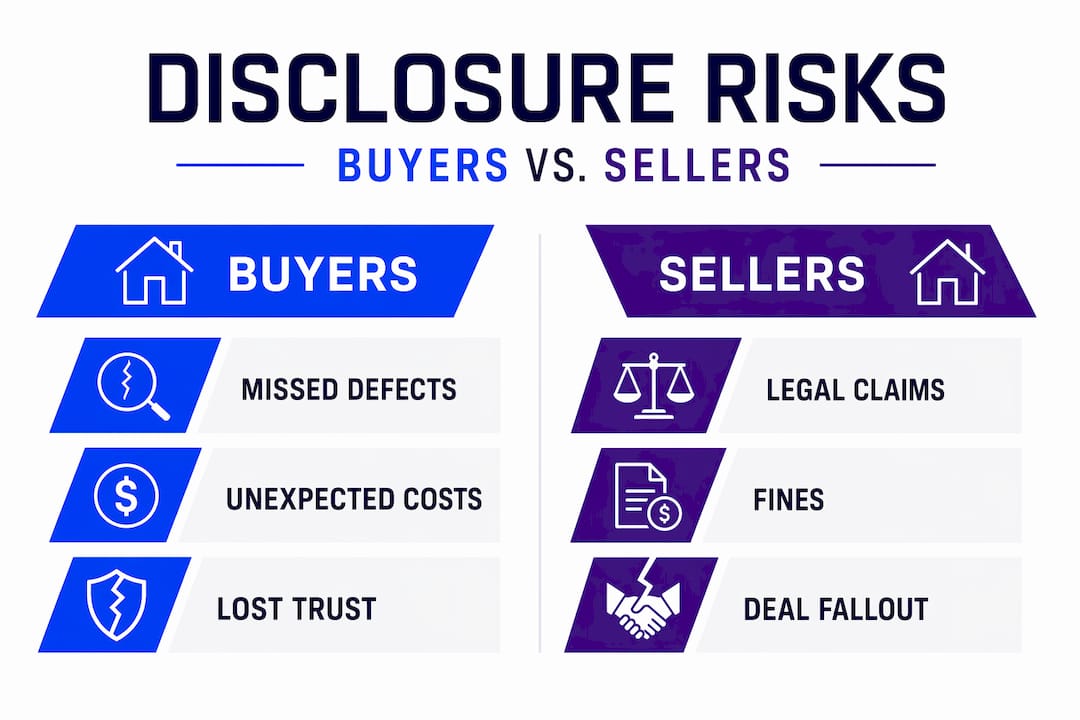
Sellers who underestimate the consequences of omitting known defects tend to learn the hard way. Post-closing litigation around nondisclosure is one of the most common disputes in California residential real estate, and the statute of limitations for disclosure lawsuits can stretch to three years or beyond if defects were not discoverable at the time of purchase or if fraud is involved.
Here is how liability typically unfolds:
- Buyer discovers a defect after closing that was not disclosed.
- Buyer hires a contractor who documents the defect and its likely age.
- Buyer files suit against the seller, the seller's agent, or both.
- If the seller knew and stayed silent, the court may find fraudulent concealment, triggering that extended statute of limitations.
- Seller faces damages, attorney fees, and potential license consequences for any agent involved.
State real estate commissions take this seriously. Hundreds of licensed agents face violations annually related to disclosure failures, and disciplinary actions include license suspension or revocation.
"A seller's duty to disclose does not end at escrow. In California, litigation for undisclosed defects can follow a seller years after the transaction closes, particularly when fraud or latent defects are at issue."
One point sellers often misread: waiving the home inspection does not erase disclosure obligations. Known defects must be disclosed regardless of whether the buyer waives their right to inspect. The waiver only affects the buyer's investigation. It does nothing to limit the seller's duty to share what they already know.
Best practices for buyers and sellers in San Diego
For sellers: get ahead of the paperwork
The single best move a San Diego seller can make before listing is ordering a pre-inspection. This gives you a written record of the property's condition before any buyer is in the picture. You can document repairs, get ahead of known issues, and build a disclosure package that reflects a well-maintained home rather than one scrambling to address surprises mid-escrow.
Sellers working with Jeffsellssandiego can also review the seller's preparation checklist before listing, which covers disclosure preparation alongside pricing and marketing strategy.
Seller brokers should incorporate home inspection report findings directly into disclosure packages to reduce liability and strengthen the paper trail. This is standard practice for experienced agents and one that courts look favorably upon if disputes arise later.
Pro Tip: If you discover a new defect after your offer is accepted but before closing, tell your agent immediately. California law requires updated disclosures in that window, and attempting to stay quiet almost always creates more legal exposure than the disclosure itself.
For buyers: treat disclosures as your first inspection
- Read the TDS in full before your home inspection, so your inspector knows exactly what areas the seller flagged.
- Ask for any repair receipts, permits, or contractor invoices referenced in the disclosure package.
- If environmental hazards like mold or lead are disclosed, request specialist reports rather than relying on a general inspection.
- If the seller's TDS conflicts with what the home inspection finds, that gap is negotiating leverage. Use it.
- Check the San Diego neighborhoods guide for area-specific issues common in certain zip codes, like hillside drainage or older plumbing in historic neighborhoods.
The real estate transparency issues that lead to lawsuits almost always involve buyers who received disclosures but did not read them carefully, or sellers who assumed silence was safer than honesty. Neither assumption holds in California court.
My take on disclosures after years in San Diego real estate
I have watched sellers go into a transaction convinced that disclosing a problem would cost them the deal. What I have seen play out time and again is the opposite. The sellers who handed over a thorough, honest disclosure package moved faster, with fewer re-negotiations, and closed with fewer surprises on both sides.
The "as-is" approach some sellers lean on is a common misunderstanding. Selling as-is does not exempt you from disclosing what you know. It simply means you are not agreeing to make repairs. The disclosure obligation remains fully intact.
What I have found genuinely true is that buyers in San Diego are not looking for a perfect home. They are looking for a home where the seller is honest. A disclosed crack in the driveway does not kill a deal. A crack discovered after closing, with evidence the seller knew about it, absolutely can, and often does.
If you are hesitant to disclose something, that hesitation is worth a conversation with your agent before you decide to stay quiet. In my experience, the defects sellers worry most about disclosing are rarely the ones that derail a sale. The cover-up, however, is almost always far more damaging than the original problem.
— Jeff
Work with a San Diego agent who knows disclosure inside and out

Navigating disclosure paperwork in San Diego is not something you want to do without support. Every form carries legal weight, and the details matter. At Jeffsellssandiego, both buyers and sellers get guided, hands-on help through every disclosure requirement so nothing slips through the cracks.
If you are buying, browse current San Diego listings that come with full disclosure packages already prepared. If you are selling, get a free home valuation to understand how your property's disclosed condition affects its market value. Working with an agent who prioritizes real estate transparency from day one means fewer surprises and a smoother close for everyone involved.
FAQ
What is real estate disclosure in California?
Real estate disclosure is the legal requirement for sellers to inform buyers of any known material defects or conditions affecting the property. In California, the primary document is the Transfer Disclosure Statement, which covers physical condition, environmental hazards, and legal matters.
When must a seller provide disclosure documents in San Diego?
California law requires sellers to deliver the Transfer Disclosure Statement before or at the time the purchase offer is accepted. Buyers retain the right to cancel within a specific period if they receive disclosures late.
Can a seller avoid disclosure by selling a home as-is?
No. Selling as-is in California means the seller will not make repairs, but it does not eliminate the obligation to disclose known defects. Known defects must still be disclosed even in cash sales where the buyer waives inspection.
What happens if a seller fails to disclose a defect in California?
A seller who omits a known material defect faces post-closing litigation. The statute of limitations can extend to three years or beyond if fraud or latent defects are involved, leaving sellers exposed long after the sale.
Do buyers benefit from real estate disclosures too?
Absolutely. Disclosures give buyers a documented history of the property's condition, reduce fear of hidden problems, and provide leverage in negotiations when defects are identified. Full disclosure upfront also tends to result in cleaner offers with fewer contingency battles.