
Signing a listing agreement is the first real commitment you make when selling your San Diego home, yet most sellers treat it like routine paperwork. That's a costly assumption. Listing agreements must be in writing to be enforceable in California, and the details buried in those pages can affect your commission costs, your timeline, and even your ability to switch agents if things go sideways. Whether you're a seller preparing to list or a buyer trying to understand how agents work, knowing what's inside a listing agreement puts you in a far stronger position before the first showing ever happens.
Table of Contents
- What is a listing agreement?
- Main types of listing agreements in San Diego
- Essential terms every San Diego seller should review
- How to protect your interests before signing
- The mistake most sellers make with listing agreements
- Work with a San Diego expert for your next move
- Frequently asked questions
Key Takeaways
| Point | Details |
|---|---|
| Listing agreements are mandatory | In San Diego, you cannot sell your home with an agent without a written listing agreement. |
| Types of listing agreements matter | Choosing the right form can affect your selling experience and payout. |
| Always review essential terms | Key provisions like commission, contract length, and cancellation affect your rights. |
| Negotiation is possible | You can and should negotiate major terms before signing. |
| Get expert advice | A local real estate expert can help you avoid common pitfalls and maximize value. |
What is a listing agreement?
A listing agreement is a legally binding contract between a property owner and a licensed real estate agent or brokerage. It authorizes the agent to market and sell the property on the seller's behalf, defines the agent's responsibilities, and spells out the compensation the agent will receive if a sale closes successfully.
In San Diego, these agreements are not casual handshakes. Listing agreements must be in writing to hold up in court, and they typically follow standardized forms developed by the California Association of REALTORS (CAR). Those CAR forms have been refined over decades to reflect California law, local customs, and the realities of residential real estate transactions across the state.
Here's what a listing agreement generally covers at its core:
- Authorization: The seller grants the agent the legal right to list and market the property
- Property details: Address, legal description, and any included or excluded items
- List price: The agreed starting price for the property
- Commission: The percentage or flat fee the agent earns upon a successful sale
- Term: The start and end date of the agreement
- Agent duties: What marketing, communication, and representation the agent promises to deliver
- Seller obligations: What the seller must do, such as disclosures and property access
"A listing agreement is not just an authorization form. It is a contract that defines the entire working relationship between you and your agent, including what happens when things don't go as planned."
Understanding these basics matters whether you're listing a condo in Mission Hills or a single-family home in one of the many San Diego neighborhoods spread across the city. The form may look standard, but the terms inside are negotiable, and that's where sellers often leave money or leverage on the table.
| Core element | What it defines |
|---|---|
| Authorization | Agent's right to market and sell |
| Commission | Agent's compensation upon sale |
| Term | Duration of the agreement |
| Agent duties | Marketing, communication, representation |
| Cancellation | Conditions for ending the agreement early |
Main types of listing agreements in San Diego
Not every listing agreement works the same way. There are three primary types used in the San Diego market, and choosing the right one shapes how much control you keep, how motivated your agent is, and how much competition exists among agents working your property. Most San Diego agents use standardized forms derived from the California Association of REALTORS, but the type of agreement you select still matters enormously.
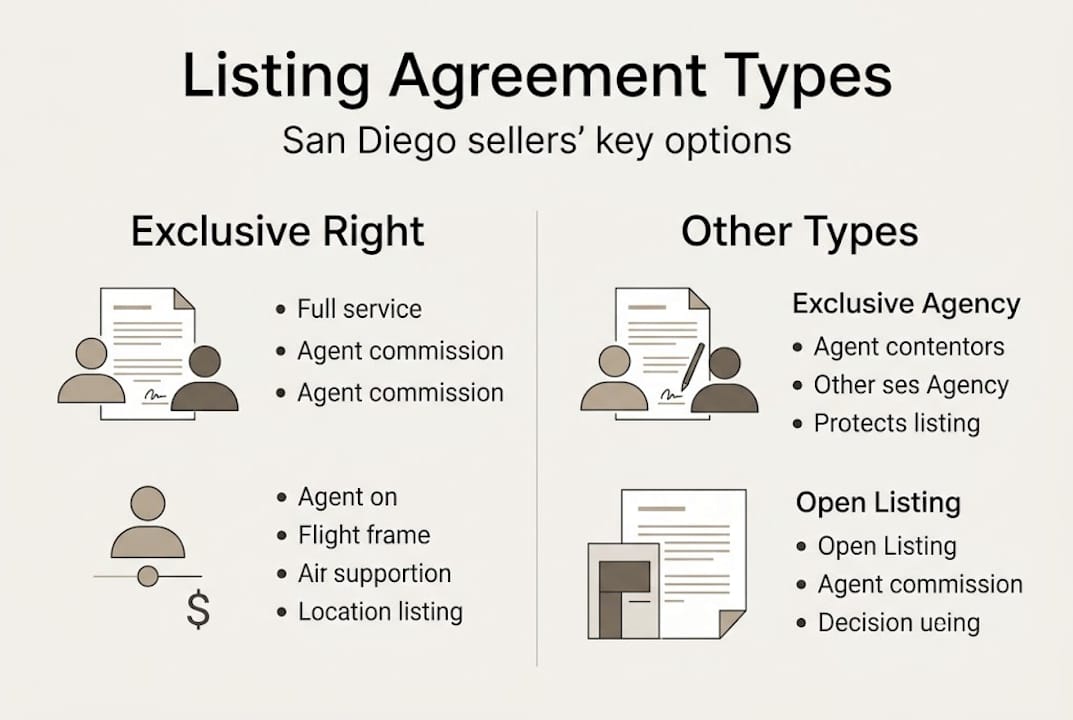
Exclusive right to sell is by far the most common agreement in San Diego. Under this structure, your agent earns the commission no matter who finds the buyer, including you. If you find a neighbor willing to buy your home the day after signing, your agent still gets paid. This arrangement gives agents the strongest incentive to invest time, money, and energy into your listing because their compensation is protected.

Exclusive agency is less common but worth understanding. Here, you retain the right to sell the property yourself without paying a commission. If you find the buyer independently, the agent earns nothing. If the agent or another cooperating agent finds the buyer, the commission applies. This sounds appealing, but many experienced agents are reluctant to invest heavily in a listing where their compensation isn't guaranteed.
Open listing is the least common in residential real estate. Multiple agents can market the property simultaneously, but only the agent who produces the buyer gets paid. Sellers can also sell on their own without owing any commission. This setup rarely attracts serious agent effort because the odds of earning a commission are low.
| Agreement type | Who earns commission | Seller can sell independently | Agent motivation level |
|---|---|---|---|
| Exclusive right to sell | Always the listing agent | No, commission still owed | Very high |
| Exclusive agency | Agent, unless seller finds buyer | Yes, no commission owed | Moderate |
| Open listing | Whichever agent closes the deal | Yes, no commission owed | Low |
Pro Tip: If you want maximum agent effort and a well-executed marketing plan, the exclusive right to sell agreement is almost always your best option in San Diego's competitive market. Pair it with proper home pricing from the start, and you give yourself the best shot at a fast, profitable sale.
Before you sign any agreement, it's also worth thinking about the condition of your property. Agents who take on listings with obvious deferred maintenance often reduce their marketing investment because they know buyer objections are coming. Addressing pre-listing repairs before you sign can actually strengthen your negotiating position with the agent and lead to a more aggressive marketing commitment.
Essential terms every San Diego seller should review
Once you've chosen the type of listing agreement, the real work begins: reading the actual terms. Listing agreements in San Diego commonly include commission rates, contract duration, agent responsibilities, and cancellation clauses. Each of those elements carries real financial weight, and none of them should be skimmed.
Here are the five most important terms to review carefully before you sign:
-
Commission rate and structure. Commission is almost always expressed as a percentage of the final sale price. In San Diego, rates vary and are fully negotiable. Understand exactly what percentage you're agreeing to, whether it includes a buyer's agent share, and under what circumstances the commission might change.
-
Contract length (term). Most listing agreements in San Diego run between 90 and 180 days. A longer term gives the agent more time to find the right buyer, but it also locks you in if the relationship isn't working. Negotiate a term that feels reasonable given current market conditions.
-
Agent's specific duties. Don't assume your agent will do everything you expect. The agreement should spell out what marketing activities are included: professional photography, MLS listing, open houses, digital advertising, and agent outreach. If it's not written in, it may not happen.
-
Cancellation and withdrawal rights. This is the clause most sellers overlook until they need it. Some agreements allow sellers to cancel with written notice and a short waiting period. Others require you to pay a cancellation fee or, worse, still owe commission if the property sells within a certain period after the agreement ends. That post-expiration window is called the "protection period" or "safety clause," and it can last 30 to 90 days after your agreement expires.
-
California-specific provisions. California law requires specific disclosures and seller obligations that are baked into CAR forms. These include agency disclosure, natural hazard disclosures, and lead paint notices for older homes. Knowing these are required protects you from surprises during escrow.
Pro Tip: Before you sign, ask your agent to walk you through the protection period clause specifically. If you cancel your agreement and then sell to a buyer your agent introduced, you may still owe the full commission. Understanding this upfront prevents an expensive misunderstanding later.
Thinking through preparing your home for sale in parallel with your listing agreement review is smart strategy. A well-prepared home gives your agent more to work with and often results in a faster sale, which reduces the risk of needing to cancel or renegotiate mid-contract. Also factor in closing costs when evaluating your net proceeds, since commission is just one piece of what you'll pay at the closing table.
How to protect your interests before signing
Before you commit to a listing agreement, a careful review and a few strategic questions can make all the difference. Listing agreements are legally binding in San Diego, and once you've signed, your options narrow significantly. The time to ask hard questions is before the ink dries, not after.
Here's a practical checklist of questions to ask your agent before signing:
- What type of listing agreement are you recommending, and why?
- What is the exact commission rate, and how is it split with a buyer's agent?
- How long is the proposed term, and can we negotiate a shorter initial period?
- What specific marketing activities are included in writing?
- What is the protection period after the agreement expires?
- Under what conditions can I cancel without penalty?
- What happens if I find my own buyer?
- Are there any circumstances where the commission rate changes?
Beyond asking questions, there are specific clauses worth negotiating. Commission rates are the most obvious, but contract length and the protection period are equally important and often more flexible than sellers realize. If an agent is unwilling to discuss any of these terms, that itself is useful information about how the working relationship will go.
"The best time to understand your exit options is before you need them. Read the cancellation clause twice."
If your situation involves complexity, such as selling an inherited home with multiple heirs or title complications, the listing agreement review becomes even more critical. Inherited properties often come with unique timelines and legal constraints that need to be reflected in the agreement terms.
One more thing: never feel pressured to sign on the spot. A reputable San Diego agent will give you time to read the agreement, ask questions, and even consult a real estate attorney if you choose. Any agent who pushes you to sign immediately without explanation is showing you something important about how they operate.
The mistake most sellers make with listing agreements
Here's the uncomfortable truth most sellers don't hear until it's too late: the listing agreement is not just a formality. It is the document that defines your entire selling strategy, and most people sign it in under five minutes.
I've seen sellers in San Diego lock themselves into six-month agreements with agents who delivered minimal effort, only to discover they had no clean exit. I've seen others agree to protection periods that came back to haunt them months after they thought the relationship was over. And I've seen sellers who negotiated every term thoughtfully, chose the right agent, and walked away from closing with more money and less stress than they imagined.
The conventional wisdom says: "Just pick a good agent and trust them." That's not wrong, but it's incomplete. Even the best agent relationship benefits from clear, written expectations. The listing agreement is where those expectations live. Treating it as a rubber-stamp document is like buying a car without reading the financing terms.
What surprises most sellers is how much the listing agreement affects their flexibility. If the market shifts, if your life circumstances change, or if the agent relationship simply isn't working, the agreement determines what your options are. Sellers who maximize their sale consistently are the ones who entered the process with clear terms, realistic timelines, and an agent accountable to written commitments.
My perspective after working in San Diego residential real estate: the sellers who take 30 minutes to understand their listing agreement before signing almost always have smoother transactions than those who don't. It's not about distrust. It's about clarity, and clarity benefits everyone.
Work with a San Diego expert for your next move
Understanding listing agreements is a strong first step, but applying that knowledge to your specific property and situation is where real results happen. Every San Diego neighborhood, every home, and every seller's timeline is different.

Whether you're ready to list or still exploring your options, having a knowledgeable local agent in your corner makes the process far less stressful. Browse current home listings to understand what's active in your target area, review the Seller's Guide for a step-by-step look at the full selling process, or explore the Buyer's Guide if you're on the purchasing side and want to understand how agent agreements affect your transaction. When you're ready to talk specifics, connect with a San Diego real estate expert who knows the local market and will walk you through every term before you sign anything.
Frequently asked questions
Are listing agreements required in San Diego real estate sales?
Yes, listing agreements are legally required in San Diego and must be in writing to be enforceable under California law. Verbal agreements between sellers and agents carry no legal weight.
Which standardized form do most agents use for listing agreements in San Diego?
Most San Diego agents use standardized forms from the California Association of REALTORS (CAR), which are updated regularly to reflect current state law and local practices.
Can a San Diego seller negotiate the terms of a listing agreement?
Yes, sellers can negotiate key terms like commission rates, contract duration, and agent responsibilities. The form may be standardized, but the terms written into it are open to discussion.
What happens if I want to cancel my listing agreement early?
You can request cancellation, but your rights depend entirely on the cancellation clauses written into your agreement. Review these terms carefully before signing, including any protection period that extends beyond the agreement's end date.
How long does a typical listing agreement last in San Diego?
Typical agreements run 90 to 180 days, though contract duration is negotiable. Sellers in fast-moving markets sometimes negotiate shorter initial terms with renewal options if the relationship is working well.