
A backup offer is a signed purchase agreement that only becomes active if the current contract falls apart. It benefits buyers who lost out on a home but still want a shot at it, and sellers who want protection if their primary buyer walks. You're next in line, but the primary contract still controls the sale until it's officially dead.
TL;DR:
- Backup offers only activate if the primary contract falls through, which typically occurs due to financing failure, inspection issues, or mutual cancellation.
- The primary contract remains legally binding until officially terminated, making sellers liable if they skip the primary buyer to accept a backup with better terms.
- For a backup offer to convert, a written mutual cancellation, financing failure, or unresolved inspection issues must occur, with deadlines resetting from the notification date.
- Buyers should ensure their preapproval is current and determine their risk tolerance for earnest money before submitting a backup offer.
- The probability of backup offers converting is around five to six percent quarterly, mostly due to last-minute financing denials or appraisal problems in competitive markets.
Table of Contents
- What Is a Backup Offer? Formal Structure and Common Terms
- How Backup Offers Work in Practice
- Should You Make or Accept a Backup Offer?
- How Often Do Backup Offers Actually Convert?
- How to Prepare and Submit a Backup Offer
- What Happens After the Primary Deal Fails
- An Agent's Take: What Backup Offers Look Like in San Diego
- Why Most Backup Offer Advice Undersells the Timing Risk
- Working with Jeff on Your San Diego Backup Offer
- Sources
What Is a Backup Offer? Formal Structure and Common Terms
A backup offer isn't a casual "let me know if it falls through" conversation. It's a fully executed purchase agreement, complete with price, terms, and signatures, that sits in reserve behind an existing contract. The key difference from a standard offer is a contingency built into the deal: it only activates if the primary contract terminates. Until then, you have no legal claim to the house, no matter how good your terms look.
LegalClarity notes that backup offers follow the same structure as any other purchase agreement, paired with a specific document called a backup addendum. That addendum is what makes the whole arrangement work. It typically includes:
- The purchase price and closing timeline you're proposing
- Earnest money terms, held in escrow once the offer is accepted
- Standard contingencies (inspection, appraisal, financing)
- A direct reference to the primary contract, identifying it as the deal that must fail before yours can proceed
Many state realtor associations publish standardized versions of this paperwork. California's CAR Form BUO is one example; Texas uses its own Addendum for Back-Up Contract. Using the standard form matters because it spells out exactly when and how your offer converts, which keeps everyone (agents, escrow, both sets of buyers) working from the same script.
How Backup Offers Work in Practice
The primary contract stays fully binding the entire time your backup sits in reserve. A seller can't just decide the backup buyer's terms look better and jump ship. Legal commentary on this point is blunt: sellers who try to skip a legitimate primary buyer for a backup with better terms are exposing themselves to real liability, even when the backup is willing to pay more or close faster.
For your backup offer to convert into the primary position, one of a few things has to happen:
- The primary buyer and seller mutually agree to cancel the contract in writing.
- The primary buyer fails to secure financing and the contract terminates under that contingency.
- Inspection issues surface that the primary buyer and seller can't resolve, triggering a contract exit.
Realtor.com's guidance on properties still marked as accepting backups makes an important point: a listing can stay open to backups precisely because the current deal has unresolved contingencies that haven't cleared yet. That window is where deals die.
Once the primary contract officially terminates, the seller's agent typically notifies the backup buyer's agent in writing, and the clock starts. Your inspection, appraisal, and loan deadlines usually begin running from that notification date, not from your original offer date. That's the moment your paperwork, your lender, and your earnest money all need to be ready to move.
Pro Tip: Ask your agent to get the exact triggering language in writing before you sign a backup offer. "Primary contract terminates" can mean different things depending on how the addendum is worded, and vague language creates disputes later.
Should You Make or Accept a Backup Offer?
For buyers, a backup offer only makes sense if you're genuinely ready to close, not just hedging your bets. Before you sign one, run through this checklist:
- Confirm your lender preapproval is current and won't expire before a realistic activation window
- Decide how much earnest money you're comfortable putting into escrow for a deal that might never happen
- Choose your contingencies carefully. Fewer contingencies make your backup more attractive, but they also raise your risk if the deal activates fast
- Be honest about your timeline. If you need 60 days to move, a backup offer that could activate with two weeks' notice isn't a great fit
Sellers weigh a different set of trade-offs. Accepting a backup offer functions as insurance, according to Realtor.com: if your primary deal collapses, you can move straight into a new contract instead of relisting from scratch and losing weeks of market time. The catch is that sellers still owe the primary buyer full performance of that contract, and juggling two sets of expectations, two agents, and two timelines takes real coordination.
Market conditions shift the calculus, as explained in Cash Offer vs Traditional Sale Miami Explained, which helps buyers weighing backup offers when cash buyers enter the market. In a tight seller's market, backup offers convert more often simply because there are more buyers chasing fewer listings, and financing or appraisal issues are more likely to surface under competitive pressure. In a slower market, backups sit dormant longer, and buyers may be better off looking elsewhere. Either way, ask your agent to include language specifying exactly how notification will happen and how many business days you get to reconfirm financing once activated.
How Often Do Backup Offers Actually Convert?
The odds are better than most buyers assume. LegalClarity reports that a small percentage of real estate contracts fail to close in a given quarter, typically around five to six percent, particularly in competitive markets where buyers stretch to compete and financing gets tight.
The usual culprits: a lender denies financing at the last minute, an appraisal comes in below the contract price and the buyer can't cover the gap, or inspection findings blow up the deal and the two sides can't agree on repairs or credits. None of that is rare. If you've submitted a solid backup offer on a desirable property, a modest quarterly failure rate means you have a real chance of stepping into that contract.
How to Prepare and Submit a Backup Offer
Getting a backup offer in front of the right people takes more coordination than a standard offer, mostly because you're negotiating around a contract you can't see the inside of.
- Confirm the listing is actually taking backups. Have your agent call the listing agent directly. Some sellers stop accepting them once they feel confident in their primary buyer.
- Draft a full purchase agreement, not a placeholder. It needs the same specificity as any offer: price, closing date, contingencies, all attached to a backup addendum that names the primary contract it sits behind.
- Set your earnest money and contingencies deliberately. Rocket Mortgage's guidance is clear that backup offers are legally binding once signed, with earnest money typically held in escrow just like a standard deal.
- Lock in lender preapproval before you submit. If your financing isn't sitting on stable, current preapproval, don't submit yet. Review how a loan contingency actually works so your timeline lines up with a fast activation.
- Submit through your agent and track every date. Log the offer date, any expiration terms on your backup, and what documents need to be escrow-ready the moment you get activation notice.
If you're new to offer paperwork generally, a first-time buyer's offer guide covers the fundamentals worth knowing before you layer a backup addendum on top.
What Happens After the Primary Deal Fails
Once the primary contract officially terminates, the seller's agent sends written notice to your agent, and that notice date becomes your new day one. From there:
- Your inspection period, appraisal timeline, and loan contingency deadlines typically restart from the notification date, not your original signing date
- Some sellers try to compress these windows since the property has already been off-market for a while. Push back if the compressed timeline doesn't give your lender enough room
- Avoid reopening price or repair negotiations unless something material changed since you signed. Sellers who just watched one deal fail are wary of a second buyer trying to renegotiate before closing
Moving fast here protects your position. A backup buyer who drags out inspection or financing gives the seller a reason to wonder if they picked the wrong second choice.
An Agent's Take: What Backup Offers Look Like in San Diego
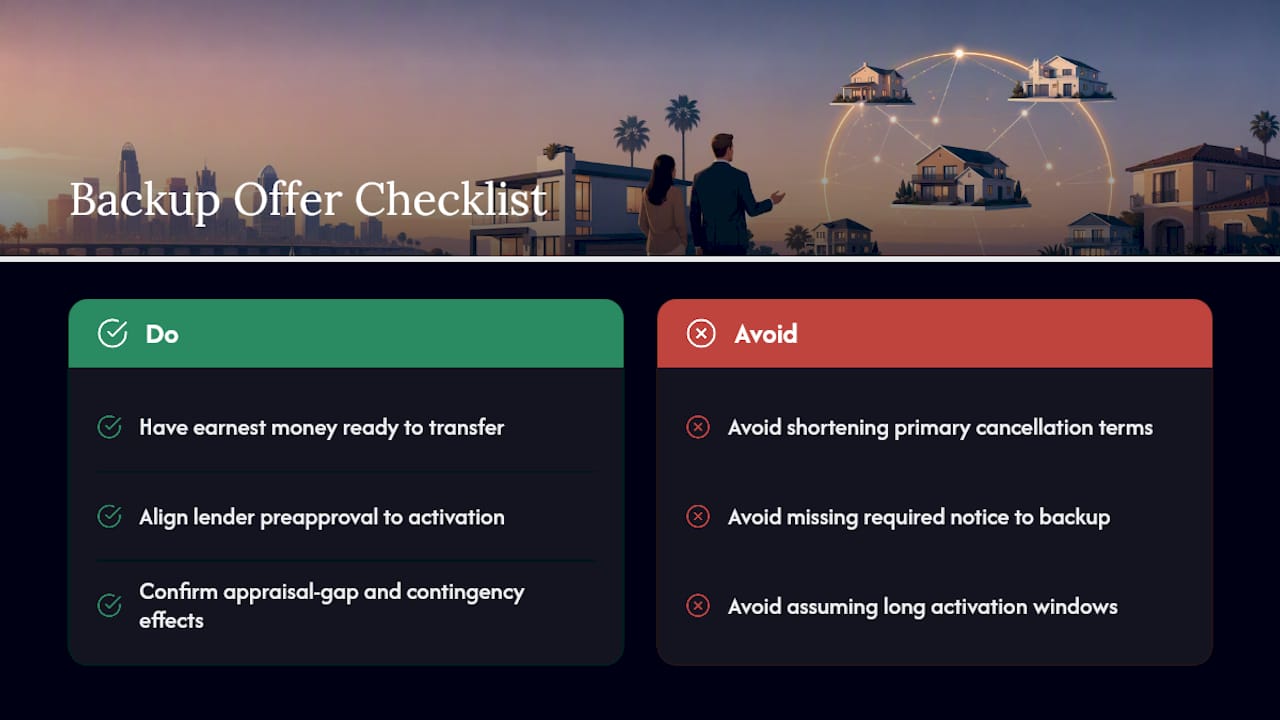
Advice to buyers submitting backup offers often starts with one question: is your earnest money actually ready to move, or just theoretical? In markets where inventory turns over fast, a backup offer that converts often does so with days, not weeks, of notice. Buyers who align their lender's preapproval window with a realistic activation timeline are the ones who actually close.
On the seller side, Jeff walks clients through the exposure of running two buyers at once: know exactly what notice period you owe the backup buyer, and don't let a strong backup offer tempt you into cutting corners with the primary contract's cancellation terms. For deeper prep, buyers should look at how appraisal gap coverage and buyer contingencies affect a backup position specifically, since both shift fast once a deal activates.
Why Most Backup Offer Advice Undersells the Timing Risk
Most guides treat backup offers as a passive waiting game: sign it, forget about it, hope for good news. That undersells the real risk, which is timing, not probability.
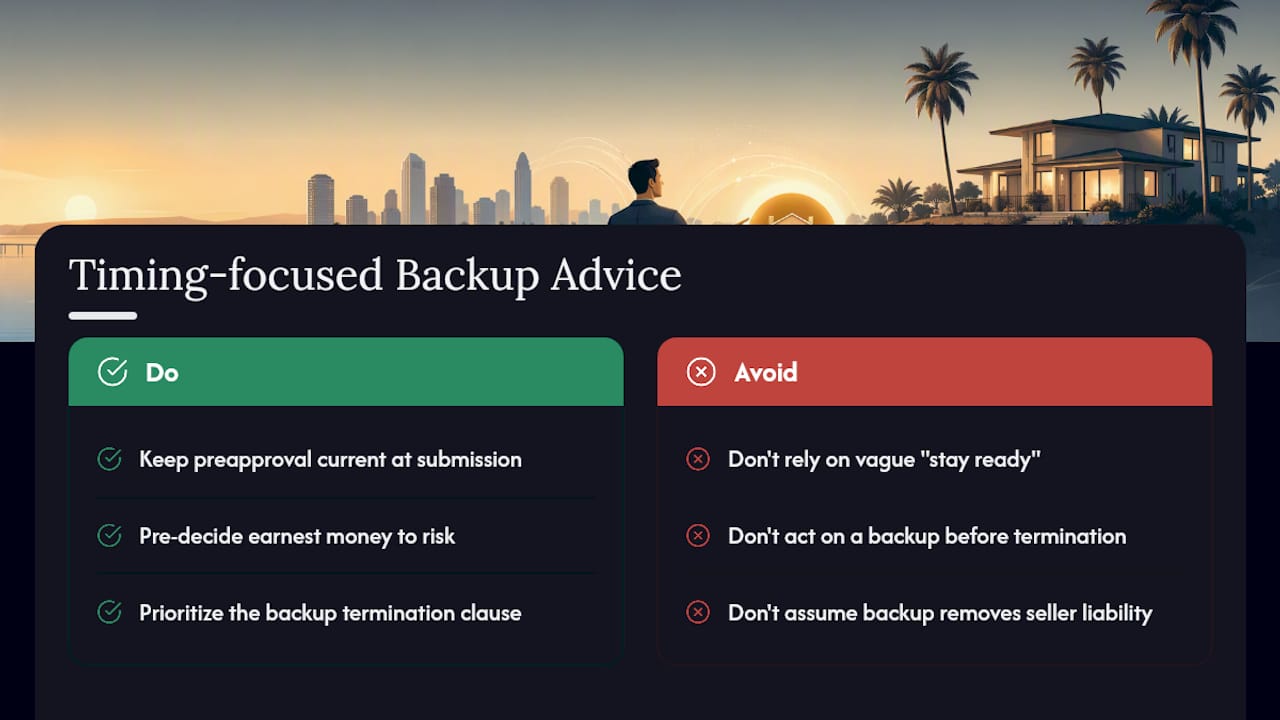
The conventional advice tells buyers to "stay ready." Vague advice like that doesn't hold up. Ready means your preapproval letter is current the week you submit, not the week you signed three months ago. It means you've already decided what earnest money you're willing to risk before a lender calls with news.
For sellers, the overlooked point is legal exposure, not convenience. Accepting a backup offer feels like a safety net, but the primary contract still controls everything until it's properly terminated. Sellers who forget that and start acting on the backup too early create real liability. My take: treat the backup addendum's termination language as the single most important clause in the whole deal, for both sides.
— Jeff
Working with Jeff on Your San Diego Backup Offer
A real estate agent can handle the parts of a backup offer that trip most buyers and sellers up: drafting a clean backup addendum, coordinating lender timelines so preapproval doesn't go stale while you wait, and managing escrow so earnest money and inspection windows move fast the moment activation happens.

If you're weighing a backup offer on a home in Point Loma, San Carlos, or anywhere else in San Diego County, the fastest way to know your real odds is a conversation with someone who's coordinated this exact scenario before. Buyers ready to start can browse current San Diego listings or work through Jeff's buyer's guide to get preapproval and contingency strategy locked in before submitting. Sellers weighing whether to accept a backup on their own listing can start with the seller's guide for a straight read on the trade-offs.
This article is general information, not a substitute for advice from a qualified financial advisor. Consult a qualified financial professional about your own circumstances before acting on anything here.
Sources
- Real Estate Backup Offer: What It Is and How It Works - LegalClarity
- Backup offers for home buyers and sellers - Rocket Mortgage