
Effective home offer negotiation comes down to three things: knowing what the data says, understanding what the seller actually needs, and being willing to walk away when the numbers don't work. Buyers who treat negotiation as a purely emotional exercise routinely overpay. Those who anchor every move in comparable sales data, inspection findings, and seller motivation tend to close at better prices with stronger terms.
Here's what that looks like in practice:
- Anchor your opening offer in recent comparable sales (CMA). A price backed by data is harder to dismiss than one pulled from instinct. CMA-supported offers are more likely to receive counteroffers and less likely to be rejected outright.
- Identify the seller's real motivation. Relocation deadlines, financial pressure, and estate situations all create openings that a lower price alone can't exploit.
- Use inspection contingencies as a negotiation tool. 86% of inspections uncover issues, and 46% lead to price adjustments or concessions averaging $14,000 in savings.
- Negotiate beyond price. Closing timelines, seller concessions on closing costs, personal property, and repair credits are all on the table.
- Support every request with documentation. Inspection reports and contractor estimates carry weight. Vague complaints do not.
- Know your walk-away number. A credible walk-away signal is the strongest leverage a buyer has.
- Work with an experienced agent. Professional representation changes how sellers and their agents respond to your offers.
Table of Contents
- What should you do before negotiating a home price?
- Proven tactics to reduce price or improve your offer terms
- How much can you realistically negotiate off a home's price?
- How seller motivations can unlock better negotiation outcomes
- Common mistakes that weaken your negotiating position
- Work with Jeffsellssandiego to negotiate with confidence in San Diego
- Key Takeaways
What should you do before negotiating a home price?
Preparation is where most buyers either build leverage or lose it before the first offer is even submitted. Walking into a negotiation without a clear financial picture, market knowledge, or professional guidance puts you at an immediate disadvantage.
Get pre-approved, not just pre-qualified. A pre-approval letter from a lender tells the seller you are a serious buyer with verified financing. In competitive markets, sellers routinely dismiss offers that arrive without one.
Partner with an agent who knows the local market cold. This isn't about having a warm body in your corner. You want someone who can pull accurate comps, read days-on-market trends, and tell you when a listing is overpriced versus when it's fairly positioned. For buyers in Southern California, understanding San Diego's negotiation dynamics specifically can shift your strategy significantly.
Run a comparative market analysis before you make any offer. A CMA shows you what similar homes in the same neighborhood sold for in the last 90 days. That data becomes your anchor. Without it, you're negotiating blind.
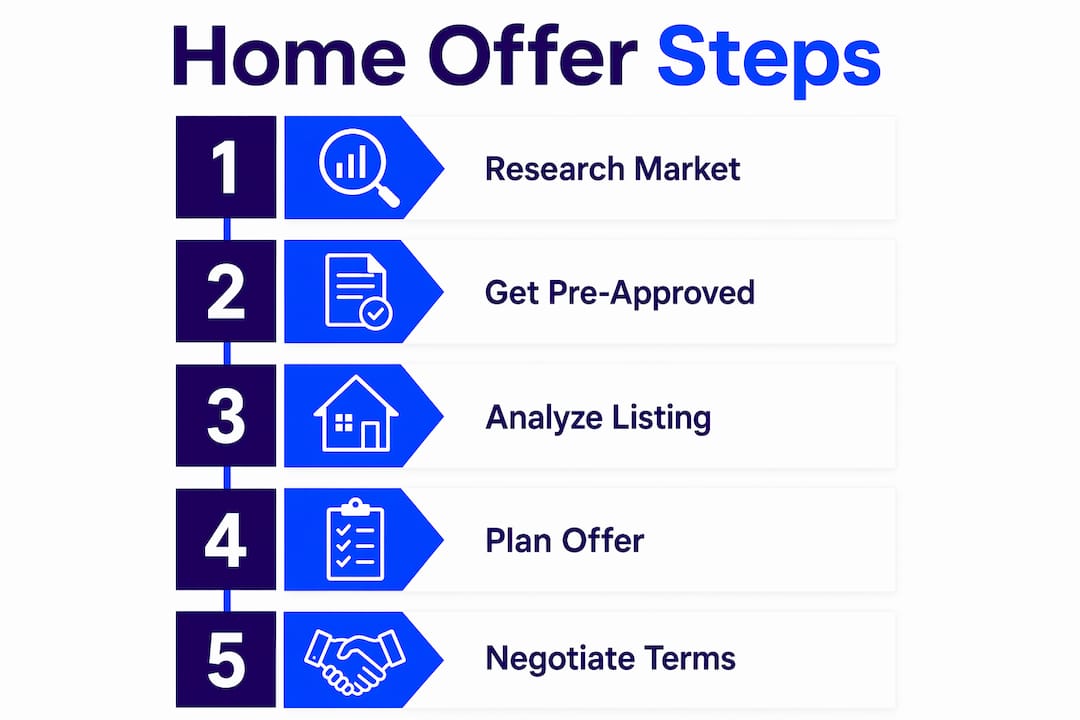
Study the listing history. How long has the home been on the market? Has the price been reduced? A property that has sat for 45 days with one price cut tells a very different story than one that listed last week. Sellers of stale listings are almost always more flexible.
Understand whether you're in a buyer's or seller's market. In a seller's market, aggressive lowball offers waste everyone's time and can poison the relationship before it starts. In a buyer's market, you have room to push. Knowing which environment you're operating in shapes every decision that follows.
Set your ceiling before you start. Decide your absolute maximum before emotions get involved. Buyers who skip this step often get caught up in the moment and agree to terms they later regret.
Proven tactics to reduce price or improve your offer terms
The best negotiators don't just ask for a lower number. They structure offers that give sellers reasons to say yes while protecting the buyer's interests at every turn.

Lead with data, not desire
Top agents frame offers with precise price anchors based on analytics rather than subjective numbers, and that precision increases negotiation success. If comparable sales support $485,000 and the home is listed at $510,000, your offer at $487,000 isn't a lowball. It's a documented position. That distinction matters to sellers and their agents.
Structure your contingencies carefully
Include a home inspection contingency with clear pass/fail conditions rather than open-ended language. This protects you without giving the seller the impression you'll use the inspection as a fishing expedition. If you're in a competitive situation, consider a pre-inspection before submitting your offer. You show up informed, the seller sees commitment, and you still have documented findings to reference.
Waiving inspection contingencies to win bids is one of the most common and costly mistakes buyers make. Pass/fail inspection clauses give you protection without deterring sellers.
Use closing timeline as a bargaining chip
Offering a quick or flexible closing can be worth more to a seller than a few thousand dollars in price. A seller who needs to close in 21 days for a job relocation will often accept a slightly lower price from a buyer who can accommodate that timeline. Ask your agent to find out what the seller actually needs, then structure your offer around it.
Request concessions, not just price cuts
Seller concessions on closing costs typically run 1%–2% of the purchase price. That's real money. One CNBC-reported example shows a buyer using a $9,000 seller credit to buy down their mortgage rate, saving over $15,000 in interest over the first two years. Personal property, warranties, professional cleaning, and landscaping work are all negotiable too.
Deploy escalation clauses strategically
When multiple offers are expected, an escalation clause automatically increases your bid above competing offers up to a hard cap. Precise increments and a firm ceiling reflect sophistication and protect your budget. Use them deliberately, not reflexively.
Signal your walk-away credibly
The most effective leverage in any negotiation is the genuine willingness to leave. If your offer is grounded in comps and inspection data, walking away isn't a bluff. Sellers and their agents recognize the difference between a buyer who is posturing and one who has done the math.
Pro Tip: Instead of waiving your inspection contingency to look competitive, propose a pre-inspection before submitting your offer. You get the same protection, the seller sees a committed buyer, and you walk in with documented findings that support any repair requests or price adjustments.
How much can you realistically negotiate off a home's price?
The honest answer depends heavily on market conditions, how long the property has been listed, and its physical condition. There is no universal discount that applies to every transaction.
As a general framework, negotiation reductions typically range from 3%–10% below asking price. Here's how that breaks down in practice:
| Scenario | Typical Reduction Range | Key Leverage |
|---|---|---|
| Well-priced home, recent comps, low days on market | Slightly below asking | Strong comps, clean offer |
| Fairly priced home, 45 days on market | Moderately below asking | Market data, flexible terms |
| Overpriced or 90+ days on market | Noticeably below asking | Days-on-market data, condition issues |
| Significant inspection findings | Additional reduction | Documented repair estimates |
| Distressed sale or estate situation | Often larger negotiations | Seller urgency, cash offer |
The table above reflects ranges, not guarantees. A home priced sharply in a hot neighborhood may receive multiple offers above asking regardless of days on market. Conversely, a property with deferred maintenance and 90 days of sitting time is a different conversation entirely.
One point buyers often miss: the total value of a negotiated deal includes concessions, credits, and terms, not just the purchase price. A seller who won't move on price may readily agree to cover closing costs, throw in appliances, or fund a rate buydown. Sometimes that's worth more than shaving another $5,000 off the number.
An appraisal gap guarantee is another tool worth knowing. In competitive markets, buyers can agree to cover a specific amount above appraised value if the home doesn't appraise at the full purchase price. This addresses a seller's fear of deal collapse without simply inflating the offer price across the board.
How seller motivations can unlock better negotiation outcomes
Understanding why a seller is selling changes everything about how you structure your offer. Price is rarely the only variable sellers care about, and in many cases it isn't even the most important one.
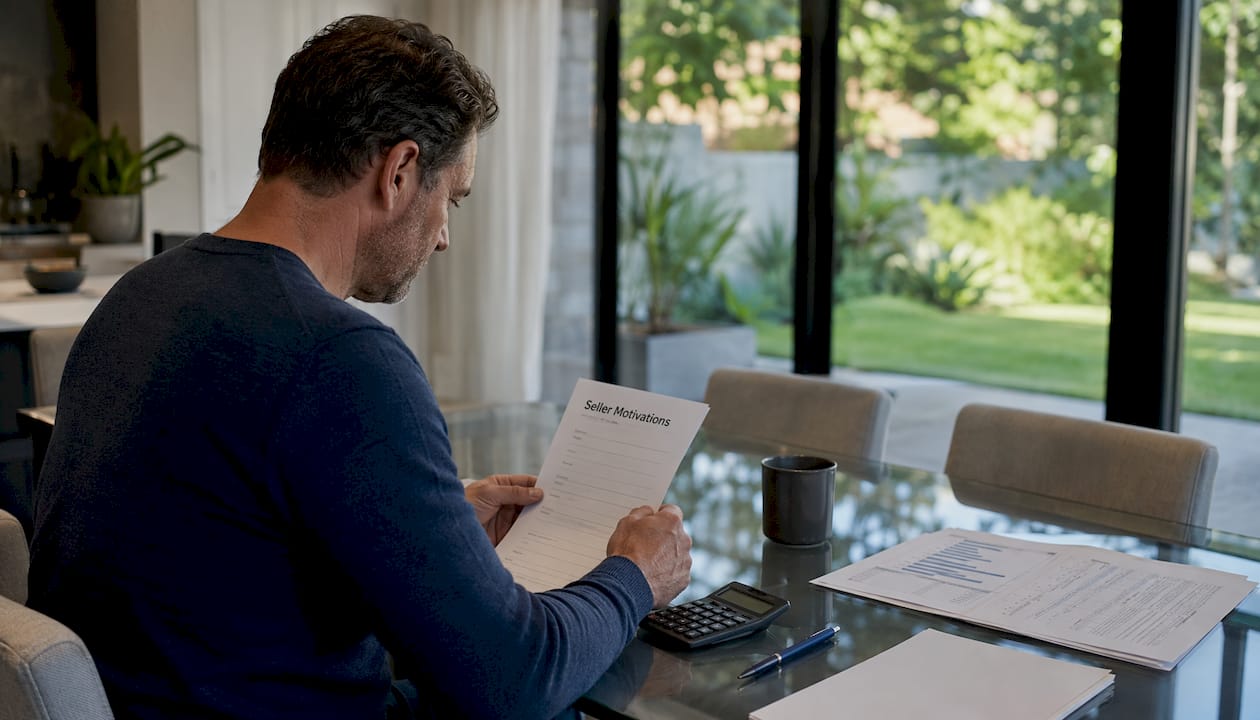
Common seller motivators include job relocations with hard deadlines, financial distress, divorce proceedings, and estate sales where heirs simply want the transaction done. Each of these creates a different kind of flexibility. A relocating seller may prioritize a fast, certain close over top dollar. An estate sale may involve multiple decision-makers who want simplicity above all else.
Buyers who align offers with the seller's underlying needs often gain better terms and faster acceptance than those who focus exclusively on price reduction. A rent-back agreement, for example, lets a seller stay in the home for a set period after closing. That flexibility can make a lower offer more attractive than a higher one with no accommodation.
Georgetown University's School of Continuing Studies frames effective real estate negotiation around four core competencies: preparation, relationship, communication, and creativity. The seller's motivation is where all four intersect.
Your agent's job is to gather this intelligence before you submit anything. A skilled agent will ask the listing agent about the seller's timeline, their flexibility on terms, and whether there are any specific needs the seller has mentioned. That information shapes an offer that a price-only approach never could.
Common mistakes that weaken your negotiating position
Even well-prepared buyers make errors that cost them leverage or derail deals entirely. Most of these mistakes are avoidable with a little discipline.
- Waiving inspection contingencies without a plan. Skipping the inspection to look competitive is a risk that has burned buyers badly. If you must compete aggressively, use a pass/fail clause or conduct a pre-inspection instead of going in blind.
- Making emotional or unsupported lowball offers. An offer 20% below asking with no comps to back it up doesn't signal savvy. It signals that you haven't done your homework, and sellers respond accordingly.
- Revealing your budget ceiling or personal urgency. The moment a seller's agent knows you have to close by a specific date or that this is your dream home, your leverage shrinks. Keep those details private.
- Ignoring terms beyond price. Buyers who fixate on the purchase price and overlook closing costs, repair credits, and timelines often leave significant value on the table. First-time buyers are especially prone to this.
- Moving too fast on counteroffers. Responding to a counteroffer within minutes signals desperation. Take time to analyze the counter, consult your agent, and respond deliberately. Patience is a negotiating tool.
- Skipping the inspection results analysis before countering. If an inspection reveals issues, get contractor estimates before you respond. A documented repair request for $8,500 in HVAC work is a completely different conversation than "the inspector found some stuff."
One pattern worth calling out specifically: buyers who disclose too much information to the listing agent early in the process. Your agent communicates on your behalf for a reason. Casual conversation at an open house about how much you love the place or how long you've been searching can and does get passed back to the seller.
Work with Jeffsellssandiego to negotiate with confidence in San Diego
Knowing the tactics is one thing. Having a seasoned agent execute them on your behalf in a real transaction is another.

Jeffsellssandiego works with buyers throughout San Diego County to structure offers that are competitive, well-documented, and built around what sellers actually need. That means pulling accurate comps before any offer goes in, reading the listing's history for pricing flexibility, and knowing how to frame concession requests so they land well rather than create friction. The difference between a buyer who reads about negotiation and one who has an experienced agent running the process shows up in the final terms.
If you're ready to start searching for homes or want to talk through your offer strategy before you're under pressure, browse current San Diego listings or head to the buyer's guide to see how the process works from first search to closing day.
Key Takeaways
Effective home offer negotiation requires data-driven preparation, a clear understanding of seller motivations, and the discipline to negotiate terms beyond purchase price.
| Point | Details |
|---|---|
| Anchor offers in CMA data | Offers supported by comparable sales data are more likely to receive counteroffers and less likely to be dismissed. |
| Inspection contingencies save money | 86% of inspections uncover issues; 46% lead to adjustments averaging $14,000 in savings. |
| Realistic discount ranges | Expect a modest discount on fairly priced homes; larger discounts possible on homes with extended market time or condition issues. |
| Seller motivation unlocks better terms | Buyers who align offers with seller needs, such as flexible closing dates or rent-back agreements, often close faster and at better terms. |
| Jeffsellssandiego | Works with San Diego buyers to build data-backed offers and negotiate terms that reflect both market conditions and seller priorities. |