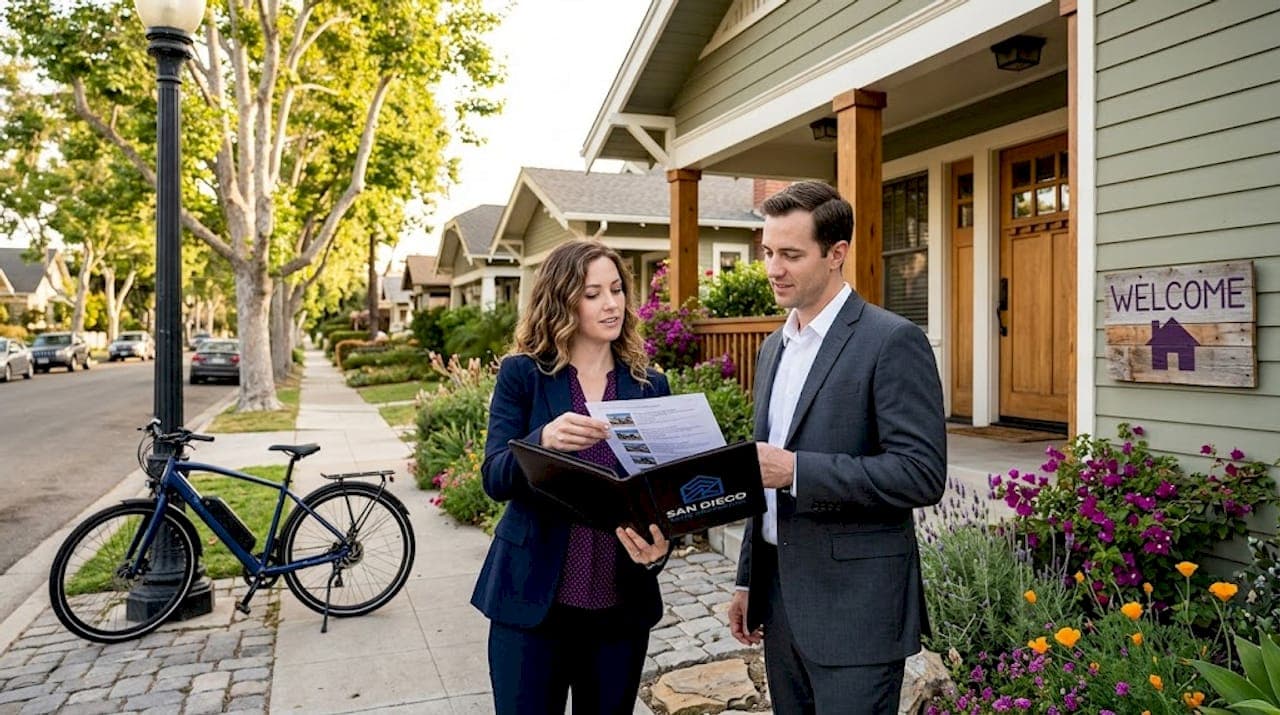
Buying your first home in San Diego is one of the biggest financial decisions you will ever make. With median home prices well above the national average and mortgage rates still elevated in 2026, the margin for error is thin. The good news is that smart, well-prepared buyers are still closing on great homes every month. These home buying tips will walk you through every stage of the process, from building your budget to signing at the closing table, with a focus on what actually works in this specific market.
Table of Contents
- Key takeaways
- 1. Establish a realistic budget before you fall in love with a house
- 2. Improve your credit score before applying
- 3. Choose the right loan type and get pre-approved
- 4. Search strategically and know what matters to you
- 5. Make a strong offer, protect yourself with contingencies, and nail the closing
- My honest take after years of working with San Diego first-time buyers
- Ready to start your San Diego home search?
- FAQ
Key takeaways
| Point | Details |
|---|---|
| Budget beyond the mortgage | Total upfront costs can exceed $35,000 on an average home when you include down payment, closing costs, and reserves. |
| Credit score controls your rate | Improving your score before applying can save you tens of thousands in interest over the life of your loan. |
| Get pre-approved, not just pre-qualified | A pre-approval letter carries real weight with San Diego sellers in a competitive market. |
| Never skip the inspection | A $300 to $600 inspection can uncover defects that justify major price reductions or save you from a bad deal. |
| Build your team early | A trusted local realtor, lender, and inspector working together from the start dramatically reduces your risk. |
1. Establish a realistic budget before you fall in love with a house
Most first-time buyers start by browsing listings. That is exactly backward. Before you look at a single home, you need a hard number that reflects what you can genuinely afford, not just what a lender will approve.
Experts recommend housing costs stay at or below 30 to 33 percent of your gross monthly income. But that ceiling is a maximum, not a target. If you have student loans, car payments, or other obligations, your personal comfort level may be significantly lower. Stretching to the maximum approval amount is one of the fastest ways to become "house poor."
For a concrete San Diego example: on a $600,000 home, you could be looking at a down payment of $18,000 to $120,000 depending on loan type, plus closing costs of $12,000 to $30,000, plus a reserve fund of 2 to 3 months of mortgage payments. That reserve is not optional. Lenders verify it before funding.

Pro Tip: Open a dedicated savings account just for your home purchase fund. Keeping it separate from your regular checking makes it harder to dip into and easier to track.
Beyond the upfront costs, ongoing expenses like property taxes, homeowner's insurance, and maintenance consistently catch first-time buyers off guard. In San Diego, property tax rates run roughly 1.1 to 1.25 percent of the assessed value annually. Add HOA fees if you are buying a condo or a planned community home, and your real monthly cost can jump by several hundred dollars. Ask your agent for a full cost estimate on every property you seriously consider.
California also offers first-time buyer assistance programs, including the CalHFA programs that provide down payment and closing cost help. Check your eligibility before assuming you need to cover everything yourself.
2. Improve your credit score before applying
Your credit score does not just determine whether you qualify for a loan. It determines how much that loan costs you over the next 30 years. A difference of 40 points on your score can mean a rate difference of half a percent or more, which translates to thousands of dollars annually on a San Diego-sized mortgage.
FHA loans require a minimum credit score of 580 for the 3.5 percent down payment option, while conventional loans generally want 620 or above. VA loans, available to eligible veterans and active-duty military, have no official minimum score, though individual lenders set their own. Getting your score above 740 is where you start accessing the best available rates across all loan types.
The most effective credit moves before a purchase are straightforward. Pay every bill on time without exception. Get your credit card balances below 10 to 30 percent of each card's limit. Avoid opening any new credit accounts in the 6 to 12 months before you apply. Pull your credit reports from all three bureaus and dispute any errors you find, because mistakes are more common than most people realize.
Pro Tip: If your score is currently below 680, consider waiting 6 months to actively improve it before applying. The rate savings on a $500,000 loan can easily exceed $30,000 over the loan term.
Buyers who shop 3 to 5 mortgage lenders within a 45-day window get the benefit of multiple quotes while those inquiries count as just one on their credit report. That single habit can save $20,000 to $40,000 over the life of the loan.
3. Choose the right loan type and get pre-approved
Not every loan is right for every buyer. Understanding your options before you apply puts you in a much stronger position, both financially and in negotiations.
Here is a quick breakdown of the main loan types available to San Diego first-time buyers:
- Conventional loans: Require 620 or above credit score, down payments from 3 percent, and private mortgage insurance if you put down less than 20 percent.
- FHA loans: Require 580 minimum score and 3.5 percent down. Mortgage insurance is required for the life of the loan in most cases. A solid option if your credit needs work.
- VA loans: Available to qualifying veterans and service members. No down payment required, no private mortgage insurance, and very competitive rates.
- USDA loans: Designed for rural areas. Some San Diego County outskirts qualify, so worth checking if you are open to those locations.
| Loan Type | Min. Credit Score | Min. Down Payment | Mortgage Insurance |
|---|---|---|---|
| Conventional | 620 | 3% | Required under 20% down |
| FHA | 580 | 3.5% | Required for most loans |
| VA | No official minimum | 0% | Not required |
| USDA | 640 (typical) | 0% | Required (lower cost) |
On rate structure, a fixed-rate mortgage gives you predictability. If you plan to stay in the home for 7 or more years, a 30-year fixed is usually the right call in the current market. An adjustable-rate mortgage (ARM) can offer a lower starting rate, but introduces risk if you end up staying longer than expected.
Pre-approval is not optional in San Diego. Sellers in competitive neighborhoods will not take your offer seriously without a pre-approval letter. Pre-qualification is just an estimate based on what you tell a lender. Pre-approval means a lender has verified your income, assets, and credit, and is committed to lending up to a specific amount. That distinction matters enormously when you are competing against other buyers.
Pro Tip: Get competing loan estimates and use them to negotiate. Comparing mortgage offers is one of the highest-return activities you can do as a buyer, and it costs you nothing.
4. Search strategically and know what matters to you
Before you tour a single home, write down your non-negotiables and your nice-to-haves. Non-negotiables might be the number of bedrooms, proximity to your job, or a specific school district. Nice-to-haves are things you would love but will not walk away over, such as a big backyard or an updated kitchen.
San Diego has dramatically different neighborhoods with different trade-offs. North Park and South Park offer walkability and character but smaller lots. Clairemont and Allied Gardens tend to offer better square footage per dollar. Coastal areas like La Jolla and Del Mar carry premium prices but strong long-term value. Your agent should help you map your priorities to the right neighborhoods so you are not wasting weekends in the wrong areas.
Set up listing alerts on the major platforms with your exact filters. The fastest-moving homes in desirable San Diego areas are going under contract within days. You need to see new listings the morning they hit the market. Working with a local agent who has neighborhood knowledge and existing relationships with listing agents gives you a real edge in speed and context.
When you attend showings, bring a checklist. Look at the roof condition, check for water stains on ceilings, run the faucets, and test every window. Fixer-upper homes can offer value, but the math has to work. Get rough contractor estimates before you write an offer if you are seriously considering a property that needs significant work.
5. Make a strong offer, protect yourself with contingencies, and nail the closing
When you find the right home, your offer strategy needs to be both competitive and protective. Here is how to do both.
- Set your earnest money deposit thoughtfully. In San Diego, earnest money typically runs 1 to 3 percent of the purchase price. A higher deposit signals serious intent to the seller, but make sure you understand the conditions under which you could lose it.
- Keep your contingencies intact. Never waive your inspection contingency just to win a bidding war. The inspection costs $300 to $600 on average but can expose foundation issues, roof failures, or electrical problems worth tens of thousands of dollars.
- Use the inspection report as a negotiating tool. A home inspection is not just a pass/fail test. It gives you documented evidence to request repairs or a price reduction. Focus on safety issues and major systems, not cosmetic items.
- Understand your closing costs before you arrive at the table. Closing costs typically run 2 to 5 percent of the loan amount, covering lender fees, title insurance, escrow, and prepaid items like homeowner's insurance. Ask your lender for an itemized Loan Estimate early so nothing catches you off guard.
- Stay in close contact with your lender and agent in the final weeks. Last-minute issues are more common than buyers expect, such as appraisals coming in low or underwriters requesting additional documentation. Respond quickly to any requests.
Pro Tip: Before making an offer, ask your agent to pull recent sold comps within the last 90 days in the same neighborhood. Knowing the true market value of a home gives you the confidence to negotiate from a position of knowledge, not emotion.
My honest take after years of working with San Diego first-time buyers
I have helped a lot of first-time buyers close on their first homes, and I want to share the pattern I keep seeing. The buyers who struggle most are not the ones with the smallest budgets. They are the ones who let a lender's maximum approval number become their shopping ceiling.
Your lender will tell you what you qualify for. That is not the same as what you should spend. I always encourage buyers to run their own affordability check based on their personal expenses, not just the formulas lenders use.
I also want to push back on the idea of waiting for the "perfect" market. Market timing costs most buyers more than it saves. The buyers who bought in 2022 when rates were rising worried they were making a mistake. Many of them have significant equity now. The goal is readiness, not perfection. Build your team early, know your numbers, and move when the right home at the right price appears.
— Jeff
Ready to start your San Diego home search?
Jeffsellssandiego specializes in helping first-time buyers like you cut through the noise and make confident decisions in one of the country's most competitive real estate markets. Whether you are still figuring out your budget or ready to make offers, having the right agent on your side changes everything.

Browse current San Diego listings to get a feel for what your budget can buy across different neighborhoods. When you are ready to go deeper, the buyer's guide on the Jeffsellssandiego site walks you through every step of the purchase process with local context built in. Reach out directly to get personalized guidance on your specific situation. The first conversation is always free, and it will save you time, money, and stress.
FAQ
What credit score do I need to buy a home in San Diego?
Most lenders require at least 580 for an FHA loan and 620 for a conventional loan. Getting your score above 740 unlocks the best available mortgage rates.
How much money do I need upfront to buy a home?
On a $350,000 home, upfront costs including down payment, closing costs, and reserves can total around $35,000. San Diego's higher price points mean buyers should plan for significantly more.
When is the best time to buy a home in San Diego?
Personal readiness matters more than market timing. Waiting for ideal conditions often costs buyers more than acting when they are financially prepared and have found the right property.
Should I waive the inspection to win a bidding war?
No. A home inspection typically costs $300 to $600 and can reveal defects worth far more. Skipping it removes your strongest negotiating tool and leaves you exposed to major unexpected costs.
What is the difference between pre-qualification and pre-approval?
Pre-qualification is an estimate based on unverified information you provide. Pre-approval involves verified income, assets, and credit, giving sellers confidence that you can actually close the deal.