
Seller financing is defined as a real estate transaction where the property seller acts as the lender, providing a loan directly to the buyer instead of a bank or mortgage company. This arrangement bypasses institutional underwriting entirely. The buyer makes monthly payments to the seller under agreed terms, and the seller holds a security interest in the property until the loan is paid off. Traditional bank loans can take 30–60 days or longer to close due to complex underwriting and appraisal requirements. Owner financing, the standard industry term used interchangeably with seller financing, can close in as little as one week by skipping that process altogether.
What is seller financing and how does it work?
Seller financing works through a private loan agreement negotiated directly between buyer and seller. The two parties agree on a purchase price, down payment amount, interest rate, and repayment schedule without a bank setting the terms. That flexibility is the core appeal of the arrangement.

The deal is formalized through two key documents. A promissory note spells out the loan amount, interest rate, payment schedule, and what happens if the buyer defaults. A security instrument, either a deed of trust or a mortgage, gives the seller a legal claim against the property if payments stop.
Several structures exist under the owner financing umbrella:
- Land contract (also called a contract for deed): The buyer gets possession and use of the property, but the seller retains legal title until the loan is fully paid.
- Lease-option: The buyer leases the property with the right to purchase it later, often applying a portion of rent toward the purchase price.
- Wraparound mortgage: The seller's existing mortgage stays in place, and the seller collects payments from the buyer that exceed their own mortgage payment, pocketing the difference.
Most seller-financed deals also include a balloon payment, which requires the buyer to pay off the remaining balance in a lump sum after a set period, typically 5–10 years. This gives the buyer time to build equity or improve their credit before refinancing through a conventional lender. Understanding real estate contract terms before signing any agreement protects both parties.
Pro Tip: Always have a real estate attorney review the promissory note and security instrument before closing. Verbal agreements and informal paperwork are unenforceable in most states.
What are the benefits of seller financing for buyers and sellers?
Owner financing delivers distinct advantages to both sides of the transaction, though the benefits differ depending on which seat you occupy at the closing table.
Benefits for buyers
- Easier qualification: Buyers who cannot meet strict bank credit score or debt-to-income requirements can still purchase a home if the seller agrees to their terms.
- Flexible terms: Interest rates, down payments, and repayment schedules are all negotiable, unlike the standardized products banks offer.
- Faster closing: Skipping institutional underwriting means buyers can take possession weeks earlier than a conventional loan allows.
- No bank-required repairs: Banks often require repairs before approving a loan. Sellers can waive those conditions entirely.
Benefits for sellers
Sellers gain a steady income stream from monthly payments, often at a higher interest rate than they would earn from a savings account or CD. A seller who prices the home slightly above market can justify that premium by offering flexible financing terms, effectively attracting a wider buyer pool.
The tax angle is the most underappreciated benefit. Sellers can defer capital gains taxes using the IRS installment sale method, spreading taxable gains across the years they receive payments rather than paying a large tax bill in the year of sale. That deferral can meaningfully improve net proceeds, especially for sellers with a low cost basis in the property.
"Seller financing is especially effective for properties difficult to finance conventionally, such as fixer-upper homes or rural properties, because it bypasses the strict appraisal processes that disqualify those homes from traditional lending."
Properties that need work before they meet conventional lender standards are natural candidates for this arrangement. Sellers of homes requiring pre-listing repairs can use owner financing to sell as-is and still command a fair price.
What are the risks and drawbacks of seller financing?
Seller financing is a situational tool, not a universal solution. Both buyers and sellers take on risks that do not exist in a standard bank transaction.
Risks for buyers
- Higher interest rates: Buyers often pay higher interest as the trade-off for bypassing strict bank credit requirements. That cost adds up over a multi-year loan.
- Less consumer protection: Federal regulations that govern bank mortgages do not automatically apply to private seller financing agreements.
- Balloon payment pressure: If the buyer cannot refinance when the balloon comes due, they risk losing the property.
Risks for sellers
- Buyer default: If the buyer stops paying, the seller must go through the foreclosure process to reclaim the property. That process is slow and expensive.
- Due-on-sale clause: A seller who still carries a mortgage on the property faces a serious complication. Most mortgages contain a due-on-sale clause that requires the full loan balance to be repaid when the property transfers ownership. Ignoring this clause can trigger loan acceleration and foreclosure by the seller's own lender.
- Ordinary income tax on interest: The interest the seller collects is taxed at ordinary income tax rates, which are higher than capital gains rates. Sellers must consult a CPA to structure the installment sale correctly and avoid surprises at tax time.
Lack of third-party oversight is the structural weakness of every owner-financed deal. Independent legal counsel is not optional. Improper agreements lead to unenforceable terms and costly legal disputes that wipe out the savings from skipping the bank.
Pro Tip: Sellers should pull a credit report and verify income for any prospective buyer before agreeing to terms. Treat it like a bank would. Your property is the collateral.
Seller financing vs. traditional mortgage: which one fits your situation?
The right choice depends on the property, the buyer's financial profile, and the seller's goals. Neither option is universally better.
| Feature | Seller financing | Traditional mortgage |
|---|---|---|
| Closing timeline | As little as one week | Typically 30–60 days |
| Credit requirements | Flexible, set by seller | Strict, set by lender |
| Interest rate | Often higher than market | Market rate, regulated |
| Down payment | Negotiable | Usually 3%–20% of price |
| Legal oversight | Minimal, private agreement | Heavily regulated |
| Best property type | Fixer-uppers, rural, unique | Move-in ready, standard |
| Tax treatment | IRS installment sale method | Standard purchase |
| Foreclosure risk | Seller manages directly | Lender manages process |
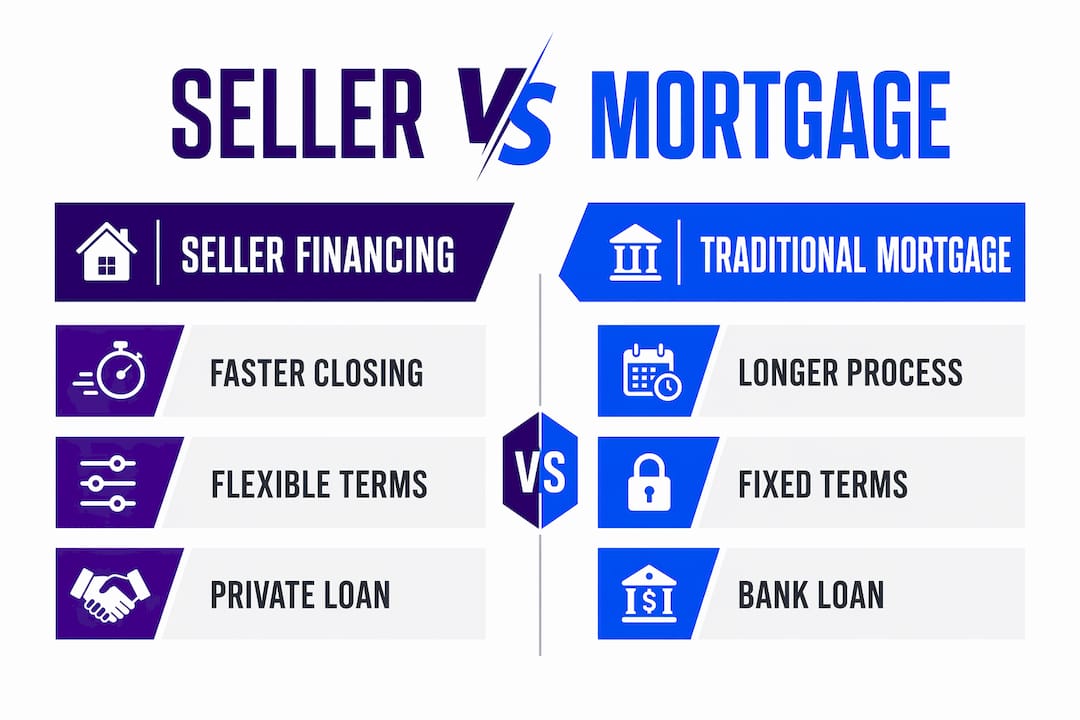
A traditional bank mortgage suits buyers with strong credit, stable income, and a property that meets conventional appraisal standards. The process is longer, but the interest rate is lower and consumer protections are built in.
Owner financing suits buyers who cannot qualify conventionally, sellers who want income over time, and properties that banks will not touch. The advantages of seller financing include lower closing costs and faster sales, but those gains come with higher interest costs and greater legal responsibility for both parties. Buyers exploring non-traditional paths should also understand how a buyer's agent can help negotiate favorable terms in these deals.
Key Takeaways
Seller financing is a private loan from the property seller to the buyer, offering faster closings and flexible terms but requiring strong legal documentation and careful tax planning from both parties.
| Point | Details |
|---|---|
| Definition | The seller acts as the lender, replacing the bank with a private loan agreement. |
| Closing speed | Owner financing can close in as little as one week, versus 30–60 days for a bank loan. |
| Tax benefit for sellers | The IRS installment sale method lets sellers spread capital gains taxes across multiple years. |
| Key risk: due-on-sale | Sellers with an existing mortgage must check for a due-on-sale clause before offering financing. |
| Legal documentation | A promissory note and security instrument are required for an enforceable agreement. |
What I've learned from watching seller financing deals go sideways
Seller financing sounds simple on paper. Two adults agree on a price, sign some documents, and skip the bank. In practice, the deals that go wrong almost always fail for the same two reasons: the seller did not check their own mortgage for a due-on-sale clause, or neither party hired an attorney.
I have seen sellers offer owner financing on properties they still owed money on, only to get a demand letter from their lender weeks after closing. That situation is entirely avoidable. Before you agree to any seller-financed deal, pull your mortgage documents and read the transfer provisions. If you cannot interpret them, pay an attorney $300 to do it for you. That is the cheapest insurance you will ever buy.
For buyers, the biggest mistake is treating a seller-financed deal as informal. The seller is your lender now. If you miss payments, you can lose the property just as fast as you would with a bank, sometimes faster, because the foreclosure process in a private agreement can move without the regulatory delays that protect borrowers in conventional loans.
The deals I have seen work well share one trait: both parties came in with realistic expectations, clear documentation, and professional guidance. A full-service real estate agent who understands owner financing can structure the negotiation so both sides walk away protected. Seller financing is a legitimate tool. Use it like one.
— Jeff
Thinking about seller financing in San Diego?
Seller financing opens doors that conventional loans close, but the details matter enormously in a market like San Diego. Whether you are a buyer looking for a flexible path to homeownership or a seller weighing the income and tax benefits of carrying a note, the right guidance makes the difference between a deal that works and one that creates problems for years.

Jeffsellssandiego works with buyers and sellers across San Diego County on residential transactions, including those involving non-traditional financing structures. Start by browsing current listings to see what is available, or visit the seller's guide to understand your options before you list. Reach out to Jeff directly for a straightforward conversation about whether owner financing fits your specific situation.
FAQ
What is the difference between seller and owner financing?
Seller financing and owner financing are the same thing. Both terms describe a transaction where the property seller provides the loan directly to the buyer instead of a bank.
Is seller financing legal?
Seller financing is legal in all 50 states. Both parties must comply with federal disclosure requirements under the Dodd-Frank Act, particularly when the seller finances multiple properties per year.
What happens if the buyer defaults on a seller-financed loan?
The seller can initiate foreclosure proceedings to reclaim the property. The process and timeline vary by state, which is why a clear default clause in the promissory note is critical.
Can a seller offer financing if they still have a mortgage?
A seller can, but the existing mortgage likely contains a due-on-sale clause that requires full repayment upon transfer. Proceeding without addressing this clause can trigger loan acceleration by the original lender.
Do buyers pay more with seller financing than with a bank loan?
Buyers typically pay a higher interest rate with owner financing than with a conventional mortgage. That higher rate reflects the seller's risk and the buyer's convenience in bypassing standard credit requirements.