
FSBO, which stands for For Sale By Owner, is defined as selling a home without hiring a traditional real estate agent to represent you. The seller handles every task that an agent would normally manage: pricing, marketing, showings, negotiations, and closing. For homeowners with the time and motivation to take this on, the financial upside is real. Typical agent commissions run 5 to 6% of the sale price, and cutting out the listing agent can save you $15,000 to $30,000 on a $500,000 home. Modern tools like flat-fee MLS services, AI pricing platforms, and virtual tour software have made the FSBO process more accessible than ever before.
What is a FSBO sale and how does it work?
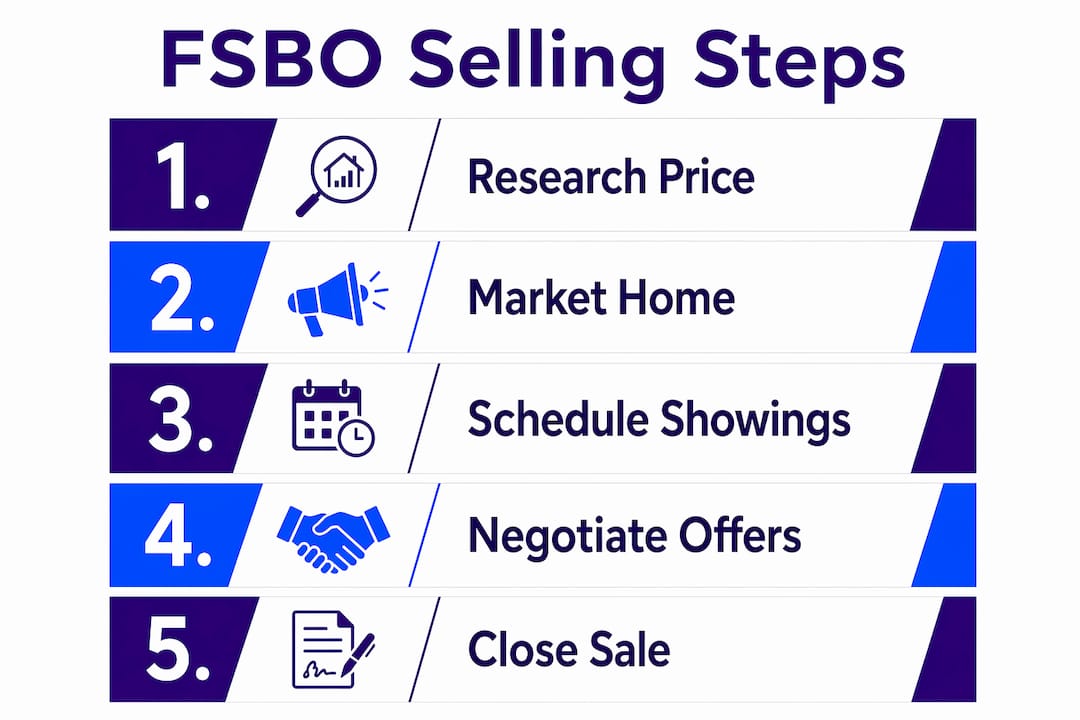
FSBO is the recognized real estate industry term for a private home sale where the owner acts as their own listing agent. The process follows five core phases, and understanding each one before you start will save you significant time and money.
Phase 1: Pricing your home accurately
Correct pricing is the single most important factor in a successful FSBO sale. You need to research neighborhood comparable sales, known as comps, to set a price that attracts buyers without leaving money on the table. Overpricing stalls your listing; underpricing cuts directly into your profit. If you want a professional benchmark, home appraisal services cost $350 or more and give you a defensible number to anchor your asking price. Jeffsellssandiego also publishes local pricing guidance that FSBO sellers in San Diego can use as a starting reference.

Phase 2: Marketing and MLS access
Without an agent, your home does not automatically appear on the Multiple Listing Service, which is where buyer's agents search for properties. Flat-fee MLS services cost between $100 and $500 and get your listing syndicated to Zillow, Realtor.com, and Redfin automatically. This matters because Zillow and other major portals restrict FSBO visibility by default, filtering out non-MLS listings in many search results. Some states prohibit Zillow from showing FSBO listings at all, which means skipping flat-fee MLS can cut your buyer exposure dramatically.
Phase 3: Showings, negotiation, and closing
Once buyers start inquiring, you schedule and host all showings yourself. You review offers, negotiate terms directly with buyers or their agents, and manage the contract process. Closing typically takes 30 to 45 days after an accepted offer, during which you coordinate with title companies, escrow officers, and inspectors. This phase is where most FSBO sellers feel the most pressure, because the paperwork is dense and the legal stakes are high.
Pro Tip: Schedule all showings in tight windows, such as Saturday morning blocks, rather than one-off appointments. This creates a sense of competition among buyers and protects your personal schedule.
What are the benefits and challenges of selling FSBO?
The financial case for FSBO is straightforward. Eliminating the listing agent saves you the largest single cost in a traditional sale. On a $500,000 home, saving on agent commissions means keeping an extra $15,000 to $30,000 in your pocket. That is a meaningful number for most homeowners, and it is the primary reason people pursue this route.
Beyond cost, FSBO gives you direct control over every decision. You set the price, choose which offers to consider, decide how to stage and photograph the home, and control the negotiation timeline. No one knows your home or your neighborhood better than you do, and that local knowledge has real value.
The challenges, however, are equally concrete:
- Time commitment. FSBO sellers must take on all tasks of a listing agent, from marketing to scheduling to contract management. This is a part-time job for weeks or months.
- Legal liability. Purchase agreements and disclosure forms are legally binding documents. Errors or omissions can expose you to lawsuits after closing.
- Buyer's agent commission. Even in a FSBO sale, sellers typically still pay the buyer's agent commission of around 2.5%. On a $500,000 home, your total FSBO cost including flat-fee MLS is still roughly $11,000.
- Sale price risk. FSBO homes often sell for less than agent-listed homes and can take longer to move, particularly in slower markets.
"FSBO sellers gain control but must be realistic about workload and legal complexities. Professional help on contract review is a good investment." — Bankrate
Pro Tip: Hire a real estate attorney to review your purchase agreement and closing documents even if your state does not require it. Attorney fees of $500 to $1,500 are minor compared to the legal exposure of a contract error on a six-figure transaction.
How does FSBO compare to using a traditional real estate agent?
The right choice depends on your situation, not a general rule. Here is a direct comparison across the factors that matter most:
| Factor | FSBO | Traditional agent |
|---|---|---|
| Commission cost | 0% listing fee + ~2.5% buyer's agent | 5 to 6% total commission |
| MLS access | Flat-fee MLS ($100 to $500) | Included in commission |
| Time investment | High. Seller manages everything | Low. Agent handles most tasks |
| Negotiation support | Seller negotiates directly | Agent negotiates on your behalf |
| Legal guidance | Seller's responsibility | Agent and broker oversight |
| Best for | Motivated sellers with time and market knowledge | Complex sales, time-constrained sellers |
Hiring a full-service agent makes more sense in three specific situations. First, if you are selling in a declining market where pricing strategy and buyer relationships are critical. Second, if you have a complex transaction such as a probate sale, divorce settlement, or property with title issues. Third, if you need to sell quickly and cannot afford the extra weeks that a poorly marketed FSBO listing might sit on the market.
FSBO works best when you have a straightforward property, a strong local market, and the bandwidth to manage the process yourself. Sellers who have done it before, or who have a background in sales or law, tend to have the best outcomes.
Practical tips and tools to succeed at FSBO selling
The gap between a successful FSBO sale and a frustrating one usually comes down to preparation and the right tools. These are the areas worth investing in:
- Flat-fee MLS services. Platforms like Houzeo, Beycome, and FSBO.com let you list on MLS for a fixed fee ranging from $200 to $500, with automatic syndication to major buyer portals. This is non-negotiable for serious FSBO sellers.
- Professional photography. Listings with professional photos receive significantly more online views than those with phone camera shots. Budget $200 to $400 for a real estate photographer.
- Virtual tours. In 2026, buyers expect 3D walkthroughs before scheduling in-person visits. Tools like Matterport produce professional virtual tours that filter out unserious buyers and save you showing time.
- AI pricing tools. Platforms like HouseCanary and PropStream give FSBO sellers access to the same automated valuation models that agents use, helping you price with data rather than guesswork.
- Legal review. Use a real estate attorney or a service like Rocket Lawyer to review your purchase agreement, seller disclosures, and closing documents. This is the one area where cutting costs creates real risk.
- Showing management apps. Tools like ShowingTime allow buyers and their agents to book showings directly, send automatic confirmations, and collect feedback without you managing every text and call.
Pro Tip: Stage your home before photography, not after. The photos are what sell the showing appointment. If the photos are weak, buyers never schedule a visit, and staging the physical space later does not fix the problem.
Jeffsellssandiego's home selling resources cover additional strategies for maximizing your sale price, including prep work that consistently moves the needle on final offers.
Key takeaways
FSBO is a viable strategy for motivated sellers who invest in the right tools, price accurately, and get professional legal review on contracts.
| Point | Details |
|---|---|
| FSBO meaning | For Sale By Owner means the seller manages all listing agent tasks without paying a listing commission. |
| Core cost savings | Eliminating the listing agent saves $15,000 to $30,000 on a $500,000 home, though buyer's agent fees still apply. |
| MLS access is critical | Flat-fee MLS services costing $100 to $500 are required to reach buyers on Zillow and Realtor.com. |
| Legal risk is real | Contract errors expose sellers to liability; attorney review costs $500 to $1,500 and is worth every dollar. |
| Know when to hire an agent | Complex sales, declining markets, and tight timelines favor full-service agent representation over FSBO. |
When FSBO makes sense and when it does not
I have worked with enough sellers in San Diego to know that FSBO is not a shortcut. It is a different kind of work. The sellers who do it well are organized, comfortable with negotiation, and willing to spend a weekend afternoon hosting showings instead of doing something else. They treat it like a project, not a passive process.
What I see go wrong most often is the legal piece. Sellers focus on the marketing and the price, which is understandable, and then they sign a purchase agreement without having anyone review it. California real estate contracts are detailed. Disclosure requirements alone can trip up an experienced seller. A single missed disclosure can result in a lawsuit months after you have already moved on. Spending $800 on an attorney to review your documents is not optional in my view. It is the cost of doing this responsibly.
The other thing I would push back on is the assumption that FSBO always saves money. If your home sits on the market for three extra months because the marketing was weak or the price was off, you have paid carrying costs, possibly reduced your final price, and spent significant personal time on the process. A full-service agent who sells your home faster and at a higher price can easily outperform a poorly executed FSBO on net proceeds.
FSBO is the right call for the right seller. If you have the time, the local knowledge, and the discipline to do it properly, the savings are real and the control is genuinely valuable. If any of those three things are missing, the math changes fast.
— Jeff
Sell smarter with Jeffsellssandiego
Whether you decide to go FSBO or want professional support behind you, Jeffsellssandiego provides San Diego homeowners with the resources to make confident decisions.

The seller's guide at Jeffsellssandiego covers pricing strategy, home prep, and negotiation tactics specific to the San Diego market. If you are weighing FSBO against a full-service listing, the guide gives you a clear picture of what each path actually involves. For buyers working alongside FSBO sellers, the home search listings page connects you directly to available properties. Reach out to Jeff for a no-pressure conversation about what your home is worth and what selling strategy fits your timeline.
FAQ
What does FSBO mean in real estate?
FSBO stands for For Sale By Owner. It means the homeowner sells their property without hiring a listing agent, taking on all marketing, negotiation, and closing responsibilities themselves.
How much can you save with a FSBO sale?
Eliminating the listing agent saves roughly 2.5 to 3% of the sale price. On a $500,000 home, that translates to $15,000 to $30,000 in savings, though sellers typically still pay the buyer's agent commission of around 2.5%.
Do FSBO sellers need to be on the MLS?
FSBO sellers are not required to list on the MLS, but skipping it severely limits buyer exposure. Flat-fee MLS services like Houzeo and Beycome provide MLS access for $200 to $500, syndicating your listing to Zillow, Realtor.com, and Redfin automatically.
What is the biggest risk of selling FSBO?
Legal liability is the largest risk. Purchase agreements and disclosure documents are legally binding, and errors can result in post-closing lawsuits. Hiring a real estate attorney to review contracts is strongly recommended even in states where it is not legally required.
How long does a FSBO sale take to close?
Once a buyer's offer is accepted, closing typically takes 30 to 45 days. The full timeline from listing to closing varies based on market conditions, pricing accuracy, and how quickly you respond to buyer inquiries and inspection requests.