
A short sale is defined as a real estate transaction where a lender agrees to accept less than the outstanding mortgage balance to allow a homeowner to sell and avoid foreclosure. The lender must approve the sale price before any deal closes, which makes this fundamentally different from a standard home sale. Homeowners who qualify typically face documented financial hardship, such as job loss, divorce, or a medical crisis. Freddie Mac and the National Association of Realtors both recognize short sales as a structured, negotiated exit strategy that gives sellers more control over timing than a forced foreclosure ever would. If you are underwater on your mortgage and weighing your options, understanding exactly how this process works is the first step toward making a sound decision.
What is a short sale and how does the process work for sellers?
A short sale begins when a homeowner can no longer afford their mortgage and owes more than the home is currently worth. The seller contacts their lender, explains the financial situation, and requests permission to sell the property below the loan balance. The lender holds most of the control throughout this process, which surprises many sellers who expect to negotiate freely.
The typical steps look like this:
- Contact your lender. Notify your mortgage servicer that you are experiencing financial hardship and want to explore a short sale. Do this before you miss payments if possible.
- Gather financial documentation. Prepare bank statements, tax returns, pay stubs, and a formal hardship letter explaining why you cannot continue making payments.
- List the property. Work with a real estate agent experienced in distressed sales to price the home at or near current market value.
- Submit the offer package to the lender. Once a buyer makes an offer, your agent sends the full package, including the purchase contract and your financial documents, to the lender for review.
- Wait for lender approval. The lender orders its own appraisal, reviews the offer, and decides whether to accept, counter, or reject it. This stage alone can take weeks or months.
- Close the sale. If the lender approves, the transaction closes and the lender receives the net proceeds.
One critical detail many sellers miss: without a written deficiency waiver, you may still owe the remaining mortgage balance after the sale closes. That gap between the sale price and what you owed is called a deficiency, and lenders can pursue it as a judgment against you. Always get written confirmation that the deficiency is forgiven before signing anything.
Pro Tip: Ask your lender in writing whether they will waive the deficiency balance as part of the short sale approval. A verbal agreement means nothing. Get it in the approval letter.

What should buyers expect when purchasing a short sale property?
Buying a short sale home can mean getting a property below market value, but the process demands patience that most buyers underestimate. Short sale transactions take 3–12 months to complete, compared to the standard 30–45 day closing timeline for traditional sales. That delay comes entirely from the lender's review process, not from the seller or buyer dragging their feet.
Here is what buyers should know before making an offer on a short sale property:
- The home sells as-is. Lenders rarely allow sellers to make repairs or offer credits. What you see is what you get, so a thorough inspection is non-negotiable.
- Your offer goes to the lender, not just the seller. The seller can accept your offer, but the lender has final say on price and terms.
- The lender may counter your offer. Even after months of waiting, the lender can reject or counter the purchase price. Be prepared to renegotiate.
- Competition is lower than on traditional listings. Many buyers walk away from short sales because of the timeline. That reduced competition can work in your favor.
- Financing must stay active. Mortgage pre-approvals typically expire in 90 days. If the lender takes six months to respond, you may need to renew your pre-approval.
Buyers of short sale homes often face complex negotiations where the lender controls the outcome. Working with an agent who has handled distressed sales before is not optional. It is the difference between a deal that closes and one that collapses after months of waiting.
Pro Tip: Lock in a loan with a lender that allows extended rate locks or offers float-down options. A standard 60-day lock will not survive a short sale timeline.
What are the advantages and disadvantages of short sales for homeowners?
A short sale avoids foreclosure, and that distinction matters enormously for your financial future. Foreclosure causes more credit damage and removes seller control entirely, while a short sale is a voluntary process with lender consent. That said, a short sale is not a clean exit. It carries real costs and trade-offs that every homeowner should weigh honestly.
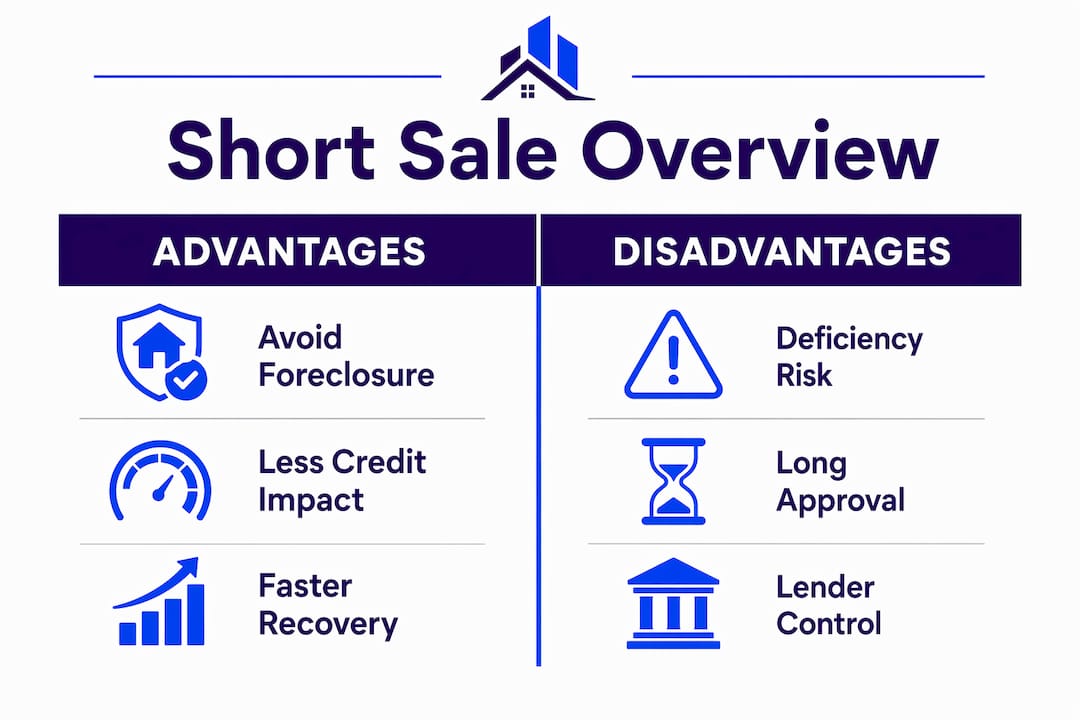
| Factor | Short sale | Foreclosure |
|---|---|---|
| Credit score impact | Significant but less severe | Severe, typically worse |
| Seller control over timing | Moderate, negotiated with lender | None, lender sets the schedule |
| Future mortgage eligibility | Waiting period of 2–7 years depending on loan type | Typically 7 years for conventional loans |
| Deficiency balance risk | Possible unless lender provides written waiver | Possible depending on state law |
| Emotional toll | High but manageable with professional support | High, often compounded by legal proceedings |
The credit impact of a short sale varies by loan type and lender guidelines. Freddie Mac notes that waiting periods before new mortgage eligibility range from 2–7 years, depending on circumstances. That is a long runway, but it is shorter than the seven years typically associated with foreclosure on a conventional loan.
The biggest hidden risk is the deficiency balance. If your lender does not forgive the gap between the sale price and your mortgage balance, you walk away from the closing table still owing money. Financial professionals consistently warn that sellers must verify deficiency forgiveness in writing before the sale closes. Assuming forgiveness without documentation is one of the most expensive mistakes a distressed homeowner can make.
How has the role of short sales changed in the current market?
Short sales peaked during and after the 2008 financial crisis, when millions of homeowners owed more than their homes were worth. The market has shifted dramatically since then. Short sales are far less common in 2026 because most homeowners now hold significant equity, making a traditional sale the obvious choice.
A few key points define where short sales stand today:
- Rising home values since 2012 have given most homeowners a cushion that makes being underwater on a mortgage relatively rare.
- Short sales remain a last-resort option for homeowners who bought at peak prices, took out large second mortgages, or experienced sharp local market declines.
- Lenders still prefer short sales over foreclosure because they recover more money faster and avoid the legal and maintenance costs of repossessing a property.
- The NAR recognizes short sales as a collaborative approach that minimizes losses for all parties when used appropriately.
For San Diego homeowners, the local market's strong appreciation over the past decade means short sales are genuinely rare. Most sellers here have options. But for those who do not, understanding the process and working with someone who knows it well makes all the difference. Check the San Diego housing trends to get a clear picture of where local equity levels stand right now.
Key Takeaways
A short sale is a lender-approved sale below the mortgage balance that avoids foreclosure, but it requires documented hardship, written deficiency waivers, and patience from both sellers and buyers.
| Point | Details |
|---|---|
| Lender controls the outcome | The lender approves the final sale price, limiting seller and buyer negotiation power. |
| Timeline is long | Short sales take 3–12 months to close, far longer than a standard 30–45 day sale. |
| Deficiency balance is a real risk | Get written confirmation that the lender forgives any remaining debt after the sale. |
| Credit impact is real but manageable | Short sales damage credit less than foreclosure, with mortgage waiting periods of 2–7 years. |
| Short sales are rare in 2026 | Rising home equity makes traditional sales the norm; short sales are a last-resort tool. |
What I have learned from watching sellers navigate short sales
Short sales expose a hard truth about real estate: the person whose name is on the deed is not always the one in control. I have watched sellers go into a short sale expecting to negotiate like a normal transaction, only to realize the lender holds every card. The sooner you accept that reality, the better your outcome will be.
The sellers who come out of this process in the best shape are the ones who communicate with their lender early, document everything obsessively, and hire an agent who has done this before. Waiting until you are three months behind on payments to start the conversation costs you time and options. Lenders respond better to proactive sellers than to ones already in default.
One thing I tell every homeowner considering this path: do not confuse "short sale" with "quick sale." The name is genuinely misleading. You are looking at months of waiting, multiple rounds of lender review, and the real possibility that a deal falls apart after you thought it was done. That is not a reason to avoid it. It is a reason to go in with clear expectations and a solid team around you.
The credit damage is real, but it is survivable. I have seen clients buy again within three to four years of a short sale when they managed the process correctly and rebuilt their finances deliberately. The goal is not to avoid all consequences. The goal is to choose the consequence you can recover from.
— Jeff
Working through a short sale in San Diego
Short sales are complex, and the margin for error is thin. Whether you are a homeowner trying to avoid foreclosure or a buyer who spotted a discounted listing, having the right agent changes the outcome.

Jeffsellssandiego works with both buyers and sellers on complex residential transactions throughout San Diego. If you are a buyer, the Buyer's Guide walks you through what to expect at every stage, including distressed property purchases. Sellers can find practical guidance in the Seller's Guide to understand all available options before committing to a path. When you are ready to see what is currently available, browse active San Diego listings to get a feel for the market and spot opportunities.
FAQ
What is a short sale in real estate?
A short sale is a home sale where the lender agrees to accept less than the outstanding mortgage balance to help the homeowner avoid foreclosure. The lender must approve the sale price before the transaction can close.
How long does a short sale take to close?
Short sales typically take 3–12 months to complete, compared to the standard 30–45 days for a traditional home sale. The delay comes from the lender's review and approval process.
Does a short sale hurt your credit score?
A short sale does damage your credit score, but less severely than a foreclosure. Depending on your loan type and lender, you may face a waiting period of 2–7 years before qualifying for a new mortgage.
Can a lender still collect money after a short sale?
Yes. Without a written deficiency waiver, the lender can pursue the difference between the sale price and the original loan balance. Always get written confirmation that the deficiency is forgiven before closing.
Is a short sale better than foreclosure?
A short sale gives the homeowner more control over timing and causes less credit damage than foreclosure. The NAR and Freddie Mac both recognize it as a less damaging exit strategy when used correctly.