
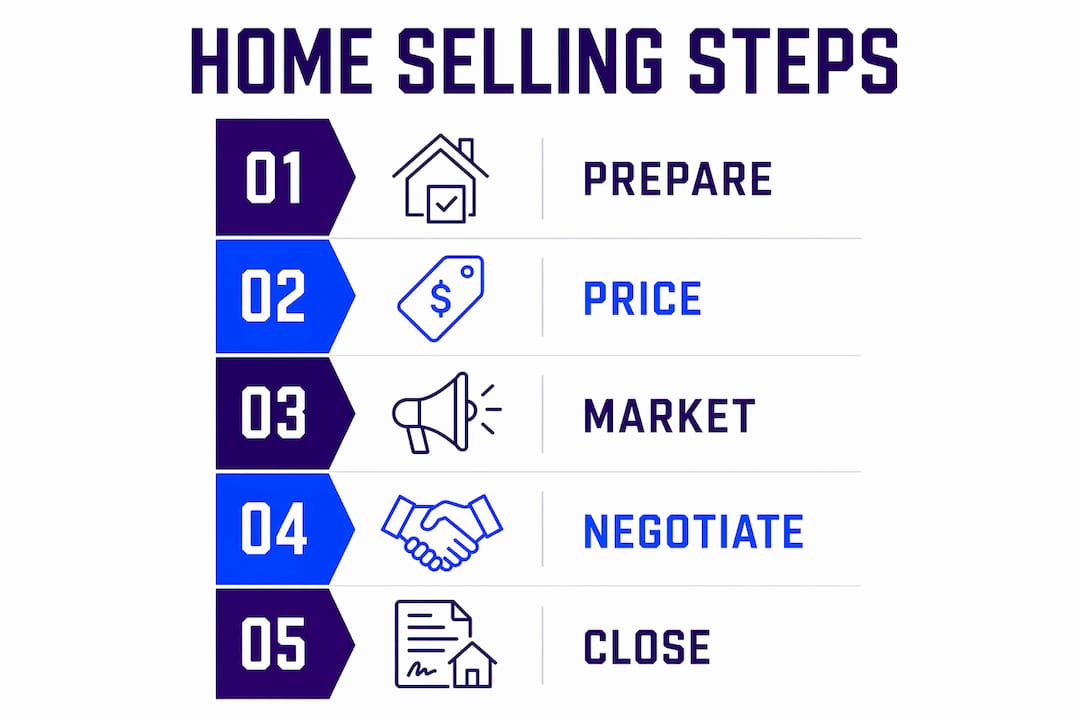
Selling your home is a process with eight distinct stages, from setting your timeline to handing over the keys, and the sellers who follow each step deliberately walk away with more money and fewer surprises. Knowing how to sell your house step by step means understanding that preparation, pricing, marketing, negotiation, and closing are all connected. Skip one and the others suffer. According to Bankrate, the full process runs from setting a timeline and hiring an agent through pricing, listing with professional photos, reviewing offers, and closing. This guide covers every stage with the specificity you need to execute it well.
How to sell your house step by step: planning your timeline
The single biggest mistake sellers make is starting too late. Starting prep 3 to 6 months early gives you time to declutter gradually, complete repairs without rushing, and hit the market in peak condition rather than scrambling to list before you are ready.
Pre-listing preparation tasks every seller needs to complete:
- Schedule a pre-sale home inspection. A pre-sale inspection costs a few hundred dollars and surfaces issues buyers will find anyway. Fixing them before listing removes negotiating leverage from the buyer's side.
- Declutter room by room. Donate, store, or discard items you will not move. Buyers need to see space, not your belongings.
- Complete deferred repairs. Leaky faucets, cracked tiles, and broken fixtures signal neglect. Address them before photos are taken.
- Deep clean every surface, including windows, grout, appliances, and baseboards.
- Improve curb appeal. Fresh mulch, trimmed hedges, and a clean front door create the first impression that pulls buyers inside.
- Depersonalize. Remove family photos, personal collections, and bold paint colors. Neutral, staged spaces let buyers picture their own lives in the home, which reduces objections and speeds decisions.
Pro Tip: Tackle decluttering one room per weekend starting three months out. This prevents the paralysis that comes from trying to sort an entire house in a single weekend before listing.
The pre-sale inspection deserves special attention. Most sellers skip it because they assume it costs money without a clear return. The opposite is true. Discovering a roof issue or electrical problem before listing lets you repair it, price around it, or disclose it on your terms. Buyers who find it first use it as a hammer in negotiations.
For sellers in San Diego, the guide on preparing your home for sale covers local-specific prep tasks that apply across neighborhoods.
Choosing your selling approach and setting the right price
The two most consequential decisions you make before listing are how you will sell and what you will ask. Get both right and everything downstream gets easier.
Agent-assisted vs. FSBO: what the comparison actually looks like
| Task | Agent-assisted | FSBO |
|---|---|---|
| Pricing strategy | Agent runs CMA, advises on list price | Seller researches comps independently |
| Marketing and MLS access | Agent lists on MLS, syndicates to Zillow and Realtor.com | Seller pays flat-fee MLS service for exposure |
| Showings and open houses | Agent schedules, hosts, and follows up | Seller manages all scheduling and access |
| Offer negotiation | Agent negotiates terms, contingencies, and credits | Seller handles all negotiations directly |
| Paperwork and legal docs | Agent and title company manage documents | Seller handles all legal documents independently |
| Closing coordination | Agent coordinates with lender, title, and escrow | Seller coordinates all parties |
FSBO saves the listing agent's commission, but it transfers every task in that table to you. For sellers with real estate experience, the tradeoff can work. For most homeowners, the time cost and risk of pricing errors outweigh the commission savings.
When choosing an agent, interview at least three. Ask each one for a comparative market analysis (CMA) based on recent sales within a half mile of your home. The CMA is the foundation of your pricing decision. Overpricing slows your sale and forces price reductions that signal desperation to buyers. Underpricing leaves real money on the table. The goal is a price that reflects current market conditions and generates competitive interest within the first two weeks.
Pro Tip: If your home sits without offers for more than 14 days at list price, the price is the problem. A 2 to 3 percent reduction applied early outperforms a larger reduction applied after 45 days on market.
What does marketing your home actually involve?
Marketing is where most sellers underinvest and where the gap between a good sale and a great one is created. Every buyer starts their home search online, which means your listing photos are your first showing. Low-quality photos cost you showings before buyers ever schedule a visit.

Hire a professional real estate photographer. In competitive markets like San Diego, drone photography adds aerial context that distinguishes your listing from others at the same price point. Your agent should provide professional photography as part of their service. If they do not, that is a signal about how they will handle the rest of the transaction.
Marketing and showing best practices:
- List on the MLS and confirm syndication to Zillow, Realtor.com, and Homes.com. FSBO sellers can access this through flat-fee MLS services that push listings to all major platforms.
- Write a listing description that leads with the home's strongest feature, not its address or square footage.
- Keep the home showing-ready at all times during the first two weeks. This is the highest-traffic window and the one that generates competing offers.
- Accept showing requests within two hours whenever possible. Delayed responses cause buyers to move on.
- Hold at least one open house in the first weekend on market to generate concentrated traffic and social proof.
- After each showing, ask your agent to collect buyer feedback. Patterns in feedback reveal pricing or presentation issues early.
Reviewing offers requires more than comparing dollar amounts. Evaluating contingencies, closing timelines, and buyer financing strength is as important as the offer price. A cash offer at 2 percent below asking with a 21-day close often beats a financed offer at full price with a 45-day close and an appraisal contingency. Your agent should model the net proceeds of each offer, not just the headline number.
What happens during closing and how do you prepare?
Closing is the finish line, but it requires active management. Sellers who treat it as automatic often face delays, surprise costs, and last-minute renegotiations.
- Organize your documents into a master folder. A well-organized master folder includes your deed, title report, disclosure forms, repair receipts, HOA documents, permits, and the purchase contract. Missing documents delay closing and create liability.
- Understand your closing costs before the final statement arrives. Agent commissions typically run 2.5 to 3 percent of the sale price on the listing side, plus transfer taxes, escrow fees, and any negotiated seller credits. Review the estimated net sheet your agent provides at the time of offer acceptance.
- Prepare for the buyer's inspection. Even with a pre-sale inspection completed, the buyer will conduct their own. Keep the home clean and accessible. Respond to repair requests with a clear counteroffer rather than refusing outright. Offering a credit at closing instead of completing repairs is often faster and less disruptive.
- Complete the final walkthrough. The buyer will walk through the property 24 to 48 hours before closing to confirm its condition matches the contract. Leave the home in the condition agreed upon, with all included appliances and fixtures in place.
- Coordinate your move-out with the closing date. Schedule movers 4 to 6 weeks before closing and arrange utility transfers to avoid overlap charges. Confirm your closing time so you can hand over keys the same day.
Pro Tip: Request a preliminary closing disclosure from the title company three to five days before closing. Reviewing it early gives you time to catch errors in fees or credits before you are sitting at the table.
For a detailed breakdown of what closing costs look like in San Diego, the closing costs guide breaks down each line item with local context.
Key takeaways
Selling your home successfully requires preparation starting months before listing, accurate pricing based on local comps, professional marketing, and organized documentation through closing.
| Point | Details |
|---|---|
| Start prep 3 to 6 months early | Early decluttering and repairs reduce stress and improve market presentation. |
| Price using a CMA | Comparative market analysis prevents overpricing, which stalls sales, and underpricing, which costs money. |
| Invest in professional photos | Every buyer searches online first; listing photos determine whether showings happen. |
| Evaluate offers on full terms | Contingencies, financing type, and closing timeline matter as much as the offer price. |
| Organize documents before listing | A master folder with all closing paperwork prevents last-minute delays and liability. |
What I've learned from watching sellers get this right and wrong
After working with sellers across San Diego, the pattern is consistent. The sellers who get the best outcomes are not always the ones with the nicest homes. They are the ones who treat the sale like a project with a timeline, a budget, and a plan.
The most common mistake I see is emotional pricing. A seller decides what they need from the sale and works backward to a list price, rather than letting the market data lead. That approach almost always ends in a price reduction and a longer time on market, both of which cost more than the original gap between what the seller wanted and what the market supported.
The second mistake is underestimating how much buyers notice during showings. A home that looks great in photos but feels cluttered or smells stale in person loses buyers fast. Presentation is not just about photos. It is about the experience of walking through the door.
What actually works is simple: start early, price honestly, hire people who know what they are doing, and stay organized through closing. Sellers who do those four things consistently walk away satisfied, even in slower markets. The sellers who cut corners on any one of them spend the next six months wishing they had not.
— Jeff
Ready to sell your San Diego home?
Jeffsellssandiego brings local market expertise, professional photography coordination, and hands-on guidance to every listing. Whether you are three months from listing or ready to go live next week, having the right support changes the outcome.

Browse the seller's guide for a full checklist of every step from pre-listing prep through closing. You can also explore the San Diego neighborhood guide to understand how your specific area is performing right now. When you are ready to talk through your timeline and pricing strategy, reach out to Jeffsellssandiego directly for a no-pressure consultation built around your goals.
FAQ
How long does it take to sell a house?
The full process from preparation to closing typically takes 3 to 6 months, depending on market conditions, your prep timeline, and how quickly you find a buyer. In active markets like San Diego, well-priced homes often go under contract within two weeks of listing.
What should I do before listing my house?
Complete a pre-sale inspection, declutter, make necessary repairs, deep clean, stage the home, and gather all ownership documents. Starting this process 3 to 6 months before your target list date gives you enough time to do it properly.
Is it worth hiring a real estate agent to sell my home?
For most sellers, yes. An agent provides pricing expertise, MLS access, negotiation support, and closing coordination that FSBO sellers must handle independently. The commission cost is typically offset by a higher sale price and fewer transaction errors.
What are typical closing costs for a seller?
Sellers typically pay agent commissions of 2.5 to 3 percent of the sale price on the listing side, plus transfer taxes, escrow fees, and any negotiated repair credits. Reviewing your estimated net sheet at the time of offer acceptance prevents surprises at closing.
How do I price my home correctly?
Ask your agent for a comparative market analysis using recent sales within a half mile of your property. Price in line with what similar homes have actually sold for, not what they were listed at. Homes priced accurately from day one sell faster and closer to asking price than homes that start high and reduce later.