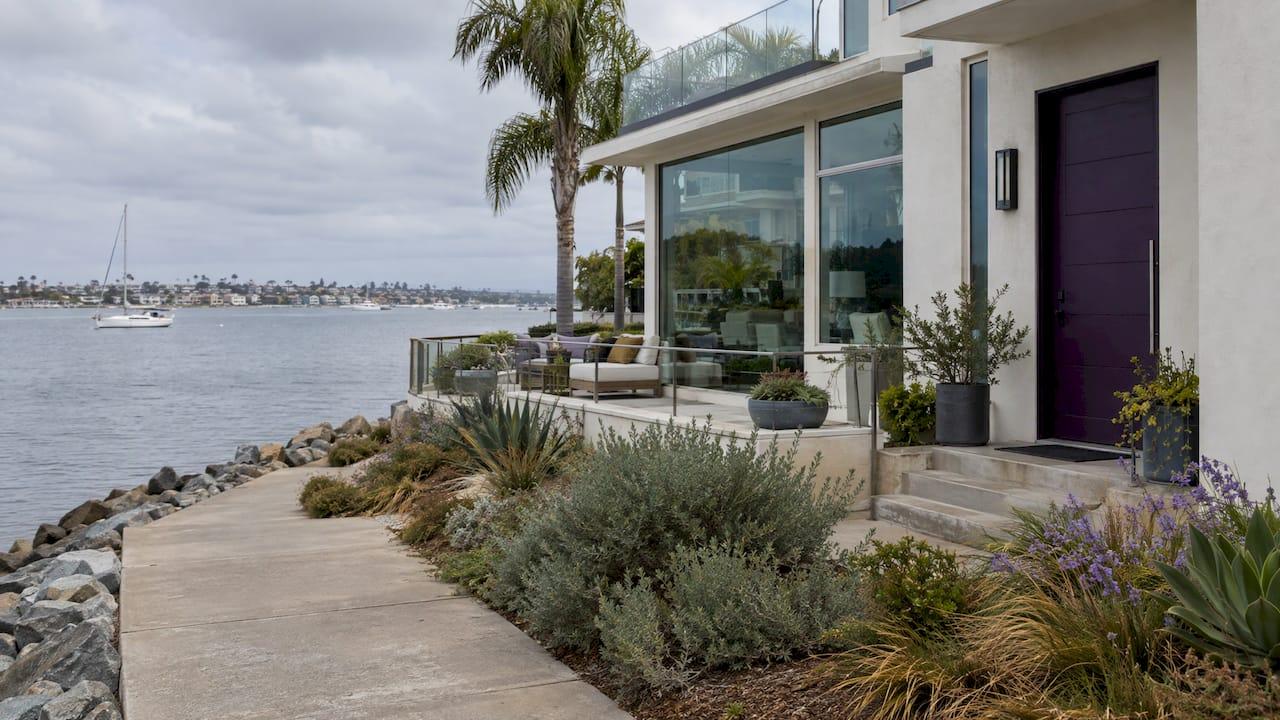
Waterfront living in San Diego means very different things depending on the water. An oceanfront cottage in Ocean Beach, a bayside home in Point Loma, a canal-side condo in Mission Beach and a river-view property in the county's inland valleys each come with their own price, their own maintenance and their own risk profile. The right choice starts with matching the setting to how you want to live, then checking the flood, erosion and insurance facts for the specific parcel before you write an offer. If you are buying or selling on the water, a local agent who knows these neighborhoods and these checks makes the process far less guesswork. That is the work we do every day at Jeff Sells San Diego.
TL;DR
- "Waterfront" in San Diego covers ocean, bay, harbor, lagoon, canal and river settings. Each has different views, noise, access and hazards.
- Coastal flooding and bluff erosion are officially recognized concerns for the city's coastline, and standard homeowners policies generally exclude flood and gradual erosion.
- Before you buy, check the flood zone, the erosion history, insurance quotes and the required local disclosures for the exact address.
- Before you sell, expect buyers to ask about the same items, so get the documents and a realistic valuation ready first.
- A local agent can narrow neighborhoods to your lifestyle and keep hazard checks on schedule.
Table of Contents
- What waterfront and coastal living mean in San Diego
- Neighborhoods to know
- The risks that come with the view
- If you are buying on the water
- If you are selling a waterfront or coastal home
- Work with a San Diego agent who knows the shoreline
- Our perspective
- FAQ
- Sources
What waterfront and coastal living mean in San Diego
People use "waterfront" and "coastal" loosely, and listings stretch the words further. It helps to sort the market by the kind of water you are next to.
Oceanfront and beachfront. These homes sit on the sand or on a bluff above the Pacific. You get surf sounds, sunsets and direct beach access, along with salt air, wind, foot traffic in busy beach towns and the highest exposure to waves and erosion. Neighborhoods such as Mission Beach, Pacific Beach, Ocean Beach, La Jolla, Del Mar and Solana Beach are the names buyers most often start with.
Bayfront and harborfront. San Diego Bay and the smaller bays and harbors have calmer water, boating, marina views and often a more residential feel. The City's Peninsula Community Plan describes a roughly 7 square mile area bounded by the Pacific on the west and south and by San Diego Bay and port tidelands on the east. It includes La Playa, Sunset Cliffs, Liberty Station and Shelter Island, so one community can offer both ocean and bay settings a few minutes apart.
Lagoon, canal and river settings. Several county communities sit beside lagoons or river corridors. These homes can cost less than a beachfront address, and they trade a surf view for water views and trails. They also sit in some of the mapped floodplain areas, which matters for insurance.
Coastal, not waterfront. Many buyers searching for coastal living are happy with a home a few blocks from the sand, or with an ocean view from a hillside. You get the climate and lifestyle without owning the shoreline risk. This is often the sweet spot for budget and peace of mind, and it is worth asking yourself early whether you need to be on the water or simply near it.
Neighborhoods to know
The best neighborhood is the one that fits your daily routine. A few reference points, with what the official sources say:
Ocean Beach. The City's Ocean Beach Community Plan describes 642 acres of mostly low- and medium-density residential area, split into North Ocean Beach, South Ocean Beach and The Hill, with commercial streets along Newport Avenue, Voltaire Street and Point Loma Avenue. In practice that means a walkable, small-scale beach town. You can read more on our Ocean Beach page.
Point Loma. Sunset Cliffs, Shelter Island, Cabrillo National Monument and Liberty Station all fall within the same planning area, which gives buyers cliffs, bay and harbor options in one place. See our Point Loma real estate page.
Del Mar. The official San Diego travel resource describes two miles of coastline in Del Mar, family- and dog-friendly beaches, and the fairgrounds and racetrack. It also says the cliff trails there can be unstable, a useful reminder that bluff-top living has its own considerations.
Downtown and the waterfront core. If you want a condo with bay views, restaurants and transit nearby, our downtown San Diego page is the place to start.
To compare lifestyles side by side, our guide to beach communities in San Diego walks through which one fits which kind of buyer, and our explore areas page covers the rest of the county.
The risks that come with the view
A good waterfront purchase is one where the buyer knows the hazards before the offer, not after. Four topics matter most.
Flood zones and flood insurance
The County's Floodplain Management Plan explains that the 1% annual-chance flood, sometimes called the base flood or 100-year flood, defines the Special Flood Hazard Area, and that properties in it require flood insurance when they carry a federally backed mortgage. A 1% annual chance does not mean once in a hundred years. It means a 1 in 100 chance in any given year, which adds up over a 30-year loan.
On the open coast, FEMA's San Diego County Flood Insurance Study maps a high-risk coastal category called Zone VE. It is drawn using the same 1% condition and includes dune, wave runup and wave overtopping zones, with base flood elevations shown on the flood map.
Two practical points. First, flood coverage is a separate policy from homeowners insurance, available through the National Flood Insurance Program or private carriers. Second, a new flood policy usually does not take effect the day you buy it, so build in time. Our guide to the 30-day waiting period for flood insurance explains how to schedule it around closing. To see what a seller's disclosure packet looks like, the natural hazard disclosure report is one document that flags whether a California property sits in a mapped hazard area.
To check a specific address, use official maps rather than listing descriptions. We lay out the process in three official maps to check for San Diego flood zones.
Bluff erosion and sea-level rise
The City of San Diego's Climate Change Vulnerability Assessment calls coastal flooding and erosion a primary concern for the city's seventeen miles of coastline. It notes that soft sandstone bluffs are especially prone to erosion from waves and storm-water runoff and names Sunset Cliffs, La Jolla Cove and Torrey Pines as long-standing problem areas.

The same document reports that sea level rose 0.71 feet in San Diego during the 20th century. Based on California Coastal Commission guidance from November 2018, it lists possible rise of 0.6 to 1.1 feet by 2030, 1.2 to 2.8 feet by 2050, and 3.6 to 10.2 feet by 2100. These are planning ranges that agencies revise as science develops, so read them as context for a long ownership horizon rather than a forecast for a single street.

For a buyer, the useful questions are address-specific. How far is the home from the bluff edge? Has there been shoreline work, and was it permitted? Is there a history of repairs to a seawall or stairway? A long-standing record of stable conditions is a strong asset to be able to show later when you sell.
Insurance and lending
Standard homeowners policies typically exclude flood and gradual erosion, and the county floodplain plan points to flood coverage as a separate purchase. Where erosion is active, some insurers price differently and some lenders limit loans. The practical step is simple: get insurance quotes and talk to your lender before you remove contingencies, not after. A home that is easy to insure and finance is also easier to resell.
Local rules and required disclosures
Coastal development in the county follows the California Coastal Act of 1976. The County's Local Coastal Program Implementation Plan aims to minimize hazards from flooding, sea-level rise and geologic instability, to encourage public access and to preserve coastal vistas. In plain terms, remodels, additions and shoreline structures near the water may need extra permits, so ask about the rules before you plan a project.
You will also see the Local Area Disclosures that Realtor associations publish. The 2023 San Diego County edition warns that coastal properties can be affected by erosion and coastal flooding and points buyers to NOAA's Sea Level Rise Viewer, a map tool that shows community-level flooding predictions up to 10 feet above average high tides. Read it with your agent, address in hand.
Two more hazard checks sometimes come up for coastal buyers: tsunami risk in San Diego and earthquake fault zone maps. Both are quick to review when you know where to look.
If you are buying on the water
A good search for a waterfront or coastal home usually runs in this order:
- Define the setting. Decide whether you want sand underfoot, a bay view, a marina or simply a coastal lifestyle a few blocks inland. This one choice changes your budget more than any other.
- Set the full monthly cost. Include the mortgage, property taxes, homeowners insurance, a flood quote if the address needs one, and any association dues for condos and gated communities.
- Shortlist by daily life. Consider commute, parking, beach crowds, noise, and whether you want a lively boardwalk area or a quiet residential street.
- Check the address, not the neighborhood. Flood zones, bluff setbacks and permit history vary lot by lot.
- Review disclosures and inspections. Salt air can be hard on metal, wood and finishes, so ask inspectors to look at exterior surfaces, drainage, decks and foundations closely.
- Plan the insurance timeline. Line up quotes early so closing is not delayed.
Our Buy With Confidence service is built around this kind of step-by-step guidance from the first showing through closing. If you want listings that match a specific neighborhood and setting, our VIP Home Search delivers personalized listings so you see properties that fit your criteria, and you can browse current San Diego homes for sale any time.
If you are selling a waterfront or coastal home
Waterfront buyers are informed buyers, and they will ask the same questions this article raises. Preparing answers in advance protects your price and your timeline.
- Gather the paperwork. Collect flood zone information, any insurance history, permits for decks, docks, seawalls or additions, and records of drainage or foundation work.
- Price for the exact setting. A beachfront home, a bay-view home and a home four blocks inland are not comparable, even in the same ZIP code. A valuation should use comparable sales that match your water frontage, view and lot.
- Present the lifestyle. Light, views, outdoor space and walkability are what buyers are paying for, so marketing should show them well.
- Be upfront about hazards. California requires sellers to make disclosures, and a clear, organized packet builds buyer confidence and keeps negotiations on track.
A good first step is a home valuation to see where your property sits in the market. Our Sell With Strategy service covers localized market analysis, strategic marketing and negotiation through closing.
Work with a San Diego agent who knows the shoreline
If waterfront living is the goal, whether you are buying your first place by the sea or selling a home you have loved for years, we can help you move with a clear picture of the neighborhood, the numbers and the hazard checks. We offer Buy With Confidence for buyers and Sell With Strategy for sellers, built on more than two decades of San Diego-focused experience, and we make ourselves available when you need us.

To start, tell us which neighborhoods and water settings you are considering, or request a home valuation for your current home. You can also reach us through our main site.
Our perspective
The most common mistake we see in waterfront decisions is falling in love with the view before understanding the address. The view is real, and so are the flood map, the bluff setback and the insurance quote. Neither one should be a surprise at the closing table.
Our approach is to start with how you want to live. Some clients want to hear the surf from the bedroom. Others want a bay-view condo with a short walk to dinner, or a home a few blocks inland with an easy path to the beach. Once that is clear, we narrow the neighborhoods, build the search around them and keep the hazard checks, disclosures and insurance timing moving alongside the negotiation.
For sellers, the same rules apply in reverse. A well-documented property with a realistic price and strong marketing gives buyers the confidence to commit. We bring calm, precise support from the first conversation through closing, because a coastal purchase or sale is both an emotional and a financial decision.
Jeff
FAQ
What is the difference between waterfront and coastal living in San Diego?
Waterfront means the property touches or directly faces water, such as the ocean, a bay, a lagoon or a river. Coastal living is broader and includes homes near the water, with the climate and lifestyle but not necessarily the shoreline. Waterfront homes usually bring more exposure to flooding and erosion, so the two are often priced and insured differently.
Do I need flood insurance for a San Diego waterfront home?
It depends on the address. Per the county floodplain plan, properties in a Special Flood Hazard Area require flood insurance when they have a federally backed mortgage. Standard homeowners policies generally exclude flood, so coverage is bought separately. Check the official flood maps for the exact address and get a quote before closing.
Which San Diego neighborhoods are known for waterfront living?
Buyers commonly look at Ocean Beach, Point Loma, Mission Beach, Pacific Beach, La Jolla, Coronado, Del Mar and Solana Beach, along with downtown for bay views. Each has a different pace and price range, so start with the setting and lifestyle you want and narrow from there.
What should I prepare before selling a waterfront home?
Gather permits, flood zone details, insurance history and records of any shoreline, drainage or foundation work. Then get a valuation based on comparable sales with similar frontage and views. Organized documents help buyers feel confident and keep the sale moving.
Sources
- Peninsula Community Plan, City of San Diego
- Ocean Beach Community Plan, City of San Diego
- Guide to Del Mar Beaches, Official San Diego Travel Resource
- Floodplain Management Plan, County of San Diego
- Flood Insurance Study Report, FEMA, December 2019
- Climate Change Vulnerability Assessment, City of San Diego, February 2020
- Local Coastal Program Implementation Plan, County of San Diego
- 2023 San Diego County Local Area Disclosures