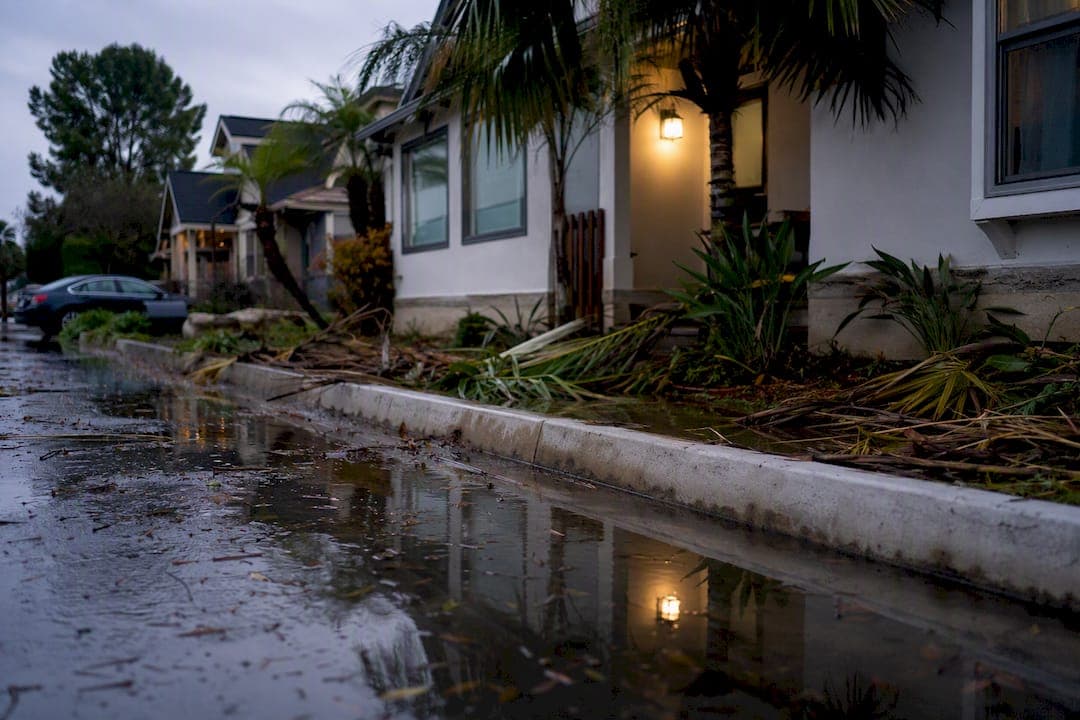
If you own property in a FEMA-designated high-risk flood zone with a federally backed mortgage, flood insurance is not optional. Even outside those zones, San Diego homeowners should seriously weigh coverage, since a large share of local flood claims come from areas maps never flagged as dangerous. Your two main paths are a National Flood Insurance Program policy or a private flood policy. Start by checking your address on FloodSmart and requesting quotes now, since new policies carry a 30-day waiting period before coverage kicks in.
TL;DR:
- Flood insurance is mandatory for properties in FEMA high-risk zones with a federally backed mortgage, but most claims in San Diego come from lower-risk zones like X.
- Private flood policies often offer higher coverage limits and loss-of-use protection at lower prices than NFIP, especially in lower-risk areas.
- Flood premiums vary widely based on zone, elevation, and property value, with higher-value homes near coast or canyons requiring private or excess coverage beyond NFIP caps.
- An Elevation Certificate and accurate flood zone map are essential for reducing NFIP premiums and confirming if current flood zone designations are up-to-date.
- Homeowners should proactively verify flood risk before transactions, request multiple quotes, and document property conditions to improve claim chances if flood damage occurs.
Table of Contents
- How does flood insurance work in San Diego?
- Private flood insurance vs. NFIP: which fits your home?
- Who actually needs flood insurance in San Diego?
- How to get flood insurance in San Diego: a step-by-step checklist
- San Diego's flood risk, recent storms, and local discounts
- What does flood insurance cost in San Diego?
- Which documents affect your flood insurance rate?
- What should you check before renewing or buying a policy?
- What should buyers and sellers know about flood risk in a transaction?
- What San Diego homeowners get wrong about flood risk
- How Jeff helps San Diego buyers and sellers navigate flood risk
- Sources
How does flood insurance work in San Diego?
The National Flood Insurance Program is run by FEMA and sold through a network of more than 47 insurers plus NFIP Direct. Coverage splits into building property and contents, and it pays out based on physical flood damage, not loss-of-use or temporary housing costs while your place dries out.
NFIP building and contents coverage have federally set maximum limits. That's a hard ceiling regardless of what your home is actually worth, which matters a lot in a market where a modest San Diego bungalow can exceed $900,000. Rates are tied directly to your FEMA flood zone designation, elevation, and building type. One detail trips up a lot of buyers: coverage doesn't start the day you sign. NFIP policies typically have a waiting period before coverage takes effect, so buying insurance shortly before a storm may not provide immediate protection.
Private flood insurance vs. NFIP: which fits your home?
Private carriers often beat NFIP on flexibility. They can write higher limits than the federal $250,000/$100,000 caps, and many include loss-of-use coverage that pays for a rental while your home is repaired, something NFIP simply doesn't offer.
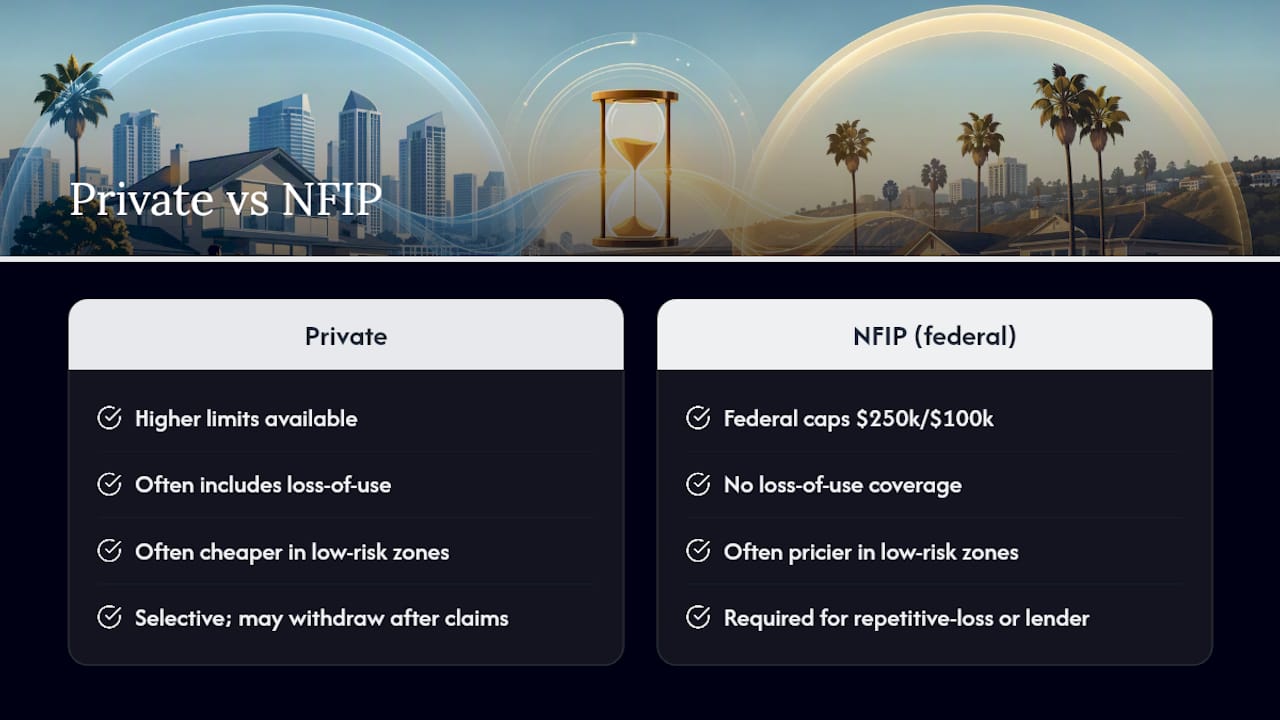
Local brokers report that private policies frequently price lower than NFIP in San Diego's lower-risk zones, since private insurers can be more selective about the risk they take on. NFIP still makes sense, or is required, for repetitive-loss properties, homes where a lender mandates it, or in neighborhoods where private insurers have pulled back after prior claims. The smart move is pulling quotes from both channels before you commit; private brokers writing California flood policies can usually run both side by side. Pay attention to how a carrier treats renewals after a claim, since that's where private policies sometimes get shaky.
Who actually needs flood insurance in San Diego?
FEMA flood zone maps sort properties into categories like AE and V, which mark high-risk Special Flood Hazard Areas, versus Zone X, which covers moderate to low risk. If your property sits in an SFHA and carries a federally backed mortgage, your lender is legally required to make you carry flood insurance for the life of the loan.
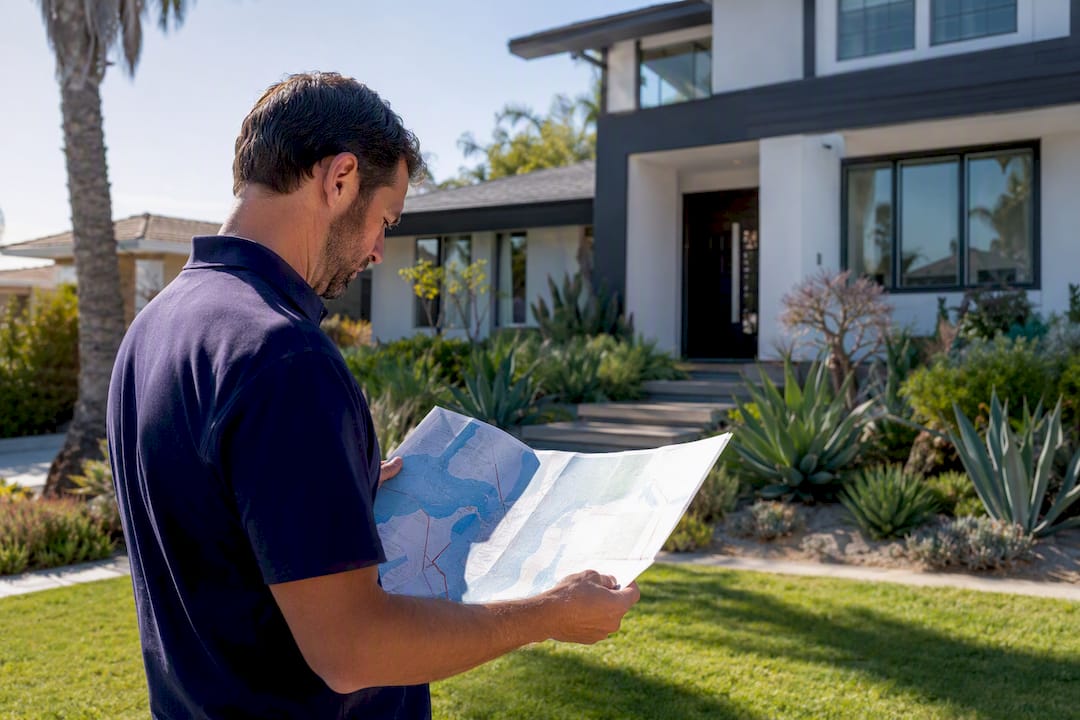
Here's the part most homeowners miss: a meaningful share of flood claims nationally come from Zone X properties, land the map never labeled dangerous. Storm water doesn't read FIRM panels; it follows drainage patterns, canyon runoff, and street grading that maps update on a lag. Before you decide coverage isn't worth it, pull your property's FIRM panel and check what your lender actually requires versus what's simply smart to carry voluntarily.
How to get flood insurance in San Diego: a step-by-step checklist
Buying coverage the right way takes a bit of sequencing, especially with that 30-day clock running.
- Look up your address on the FloodSmart provider lookup tool or FEMA's map service to see your official flood zone.
- Gather your documents: property address, mortgage lender info, an Elevation Certificate if one exists, and any prior claims history.
- Request an NFIP quote through an agent or NFIP Direct, and get at least one private-market quote for comparison.
- Note the 30-day waiting period. Exceptions exist for loans closing on federally backed mortgages and for certain map-change situations, so ask your agent directly.
- Purchase the policy, then save a copy along with your carrier's claims contact information somewhere you can find it during a storm, not after.
San Diego's flood risk, recent storms, and local discounts
San Diego's flood risk comes from atmospheric rivers dumping rain fast, runoff funneling through canyon and creek corridors, and coastal surge stacking on top of king tides. None of that respects a flood map drawn years earlier.
The January 2024 storms made that painfully literal. Local reporting on the aftermath found that many flooded homes sat outside FEMA's highest-risk zones, and standard homeowners policies didn't cover a dime of the water damage. That gap is exactly why flood coverage and a standard homeowners policy are two separate products, not overlapping ones.
Some good news on cost: communities that participate in FEMA's Community Rating System earn premium discounts for floodplain management efforts like better drainage maintenance and stricter building codes. Ask your agent or check with San Diego County's floodplain program whether your neighborhood qualifies.
What does flood insurance cost in San Diego?
Premiums vary widely based on zone, elevation, and building type, so treat any number here as a planning range, not a quote.
Quick reference: Homes in Zone X (preferred risk) tend to see the lowest premiums, moderate-risk areas fall in the middle, and high-risk zones like AE or V carry the steepest rates, largely because FEMA and private insurers price directly against flood zone, elevation above base flood level, prior claims history, and available CRS discounts.
Your replacement cost matters too. A home valued well above the $250,000 NFIP building cap needs either a private policy or an excess flood endorsement to close the gap, otherwise you're covering the difference out of pocket after a total loss. That's the single biggest reason higher-value San Diego properties, especially in coastal or canyon-adjacent neighborhoods, tend to end up in the private market rather than sticking with NFIP alone.
Which documents affect your flood insurance rate?
Your FIRM panel (Flood Insurance Rate Map) is the official document that sets your zone designation and determines whether a lender requires mandatory purchase. You can pull yours through FEMA's map service center.
An Elevation Certificate documents how high your structure sits relative to base flood elevation, and it's frequently the single most useful document for lowering NFIP premiums on coastal or river-corridor homes. City of San Diego floodplain management procedures require one for new construction or substantial improvements in Special Flood Hazard Areas.
If your property's flood status seems wrong, a LOMR or CLOMR (Letter of Map Revision, or Conditional version for planned work) can formally change your official zone, which can shift both your mandatory purchase status and your rate.
What should you check before renewing or buying a policy?
A policy that technically exists isn't the same as one that actually protects you. Before you sign or renew, run through this list with your agent:
- Confirm whether you're covered for building only, contents only, or both.
- Ask whether the payout is replacement cost or actual cash value; the second one factors in depreciation and pays out less.
- Read the mold-remediation language closely, since experts recommend reviewing water-damage endorsements before storm season, not after a claim gets denied.
- Check for debris removal coverage and ordinance-or-law coverage, which pays for code-required upgrades during rebuilding.
Pro Tip: Photograph every room of your home now, before any storm, and keep receipts for major purchases in a cloud folder. Insurers move faster on claims when you can prove what you owned and what it was worth.
What should buyers and sellers know about flood risk in a transaction?
Buyers should verify a property's flood zone before writing an offer, request any existing Elevation Certificate, and budget above NFIP's caps if the home's value justifies a private or excess policy. Sellers, meanwhile, should disclose known flood history honestly. It's part of the broader disclosure obligations that protect both sides of the deal, and having an Elevation Certificate on hand can actually smooth negotiations rather than scare buyers off.
Part of representing either side well means coordinating local risk checks early, not after inspection deadlines are looming, and connecting clients with licensed flood insurance brokers who know San Diego's specific zones and CRS-participating communities. For homeowners seeking a foundational understanding, Floodplains Explained: What Every Homeowner Needs to Know offers a clear primer on floodplain definitions and implications.
What San Diego homeowners get wrong about flood risk
Most advice on flood insurance treats it as a binary: you're in a high-risk zone, buy it, or you're not, skip it. That framing is outdated the moment you look at what actually happened in San Diego in January 2024, when properties in Zone X, the supposedly low-risk designation, took on water anyway.
The conventional wisdom also overweights the FEMA map as a static truth. Maps get revised through LOMR and CLOMR processes, drainage infrastructure ages, and canyon runoff patterns shift after wildfire burns upstream vegetation. A map from a decade ago tells you less than most homeowners assume.
If I had to rank priorities for a San Diego homeowner right now, it's this: pull your FIRM panel first, get an Elevation Certificate if you're anywhere near a creek corridor or coastal bluff, then get two quotes, NFIP and private, before assuming either one is the obvious choice. The homeowners caught worst in recent storms weren't reckless. They were relying on a map that hadn't caught up to the water.
— Jeff
How Jeff helps San Diego buyers and sellers navigate flood risk
Figuring out whether a property carries real flood exposure, and what that means for your offer or your listing price, isn't something a FEMA map alone answers well.
Jeffsellssandiego works alongside buyers and sellers across San Diego County to check neighborhood-level flood history, walk through what an Elevation Certificate actually tells you, and connect clients with licensed local flood insurance brokers for real quotes. This is agent-side guidance woven into your transaction, not an insurance sales pitch. If you're searching for a home and want flood risk factored into your search from day one, start with the current San Diego listings or reach out directly to talk through a specific address before you make an offer.
Sources
- Fema
- Sandiegocounty
- What homeowners need to know about flood insurance in San Diego | CBS8
- Californiafloodinsurance