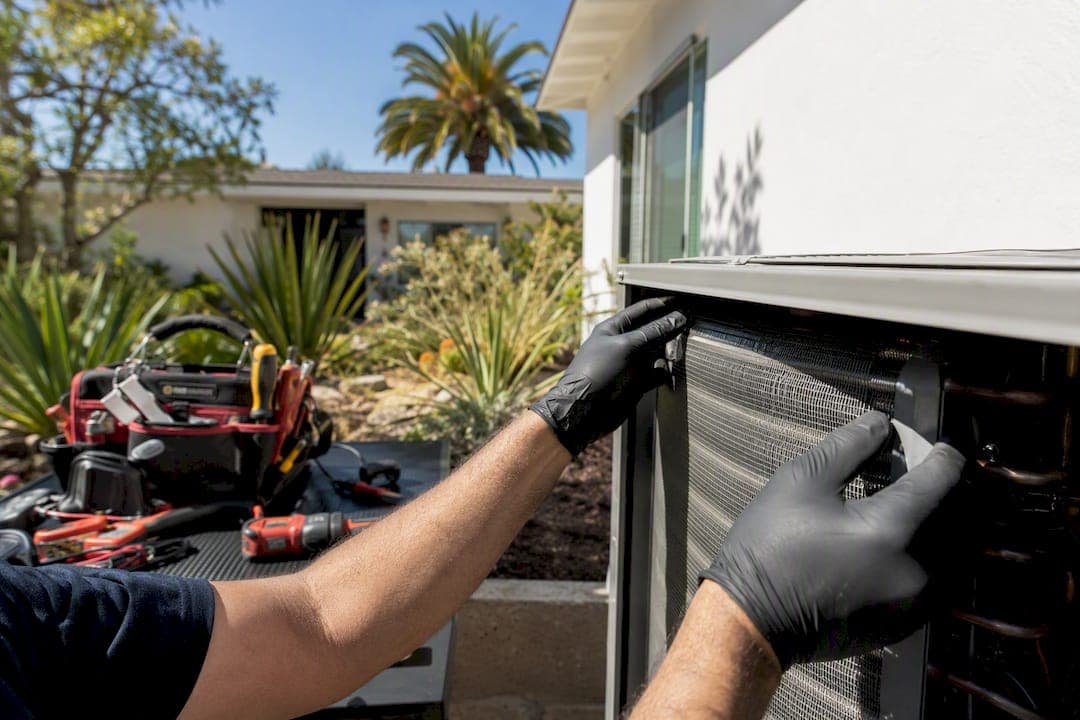
A San Diego home warranty makes the most sense for buyers without a large cash cushion, anyone purchasing a home older than 15 years, and owners inheriting a pool, spa, or heavily used HVAC system. It's a service contract that pays for repair or replacement of systems and appliances that fail from normal wear, which is a completely different product from homeowners insurance covering fire, theft, or storm damage. Before you sign anything, pull out your inspection report and ask your agent or the escrow officer whether the seller will throw in a warranty as part of the deal.
- Check the inspection report for aging HVAC, water heater, or electrical systems first.
- Ask about seller-paid warranty concessions before you write your offer.
- Confirm the effective date so coverage starts at move-in, not weeks later.
Key Takeaways
A San Diego home warranty pays off when coverage caps, service fees, and workmanship guarantees are checked against your home's actual systems before you buy, not after something breaks.
| Point | Details |
|---|---|
| Know the real distinction | A home warranty covers wear-and-tear failures on systems and appliances; homeowners insurance covers perils like fire or theft. |
| Watch the fee tradeoff | A higher service fee often lowers your premium, but frequent claims can erase that savings fast. |
| Prioritize local add-ons | Salt air, pools, and heavy A/C use make pool/spa coverage and HVAC tune-ups worth the extra cost in San Diego. |
| Confirm timing before closing | Verify the effective date and transfer terms on any seller-provided warranty so coverage starts when you move in. |
| Get local, transaction-level help | Jeffsellssandiego folds warranty review into inspection coordination and negotiation for San Diego buyers. |
Table of Contents
- What Does a San Diego Home Warranty Actually Cover?
- How Much Does a Home Warranty Cost in San Diego?
- Why Local Conditions Change Which Coverage You Need
- How to Compare San Diego Home Warranty Plans
- When Should You Buy a Home Warranty During Your Purchase?
- Warning Signs That a Home Warranty Won't Deliver
- How I Handle Home Warranty Decisions With San Diego Buyers
- Get Warranty Guidance Built Into Your San Diego Home Purchase
- Sources
What Does a San Diego Home Warranty Actually Cover?
Most plans split coverage into two buckets: systems and appliances. Systems typically include your HVAC unit, plumbing lines, electrical wiring, water heater, and garage door opener. Appliance coverage usually adds the refrigerator, oven, dishwasher, and washer and dryer, though some entry-level plans charge extra for laundry machines.
Exclusions trip up more homeowners than anything else in the contract. Pre-existing conditions are almost never covered, meaning if an inspector flagged a failing water heater before closing, don't expect a warranty to pay for its replacement six months later. Poor maintenance history, purely cosmetic damage, and mandatory code upgrades triggered by a repair also fall outside standard coverage.
For San Diego specifically, three add-ons deserve real consideration:
- Pool and spa equipment — pumps, heaters, and filtration systems, often excluded from base plans.
- Roof-leak coverage — useful given the region's aging tile and shingle roofs.
- Outdoor fixtures and HVAC tune-ups — helpful given how hard air conditioners work through San Diego's dry summer stretch.
Pro Tip: Read the "systems vs. appliances" breakdown line by line before you buy. A plan that looks cheap upfront can exclude your pool equipment entirely, which is exactly the coverage a San Diego buyer is most likely to need.
How Much Does a Home Warranty Cost in San Diego?
A home warranty has two separate price tags: the premium and the service fee. The premium is what you pay monthly or annually just to hold the contract. The service fee, sometimes called a trade call fee, is what you pay every time a technician shows up to diagnose a problem, regardless of whether it's actually covered.

Raising your service fee usually lowers your premium, and vice versa. Choosing a $125 service fee over a $65 one might save you $10 to $15 a month, but if you file four claims in a year, that math flips fast.
Coverage caps matter just as much as the fees. Most contracts set a per-item limit, sometimes $1,500 to $3,000 for a system like HVAC, and if the actual repair or replacement costs more, you cover the difference out of pocket.
Industry pricing summaries put California service fees in the $65 to $125 range, with monthly premiums shifting based on how many add-ons you select. Waiting periods before you can file a first claim commonly run around 30 days, though some sellers negotiate faster activation for buyer-side plans.
- Premium: what you pay to hold the contract, monthly or annually.
- Service fee: what you pay per visit, win or lose on the claim.
- Coverage cap: the ceiling on what the provider pays per item.
Why Local Conditions Change Which Coverage You Need
San Diego's climate isn't gentle on home systems the way its reputation suggests. Coastal neighborhoods deal with salt air that corrodes exposed metal components, especially pool pumps and outdoor A/C units, faster than inland homes ever experience. If you're buying near the coast, ask specifically whether outdoor fixtures and pool equipment fall under your base plan or require an add-on.
Inland or not, air conditioners in San Diego run hard for months at a stretch, which makes HVAC coverage and scheduled tune-ups worth the extra line item rather than a throwaway upsell.
- Salt air accelerates corrosion on pool pumps and A/C components near the coast.
- Heavy A/C use through warm months raises the odds of an HVAC claim.
- Pools and spas are common enough locally that add-on coverage is rarely wasted money.
- Older housing stock often carries pre-existing condition clauses that limit what a warranty will actually pay.
How to Compare San Diego Home Warranty Plans
Start by inventorying what you'd actually hate to pay for out of pocket. Walk through the inspection report and list every system or appliance older than 10 years. That list becomes your filter for every quote you get.
- Compare per-item caps against replacement cost. A $2,000 cap on a water heater that costs $2,800 installed still leaves you $800 short.
- Check the annual coverage limit, not just the per-item number. Multiple claims in one year can hit a ceiling fast.
- Match the service-fee tier to your risk tolerance. A higher fee with a lower premium favors buyers who rarely file claims.
- Confirm the workmanship guarantee length. Guarantees range roughly from 60 to 180 days across providers, and a shorter window leaves you exposed if a repair fails after the fact.
- Ask about the local technician network. A provider with a thin San Diego contractor base means longer waits when your A/C dies in August.
- Get direct answers on transferability, start date, cancellation terms, and named exclusions before you sign anything.
Reviews of major providers show real differences worth asking about by name: some offer wider per-item coverage limits, others lean on stronger workmanship guarantees, and a few compete mainly on price, according to comparative provider reviews. That list commonly includes Liberty Home Guard, American Home Shield, 2-10 Home Warranty, Choice Home Warranty, Old Republic Home Protection, Select Home Warranty, Cinch Home Services, and First American Home Warranty, each with its own mix of caps, add-ons, and service territories.
Pro Tip: Ask any warranty rep directly, "What happens if the same appliance fails twice in one year?" Their answer tells you more about claim-handling quality than any brochure will.
When Should You Buy a Home Warranty During Your Purchase?
The strongest timing move is during escrow, either by negotiating a seller-paid warranty or lining up your own plan to start the day you close. Sellers frequently offer a short-term home warranty as a concession to smooth negotiations, particularly in a competitive market where buyers are asking for repairs.
Before you count on that seller-provided plan, confirm two things: the effective date, so you're not paying out of pocket for a system failure in the gap between closing and activation, and whether the contract transfers automatically to you as the new owner. Some plans require a written transfer request within a set window after closing.
- Ask whether the seller's warranty transfers automatically or requires paperwork.
- Confirm the exact activation date, since many contracts carry a 30-day waiting period.
- Get the transfer terms in writing before your final walkthrough.
Warning Signs That a Home Warranty Won't Deliver
Vague exclusion language is the biggest red flag in any contract. If a plan buries "lack of proper maintenance" without defining what that means, expect it to get used against your claim later.
Watch for coverage caps so low they barely dent a real repair bill, workmanship guarantees under 30 days, and providers that rely on a thin bench of out-of-network contractors. Aggressive upsell pitches the moment you file a claim, paired with slow or vague communication about your case status, usually predict a frustrating renewal year ahead.
- Exclusion language that's too vague to interpret before you need it.
- Coverage caps that guarantee a large out-of-pocket balance on any real replacement.
- Workmanship guarantees under 30 days or a contractor network that's thin locally.
- Upsell pressure during the claim process instead of a straight answer.
How I Handle Home Warranty Decisions With San Diego Buyers
I lean toward asking sellers for a short-term warranty when a home's systems are aging but the seller has leverage in negotiations, and toward a buyer-purchased plan when a client wants pool or HVAC add-ons the seller's basic version won't include. I cross-check whatever warranty language shows up against the inspection report and confirm transfer terms in writing before closing. A coastal buyer in Point Loma and an inland buyer in San Carlos need different add-ons entirely, and that distinction rarely shows up in a generic warranty brochure.
— Jeff
Get Warranty Guidance Built Into Your San Diego Home Purchase
Jeffsellssandiego is the alternative to sorting through eight competing warranty brochures alone during one of the busiest weeks of your closing. When you work with me on a purchase, warranty review is folded into the same process as inspection coordination and price negotiation, not handled as an afterthought once you're already signing paperwork.

I've walked coastal buyers through pool-equipment add-ons and inland buyers through HVAC-heavy coverage, because a seller concession for a warranty is worth negotiating hard for when it fits the home's actual risk profile. If you're pool-shopping in San Diego, the equipment costs alone make that add-on worth a second look, as this local pool cost breakdown makes clear. Ready to start your search with someone who checks this box for you? Visit my Buyer's Guide and let's talk about your next purchase.
Sources
- Liberty Home Guard — plans
- Select Home Warranty — San Diego home warranty guidance
- Forbes Advisor — Best home warranty San Diego (workmanship guarantees insight)