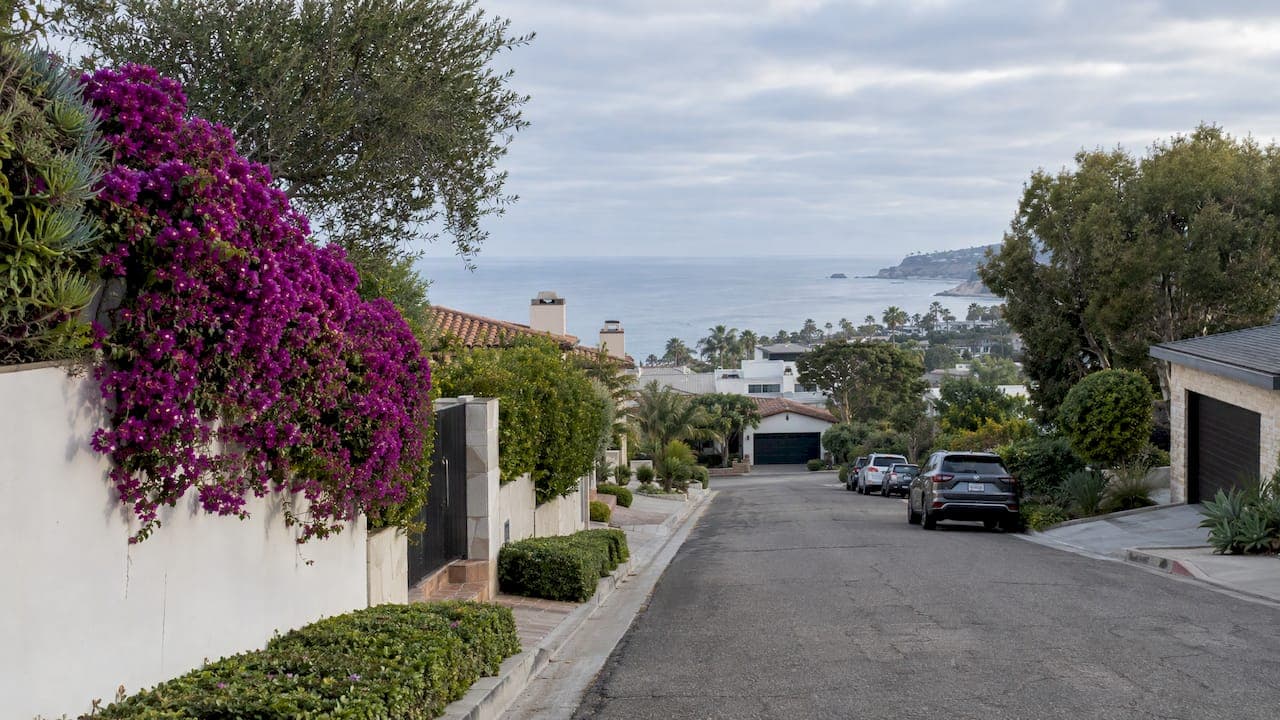
Living in La Jolla means a seaside, small-town setting inside the city of San Diego: bluffs, beaches, a walkable village, a major research university and some of the highest housing costs in the county. It suits buyers who want coastal living and are ready to budget for it. Parking, summer crowds and hilly terrain are the trade-offs that shape daily life, and they vary a lot from one pocket of La Jolla to the next.
This guide covers how the community is laid out, what it costs, how people get around, and how to choose a neighborhood. It also answers the Encinitas question we hear from buyers comparing the two coastal areas.
TL;DR
- La Jolla is a community within the City of San Diego, not a separate city. The City says it sits 12 miles north of Downtown and has roughly 32,000 residents.
- The three commercial hubs are the Village, La Jolla Shores and Bird Rock. Each feels different, so pick the neighborhood before you pick the house.
- Housing is expensive. Our own market analysis cites a median of $3.57M for La Jolla, and renting averages $3,614 a month across all apartments.
- Plan for a car, even in the walkable Village, and expect busier streets and tighter parking in summer.
- Encinitas is the nearby alternative: more spread out, with coastal areas that are walkable and inland areas that are car-dependent.
Table of Contents
- What it is like to live in La Jolla
- La Jolla neighborhoods compared
- What living in La Jolla costs
- Getting around: traffic, parking and transit
- Schools, parks and community life
- Moving to La Jolla: a practical checklist
- Living in Encinitas instead?
- Ready to buy or sell in La Jolla?
- FAQ
- Sources
What it is like to live in La Jolla
La Jolla is a coastal community with the feel of a small town. According to the City of San Diego, it offers UC San Diego, Scripps Institution of Oceanography, cultural institutions, beaches, shopping, dining and events, and it covers about 5,700 acres organized around the Village, Shores and Bird Rock commercial districts.
The setting is what residents talk about first. The community's character comes from its coastline, bluffs, hillsides, canyons and Mount Soledad, along with low-scale buildings, mature trees and pedestrian-oriented commercial streets. In practice that means ocean views from many streets, short walks to coffee and dinner in the Village, and a lot of houses tucked into hillsides.
The weather is a big part of the lifestyle. Mild, sunny days are the norm, and mornings near the water are often cloudy before the sun burns through. Many residents build their routines around the coast: sunrise walks, swims, kayaking and tide-pool visits.

It is also a place with real institutions. UC San Diego and Scripps bring researchers, students and medical professionals into the area, which keeps the Village busy on weekdays and gives the community a different rhythm from a purely resort town.
Who tends to love it
- Buyers who want to walk to restaurants, shops and the ocean.
- Professionals who work at UCSD, Scripps or the nearby medical and biotech employers on the mesa.
- Downsizers who want a low-maintenance home near the coast.
- Families who want a quiet residential street within reach of the beach.
La Jolla neighborhoods compared
La Jolla is not one market. Walkability, beach access, lot size and price shift block by block. These are the areas we help buyers sort through most often.
| Area | Feel | Typical home types | Best for |
|---|---|---|---|
| La Jolla Village | Busiest, most walkable, shops and restaurants close by | Condos, townhomes, cottages, some single-family | Buyers who want to walk everywhere |
| La Jolla Shores | Beach-centered, relaxed, near UCSD and Scripps | Single-family homes, some condos | Beach lovers, academics, families |
| Bird Rock | Neighborhood business district, ocean-side streets | Single-family homes, coastal bungalows, newer builds | Buyers who want a village feel away from the main crowds |
| La Jolla Farms and hillside streets | Private, larger lots, often view properties | Larger single-family estates | Buyers prioritizing privacy and space |
| Mount Soledad area | Elevated, quieter, views | Single-family hillside homes | Buyers who want views and low traffic |
The Village tends to be the most active. Local discussions describe the Village as lively around the shopping centers and UCSD, and downtown La Jolla as crowded in summer. If you want to hear the ocean and skip the crowds, the quieter residential streets are the better fit.
One thing to know about the beach lifestyle: not every address has easy water access. The City's open-space plan notes that shoreline access is constrained in parts of Bird Rock, La Jolla Hermosa and La Jolla Farms by steep slopes, cliff erosion, sensitive rock formations and limited parking. A home that looks close to the sand on a map may still mean a drive or a staircase. Walk the route yourself, at the time of day you would actually go.
For a deeper look at specific streets and listings, see our La Jolla neighborhood page, or compare options in our guide to San Diego beach communities.
What living in La Jolla costs
The honest answer: housing is the cost that defines La Jolla. Everything else, from groceries to dining, follows a coastal San Diego pattern.
Buying
Our market analysis of the community reports a median of $3.57M. Different sources measure "typical" differently (median sale price, typical value across all homes, list price), so figures you see online can vary by a million dollars or more. What matters is the type of home you want. Condos and townhomes in the Village sit well below hillside and oceanfront single-family homes.
If you are planning a purchase, three things shape your real monthly cost:
- Down payment and loan size. Larger loans in this price range often fall into jumbo territory, so lender choice matters.
- Property taxes and insurance. Ask for estimates on the specific address before you write an offer.
- HOA dues. Condos and some planned communities carry monthly dues that change your budget.
We have written about how rates work locally in how to get the best mortgage rates in La Jolla, which is a good next read if you are building a budget.
Renting
If you want to try the area before buying, renting is a common first step. RentCafe lists the average La Jolla rent at $3,614, with one-bedrooms at $3,185 and two-bedrooms at $4,122 as of its September 2026 update.

If you are renting with an assistance animal, California housing law has specific protections. This overview of service animals and housing rights in California explains what landlords can and cannot require.
Day-to-day expenses
Expect restaurants, services and groceries to run at coastal San Diego prices. The Village has plenty of options at different price points, but a regular dining-out habit will add up. Budget for parking if you will often visit the Village or beaches on busy days, and for a car, since most households rely on one.
Getting around: traffic, parking and transit
The Village is walkable. The surrounding hills are not always. La Jolla's planners say as much: the community plan calls for stronger pedestrian pathways, bicycling, public transit, shuttle service and added public parking in the Village core, while acknowledging the need to reduce automobile dependence there. That tells you two things: parking is a known pressure point, and the goal is a less car-centered village.
What that means for your daily life:
- Choose your address for your errands. If you live within a short walk of the Village, Shores or Bird Rock business district, you can cover coffee, groceries and dinner on foot.
- Expect hills. Hillside streets and Mount Soledad are scenic but steep. Check the walk with the grade in mind, especially if you plan to bike.
- Time your trips. Summer weekends and holidays bring beachgoers and visitors. Many residents shift errands to mornings or weekdays.
- Plan for commuting. You are 12 miles from Downtown, and most residents drive. Test your commute at rush hour before you commit.
Schools, parks and community life
La Jolla is part of the San Diego Unified School District area, and school assignment depends on your address. Confirm the school boundaries for any specific home with the district before you make an offer, and do not rely on a listing's description.
Outside school, community life centers on the coast and the Village. Beaches, parks, ocean swimming, cultural venues and events fill weekends. UCSD brings lectures, performances and research activity to the neighborhood, and Scripps adds a science presence that is unusual for a beach community.
One point from the City's planning goals is useful for buyers: the community plan frames La Jolla's appeal as depending on balancing residential and recreational protection with enhanced commercial districts and public access. Low-scale buildings and coastal protections are part of what keeps the character, and they also affect what you can build or change on a property. If you plan a remodel, check requirements early.
Moving to La Jolla: a practical checklist
- Decide your lifestyle first. Walkable village, beach-adjacent, or private hillside? The table above narrows this fast.
- Set a real budget. Include taxes, insurance, HOA dues and parking.
- Visit at different times. Go on a summer weekend, a weekday morning and an evening.
- Test the details. Drive your commute, walk to the nearest coffee shop, and try parking near the beach you would use.
- Check the address-specific rules. School assignment, coastal rules and any remodel limits depend on the exact parcel.
- Get a local agent early. Many of the best homes sell with little marketing. Early access matters.
Living in Encinitas instead?
Many buyers weigh La Jolla against Encinitas, a coastal city in North County. The two feel different. La Jolla is a neighborhood within a large city. Encinitas is its own city with its own government, services and school districts.
A few things to know if you are moving to Encinitas:
- Schools depend on address. The City says residents may be served by the Cardiff School District, Encinitas School District or San Dieguito Union High School District, and tells movers to verify the district by address.
- Transportation is an active topic. The city lists current mobility work including rail-crossing safety, a Cardiff pedestrian undercrossing, complete-streets work, bicycle facilities and separated bike lanes on El Camino Real.
- Traffic information is available. The city points residents to SANDAG 511 for current traffic, incidents and drive times, and it maps a major transit stop area around Encinitas Station.
The broader picture: coastal Encinitas neighborhoods suit walking and biking, while inland areas are more spread out and generally call for a car. If a beach-town lifestyle with more space appeals to you, Encinitas is worth a weekend visit. If you want proximity to UCSD, a dense village and a shorter run to Downtown San Diego, La Jolla is the stronger match.
Our take on living in La Jolla
After more than two decades working in San Diego real estate, we see the same pattern with La Jolla buyers: the people who are happiest chose the pocket of the community that matched their daily routine, not just the home that photographed best. A Village condo and a hillside house share a zip code, but they are very different lives.
Our approach is to start with how you want a normal Tuesday to look. Where do you get coffee, how do you reach the water, how long is your drive, and how much space do you need? Then we build a search around those answers and show you homes in the right neighborhoods, including options that are not heavily advertised.
For sellers, the same local knowledge matters. A La Jolla home sells on its setting, its walkability and its views, and pricing it correctly means reading the specific street, not the zip code average. We aim to give you calm, precise guidance from the first showing through closing.
Jeff
Ready to buy or sell in La Jolla?
If you are buying, our Buy With Confidence service walks you through the search, neighborhood choices, offers and closing, with one agent guiding each step. If you want listings matched to your criteria as they come up, our VIP Home Search is built for that.

If you own a home in La Jolla or nearby, start with a home valuation to see where your property stands, or talk through a selling strategy before you list. You can also browse current San Diego listings any time.
FAQ
Is La Jolla its own city?
No. La Jolla is a community within the City of San Diego, located about 12 miles north of Downtown, according to the City of San Diego. It has its own identity, business districts and community groups, but city services and zoning come from San Diego.
What is the cost of living in La Jolla?
Housing drives it. Our market analysis reports a median of $3.57M for homes, and the average apartment rent is $3,614 a month. Dining, services and parking add to the budget at typical coastal San Diego levels.
Do you need a car in La Jolla?
Most residents have one. The Village, Shores and Bird Rock districts are pedestrian-oriented, so living close to one lets you walk for daily errands. Commuting, hillside streets and trips outside the community usually still call for a car.
Which La Jolla neighborhood is best for families?
It depends on your priorities. Many families look at quieter residential streets near La Jolla Shores or Bird Rock for beach access and neighborhood feel. School assignment depends on the exact address, so confirm it with the district for every home you consider.
Is Encinitas a good alternative to La Jolla?
It can be, if you prefer a standalone beach city in North County. Coastal Encinitas is walkable in places, and the city is investing in mobility projects, but inland areas are more car-dependent. Check school districts by address through the City of Encinitas.
Sources
- La Jolla | City of San Diego
- La Jolla Community Plan and Local Coastal Program Land Use Plan
- La Jolla Community Plan: Open Space
- Average Rent in La Jolla, CA | RentCafe
- Citywide Frequently Asked Questions | City of Encinitas
- City Projects & Initiatives | City of Encinitas
- GIS & City Maps | City of Encinitas
- Service Animals and Housing in California: Your Rights