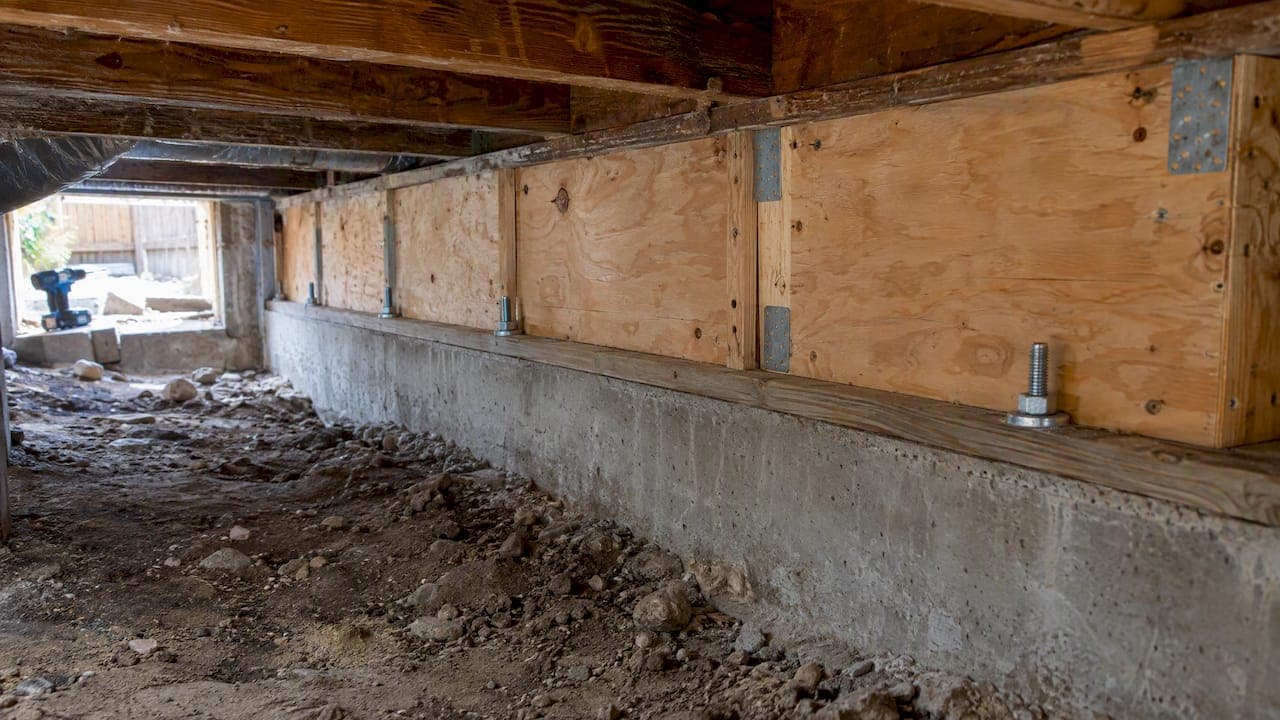
An earthquake retrofit strengthens an existing home so it holds up better in shaking, most often by bolting the house to its foundation and bracing the short walls beneath the floor. In San Diego it matters most for older raised-foundation homes and for houses with living space over a garage. A typical foundation retrofit costs a few thousand dollars, and grants may cover part of it if your home and ZIP code qualify. If you are buying or selling, the retrofit status of the house also shapes disclosures, inspections and negotiation.
TL;DR
- A retrofit makes a house more resistant to ground shaking. It reduces damage and collapse risk but does not eliminate them.
- Homes built before 1980 on raised foundations, and homes with living space over a garage, are the usual candidates.
- California's 2026 program rules put a typical Chapter A3 foundation retrofit at $3,000 to $7,000. Grants of up to $13,000 exist for qualifying homes.
- Sellers of qualifying homes built before 1960 must disclose known earthquake weaknesses, so retrofit paperwork can protect both sides of a deal.
- A building permit is required for retrofit work. Ask for the permit record before you buy.
Table of Contents
- What an earthquake retrofit actually does
- Which San Diego homes are the usual candidates
- What a retrofit costs in San Diego
- Grants that can offset the cost
- Permits and standards
- What sellers must disclose about earthquake weakness
- If you are buying: a practical checklist
- If you are selling: what to do before you list
- What a retrofit does not do
- Work with an agent who knows San Diego's older homes
- FAQ
- Sources
What an earthquake retrofit actually does
Many older houses were framed before modern seismic rules. Their weak points are predictable. The wood frame sits on the foundation with little or no anchoring, so the house can slide off during strong shaking. The short "cripple" walls between the foundation and the first floor are often unbraced and can collapse sideways. A retrofit fixes these points.
The California Residential Mitigation Program (CRMP) describes a seismic retrofit as work that makes a house more resistant to earthquake activity such as ground shaking and soil failure. The state's official homeowner guide adds that properly constructed and strengthened homes are far less likely to collapse or be damaged, while being clear that nothing guarantees safety.
That honest framing is useful. A retrofit is risk reduction. It is a smart, well-understood improvement, and it gives a home a stronger story when it goes on the market.
The common retrofit types
- Foundation bolting and cripple wall bracing. Anchor bolts tie the frame to the foundation, and plywood bracing stiffens the short walls underneath. This is the standard job on raised-foundation homes.
- Soft-story strengthening. Homes with living space over an attached garage often have a wide garage door opening with little wall around it. Strengthening the walls at that opening helps the house resist racking in a major quake.
- Water heater bracing. Strapping a water heater is simple and inexpensive, and it is on the list of items sellers disclose for older homes.
- Specialized foundations. Pier-and-post foundations and hillside homes can call for a licensed engineer or architect and a general contractor with the right specialty, according to the state guide.
Which San Diego homes are the usual candidates
Age and structure tell you most of what you need to know.
| Home feature | Why it draws attention | What to look for |
|---|---|---|
| Raised foundation, built before 1980 | Often lacks anchor bolts and cripple wall bracing | Crawl space access, bolt heads along the foundation, plywood on short walls |
| Living space over a garage | Wide opening weakens the wall line | Large garage door with a bedroom or living area above |
| Pier-and-post foundation | Needs a custom engineered solution | Posts on pads instead of a continuous perimeter foundation |
| Hillside lot | Added load and slope conditions | Stepped foundations, tall support walls |
| Slab-on-grade home | Generally not a cripple wall candidate | Ask an engineer about specific concerns |
CRMP's guidance points to raised-foundation older homes built before 1980 and houses with living space over garages as the ones that may need retrofitting. Plenty of neighborhoods in the county have this kind of housing stock, from mid-century tracts to older streets closer to the urban core. If you are weighing neighborhoods, our San Diego neighborhood guide and San Diego County area pages are a good place to compare housing styles and eras.
No one can confirm a home's condition from the listing photos. Age is a clue, and an inspection of the crawl space and garage walls is the answer.
What a retrofit costs in San Diego
The most useful number comes from the program rules themselves. CRMP's 2026 rules state that a typical Chapter A3 retrofit costs between $3,000 and $7,000, depending on the location and size of the house, contractor fees, and the materials and work involved. Chapter A3 refers to the prescriptive cripple wall provisions in the California Existing Building Code.
What moves the price:
- Size and footprint. More linear feet of foundation means more bolts and more bracing.
- Access. A tight or obstructed crawl space slows the crew.
- Foundation type. Standard perimeter foundations are the simplest. Pier-and-post and hillside conditions can require engineering and custom work.
- Home layout. Soft-story garage work is a different scope from a foundation bolting job.
- Permit and plan costs. A building permit is required, and the fee is part of the project budget.
The state guide suggests weighing both the economic value of the work and its value for peace of mind. That is a fair way to think about it. Get more than one written bid, and make sure each bid lists the same scope so you can compare them line by line.
Grants that can offset the cost
CRMP runs grant programs in California, and some San Diego homes qualify. Two programs matter most for single-family owners.
Earthquake Brace + Bolt
The FEMA-funded Earthquake Brace + Bolt (EBB) program supports foundation retrofits on qualifying homes. CRMP's rules say incentive payments in the program are generally not subject to federal or state taxation, and they encourage homeowners to seek professional tax advice. Talk to a tax professional about your own situation.
Earthquake Soft Story
The Earthquake Soft Story (ESS) program is aimed at houses with living space over a garage. Under the 2026 rules it offers grants of up to $13,000 for qualifying pre-2000, owner-occupied, single-family homes in eligible ZIP codes, and the amount depends on the house type.
Eligibility under ESS has specific conditions. The house must be owner-occupied and in an eligible ZIP code. The parcel cannot have received a previous ESS grant or another soft-story retrofit grant. A previous crawlspace retrofit grant does not exclude participation.
Timing and paperwork
Grant programs open in enrollment periods, and funding and ZIP code lists change. Check CRMP's official site for the current enrollment status before you plan around a grant. Also read the process carefully. CRMP's FAQ explains that permit costs are reimbursable after the retrofit is completed, approved by the building department, and the required documentation is approved by CRMP. Start the process before hiring a contractor, because program rules can affect when work may begin.
Permits and standards
Retrofit work needs a building permit. The state guide tells homeowners to consult the local building department about requirements, codes and standards, and it lists the California Existing Building Code, Appendix A, Chapter A3, and FEMA P-1100 as retrofit resources.
Why this matters in a sale: a permitted, inspected retrofit is documentation. An unpermitted one can raise questions with a buyer's inspector, an appraiser or an insurer. If you are selling, find the permit record and final inspection sign-off before you list. If you are buying, ask for them early.
What sellers must disclose about earthquake weakness
California law has a specific rule for older houses. Under the state's Government Code, sellers of qualifying homes built before 1960 must disclose known, material deficiencies and any material information they have about corrective measures or improvements addressing them. The listed items include missing anchor bolts, unbraced cripple or first-story walls, a room above a garage, and unbraced water heaters. The homeowner's guide uses the same examples: an unbolted foundation, unbraced crawl-space walls, or a room over a garage.

The rule covers what the seller knows. It does not oblige a seller to commission an engineer's report, though a retrofit and its paperwork put the seller in a much stronger position.
Separately, sellers must tell buyers if a property sits inside an Earthquake Fault Zone. The City of San Diego's public notice on earthquake zones states this requirement. We cover how to check the maps in our guide to earthquake fault zone maps before closing, and our overview of real estate disclosure for San Diego buyers walks through the rest of the disclosure package.
If you are buying: a practical checklist
A retrofit is not a deal breaker. It is a line item you can understand, price and negotiate. Here is how we suggest buyers approach a pre-1980 home.
- Read the disclosures first. Look for any mention of anchor bolts, bracing, soft-story conditions or past retrofit work.
- Ask for permits. If a retrofit was done, request the permit and final inspection record.
- Inspect the crawl space. Have your inspector check for bolts on the foundation, plywood on the short walls and the condition of the water heater strapping.
- Look at the garage. If there is living space above, ask the inspector or a structural professional about the wall around the garage door opening.
- Get a bid before you commit. A written scope and price from a licensed contractor turns an unknown into a number you can use in negotiation.
- Check grant eligibility. Owner-occupancy, year built, ZIP code and prior grants all matter, so confirm with CRMP before you assume anything.
- Run the hazard maps. Check the fault zone maps and consider whether earthquake insurance makes sense for your budget.
When you hire anyone for the work, vet them carefully. A contractor verification checklist is a good model for the questions to ask: license, insurance, references, written scope and payment terms. For pier-and-post or hillside homes, add a licensed engineer or architect to the team, as the state guide advises.
If you want help pulling this together while you search, our VIP Home Search lets you set the criteria that matter, including the age and style of home you are comfortable with.
If you are selling: what to do before you list
Sellers of older homes have three realistic choices, and each can be a sound strategy.
Retrofit before listing. If your home is a raised-foundation house that has never been bolted, a completed, permitted retrofit removes a common point of buyer concern. Check grant eligibility first, since a grant may reduce your out-of-pocket cost if you qualify.
Document what you know. Gather permits, contractor invoices and any engineer notes. For homes covered by the pre-1960 rule, accurate disclosure is a legal requirement, and organized records make the process smoother.
Price with the condition in mind. If you choose not to retrofit, price and negotiate with the condition in view. A buyer's inspector will likely notice an unbolted foundation. Discussing it up front, with a contractor's estimate in hand, tends to keep negotiations calm.
We lay out how to prioritize improvements in our pre-listing repairs guide for Allied Gardens and Del Cerro, and the same logic applies across the county: fix what buyers will ask about, document it well and skip projects that will not change the outcome. To see where your home stands in today's market, start with a home valuation, and read our San Diego housing trends overview for the bigger picture.

What a retrofit does not do
Be clear-eyed about the benefit. The program rules say the grants aim to reduce, but not eliminate, earthquake damage or collapse. A bolted and braced house can still suffer cracked finishes, broken plumbing or damaged contents. A retrofit also does not replace insurance, which is a separate decision with its own costs and deductibles.
The value is in the main goal: keeping the structure on its foundation and reducing the chance of a serious collapse, so you and your family have a safer place to be and a better chance of repairing instead of rebuilding.
Our perspective
We have spent more than two decades working San Diego real estate, and earthquake questions come up more than people expect, usually halfway through an inspection when someone crawls under a 1950s house and finds no bolts.
Our view is simple. A retrofit is a manageable, well-documented project, not a reason to walk away from a home you love. For buyers, the answer is information: read the disclosures, get the inspection, get a bid, and then negotiate with real numbers. For sellers, the best move is to know your home's story before a buyer asks. Permits, receipts and a clear explanation do more for your sale than any speculation.
That is how we approach every transaction. We stay calm, we stay precise, and we stay available from the first showing through closing, because the details of an older home deserve a steady hand.
Jeff
Work with an agent who knows San Diego's older homes
Whether you are buying a 1955 ranch or preparing a mid-century home for sale, we can help you understand how condition, disclosures and pricing fit together. Our team offers personalized guidance and local market analysis for buyers and sellers across San Diego County.

Buyers can start with Buy With Confidence. Sellers can see how we plan a listing at Sell With Strategy. Or just tell us what you are looking for and we will point you to the next step at jeffsellssandiego.com.
FAQ
Is an earthquake retrofit required to sell a home in San Diego?
California law does not make a retrofit a condition of sale, as far as the sources we reviewed show. What it does require is disclosure: sellers of qualifying homes built before 1960 must disclose known, material earthquake deficiencies. Check with your agent and the local building department for any rules that apply to your specific property.
How much does an earthquake retrofit cost in San Diego?
CRMP's 2026 program rules say a typical Chapter A3 retrofit costs between $3,000 and $7,000. The final price depends on the house's size and location, contractor fees and the work required. Pier-and-post foundations, hillside homes and soft-story garage work may cost differently, so get written bids.
Can I get a grant for an earthquake retrofit?
Possibly. CRMP's ESS program offers grants of up to $13,000 for qualifying pre-2000, owner-occupied, single-family homes in eligible ZIP codes. Enrollment periods and funding change, so confirm the current status and your ZIP code on CRMP's official site before you start work.
Does a retrofit make my house earthquake-proof?
No. A retrofit makes a house more resistant to shaking and lowers the risk of collapse or serious damage, but the official guidance is clear that there are no guarantees. Think of it as a major step in risk reduction, alongside insurance and an emergency plan.
Do I need a permit for retrofit work?
Yes. The state's homeowner guide says a building permit is required for retrofit work. Ask your local building department about requirements, and keep the final inspection record, because buyers and grant programs may ask for it.
Sources
- Homeowner's Guide to Earthquake Safety (California Seismic Safety Commission)
- California Government Code Sections 8897.1-8897.5
- City of San Diego public notice on earthquake zones
- CRMP Earthquake Brace + Bolt rules and regulations
- CRMP Earthquake Soft Story rules and regulations
- CRMP frequently asked questions
- CRMP: Is an earthquake retrofit in San Diego worth it
- Contractor verification checklist