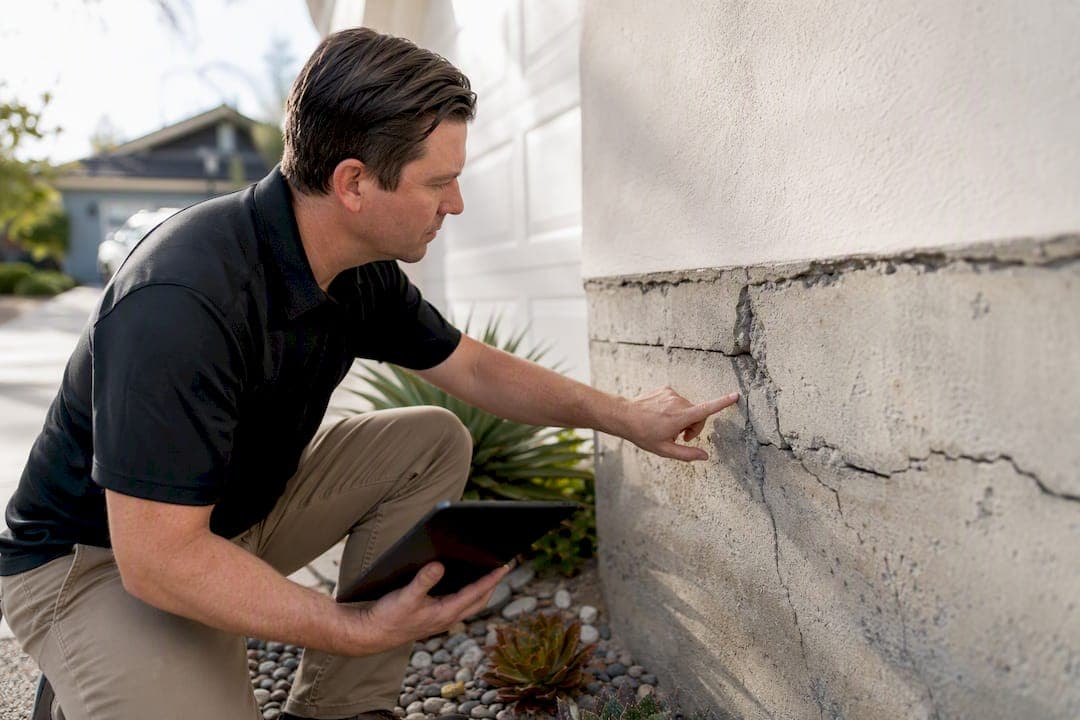
Most San Diego homeowners should at least price out earthquake coverage, and quite a few should buy it. You buy this coverage through the California Earthquake Authority (CEA), sold via your existing homeowners insurer, with rules set by the California Department of Insurance. Run a CEA premium estimate and get a written quote before you decide either way.
TL;DR:
- Earthquake premiums in San Diego typically range from $2,100 to $2,300 annually, depending heavily on rebuild cost, home age, and construction type.
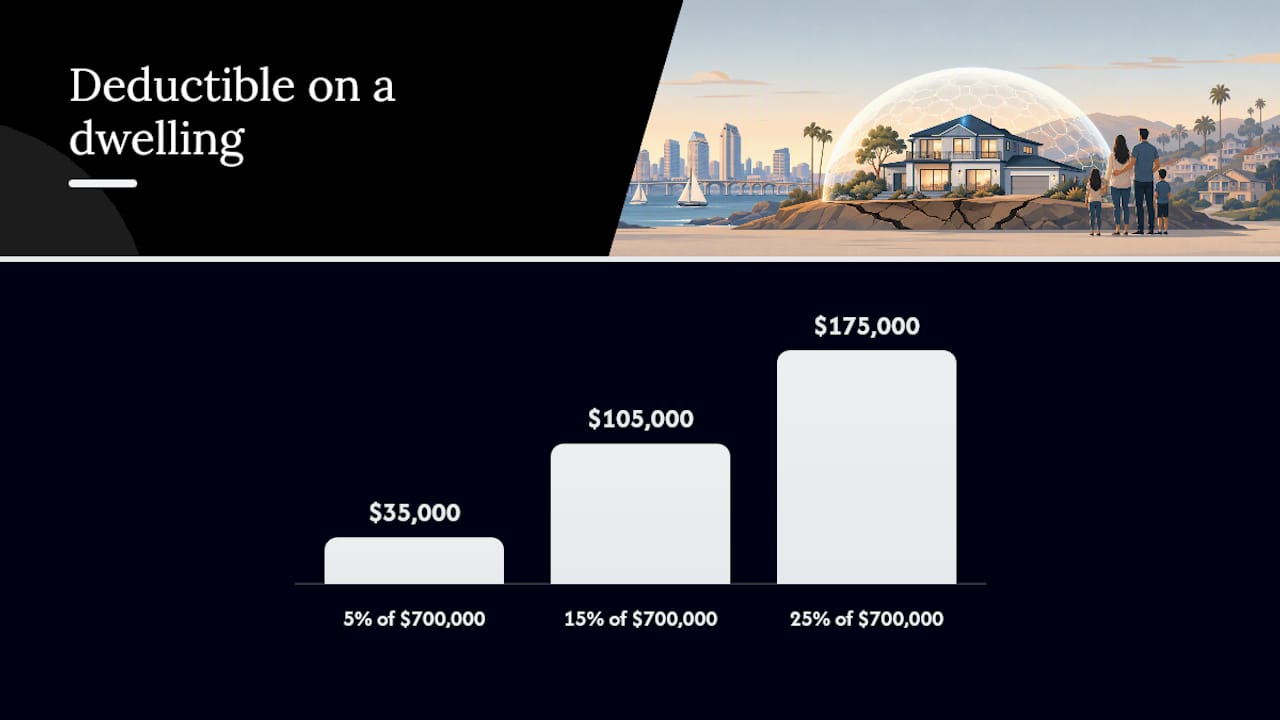
- Deductibles are percentage-based, usually from 5% to 25%, meaning a $700,000 dwelling with 15% deductible requires paying $105,000 before coverage kicks in.
- Retrofits, especially foundation bolting and cripple-wall bracing, can reduce both actual risk and insurance premiums by up to 25%.
- Many homeowners are unaware that standard policies exclude earthquake damage, making separate coverage through CEA essential for full protection.
- It is crucial to compare written quotes from insurers using the same dwelling limits and deductibles, and verify participation with CEA before purchasing.
Table of Contents
- How Does Earthquake Insurance Work in San Diego?
- What Does Earthquake Insurance Cost in San Diego?
- How Do Earthquake Insurance Deductibles and Coverage Limits Work?
- How Do You Get Earthquake Insurance Quotes in San Diego?
- Is Earthquake Insurance Worth It for Your Home?
- Do Retrofits Really Lower Your Earthquake Insurance Premium?
- What Local Earthquake Risks Should San Diego Homeowners Know?
- Can Lenders Require Earthquake Insurance in San Diego?
- What Do Local Agents Recommend for Assessing Earthquake Risk?
- What San Diego Homeowners Get Wrong About Earthquake Risk
- Getting Practical Help Weighing Earthquake Risk in San Diego
- Where to Verify Earthquake Insurance Costs and Local Hazard Maps
- Sources
How Does Earthquake Insurance Work in San Diego?
Your homeowners policy will not pay for earthquake damage. The California Department of Insurance is blunt about this: a standard policy covers fire that results from an earthquake, but not the shaking, cracking, or foundation failure itself. That gap is why a separate earthquake policy exists at all, and why so many San Diego owners discover the exclusion only after a scare, not before.
The California Earthquake Authority writes most of the state's residential earthquake coverage, but you cannot buy a CEA policy directly. It is sold exclusively through participating private insurers, meaning your current carrier has to be one of them.
You'll typically run into two structures:
-
Standalone policy: a separate earthquake policy layered on top of your existing homeowners insurance.
-
Endorsement: earthquake coverage added directly onto your existing homeowners policy.
-
Homeowners Choice option: lets you set a different, sometimes lower, deductible than your base policy's standard offering.
State law also requires insurers to offer you earthquake coverage in writing every other year, whether you ask for it or not. If you've been ignoring that letter, it's worth actually opening the next one. Start by running the CEA's calculator and requesting a written offer from your own insurer so you have real numbers instead of guesses.
What Does Earthquake Insurance Cost in San Diego?
Premiums for a typical San Diego home commonly land in the $2,100 to $2,300 a year range, though your actual number depends heavily on your specific property. That figure moves a lot based on a handful of variables insurers weigh every time they price a policy.
Pro Tip: Ask your insurer for the per-$1,000-of-coverage rate, not just the total premium. It's the fastest way to compare two quotes with different dwelling limits apples-to-apples.
The biggest premium drivers include:
- Rebuild cost, not market value, which sets your dwelling coverage limit.
- Year built and construction type, since older wood-frame homes on raised foundations often price higher.
- Foundation and roof type, with unreinforced or unbolted foundations flagged as higher risk.
- Soil conditions, including liquefaction potential near bays, canyons, and fill areas.
- Deductible choice, where a 25% deductible can cut your premium noticeably versus a 5% deductible.
- Retrofit status, which insurers reward with lower pricing once documented.
Picture a median San Diego home valued around $850,000. That tradeoff, cheaper premium versus bigger deductible, is the whole decision in miniature. Run the CEA calculator with your actual address and compare at least two written quotes before committing.
How Do Earthquake Insurance Deductibles and Coverage Limits Work?
Earthquake deductibles are percentage-based, not flat dollar amounts, and that trips up a lot of first-time buyers of this coverage. A 5% to 25% deductible applies against your dwelling coverage limit, not your claim total. On a $700,000 dwelling limit with a 15% deductible, you're covering the first $105,000 of damage yourself before the policy pays a dollar.
Insurers have also tightened minimum deductible requirements for older homes and higher-value properties in recent years, which pushes some owners toward deductibles they wouldn't have chosen otherwise. The practical effect: a 1960s San Diego home with an unreinforced foundation might not qualify for the lowest deductible tier at all.
Beyond the dwelling itself, policies typically include:
- Personal property coverage, usually capped well below your dwelling limit.
- Loss-of-use / additional living expenses, covering temporary housing while repairs happen.
- Land exclusion, since no earthquake policy pays to stabilize or repair the ground itself.
Condo owners face a wrinkle here too: your individual policy may not cover damage to shared structures, and an HOA special assessment for building repairs can land on you separately.
How Do You Get Earthquake Insurance Quotes in San Diego?
You buy earthquake coverage through your existing homeowners insurer, or by switching to one that participates with CEA if yours doesn't. That carrier mismatch catches a surprising number of San Diego owners off guard when they finally ask for a quote.
- Gather your property details: rebuild cost estimate, address, year built, and foundation type.
- Run the CEA premium calculator using those exact figures for a baseline estimate.
- Request written offers from your insurer, specifying the same dwelling limit and deductible so you're comparing like for like.
- Read the written offer closely, checking the deductible math against your actual dwelling limit, any waiting period before coverage starts, and what endorsements are included versus sold separately.
- Talk to a local agent or broker and ask directly which insurers on their panel participate with CEA, since not all do.
A local agent earns their fee here by knowing which carriers actually write CEA policies in San Diego and which ones will quietly steer you toward "no coverage" as the path of least resistance.
Is Earthquake Insurance Worth It for Your Home?
Run the math on affordability first: could you rebuild or repair without insurance, using savings, a mortgage refinance, or your home equity? If the answer is a stretch, coverage probably makes financial sense regardless of your risk tolerance.
Property-specific factors matter just as much:
- Age and construction type, especially pre-1980s wood-frame homes without foundation bolting.
- Location inside a mapped liquefaction or seismic hazard zone.
- Proximity to Rose Canyon or other active fault traces.
Pro Tip: Ask your insurer for a claim example from a past moderate earthquake, not a hypothetical. How they answer tells you more about their claims process than any brochure.
Ask directly: What's the premium at my specific dwelling limit? What deductible options exist? Is there a retrofit discount, and what documentation earns it? What's the waiting period before coverage is active?
Red flags worth walking away from: no written offer after you ask twice, a deductible the agent can't calculate on the spot, or a retrofit discount claim with no paperwork behind it.
Do Retrofits Really Lower Your Earthquake Insurance Premium?
Seismic retrofitting is one of the few moves that pays off twice: it reduces actual earthquake risk and lowers what you pay to insure against it. The measures insurers care about most are foundation bolting, cripple-wall bracing, and general foundation stabilization, since these are the failure points that cause the most damage in a moderate quake.
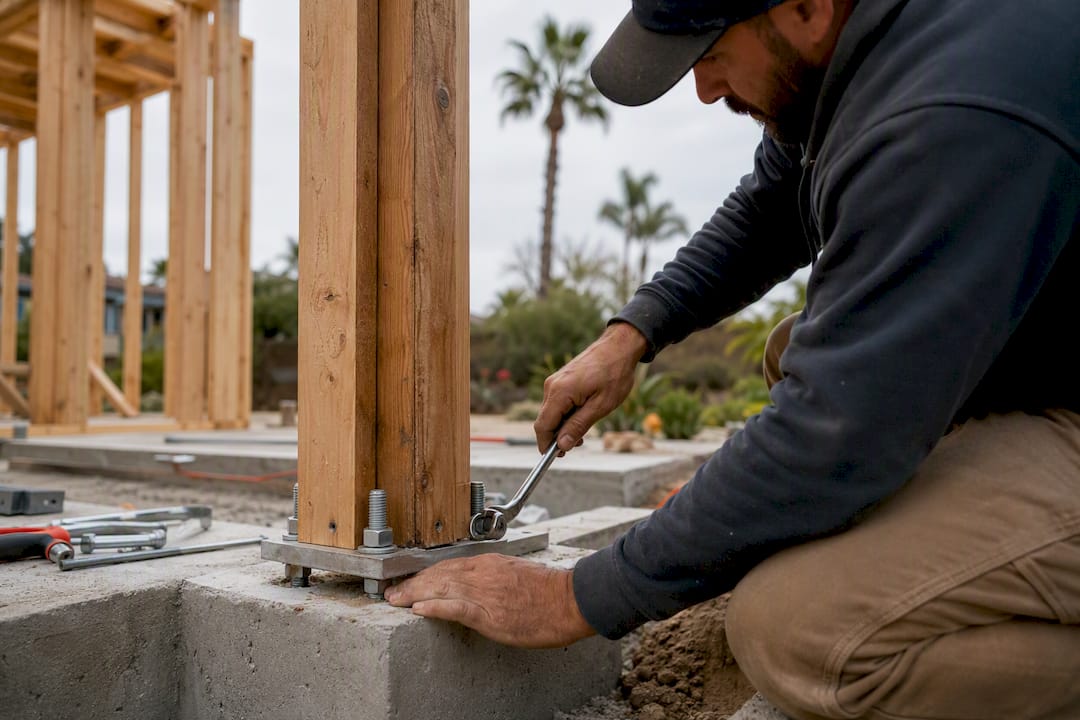
You'll need documentation to actually collect the discount: permits, contractor invoices, and often photos of the completed work before an insurer will apply it. Guidance from the CEA notes discounts of up to 25% in some circumstances once retrofits are verified.
For sellers, a documented retrofit is a real selling point in San Diego's older neighborhoods. Buyers increasingly ask about foundation work, and a folder of retrofit permits answers the question before it's asked. A contractor guide on earthquake-resistant construction walks through what these upgrades typically involve if you're weighing the cost against the discount.
What Local Earthquake Risks Should San Diego Homeowners Know?
The Rose Canyon fault runs directly through the urban core, tracing near downtown and out toward La Jolla, and it's been quiet for a long time, which is not necessarily good news. County-level seismic reporting puts the odds at roughly 18% for a magnitude 6.7 or larger earthquake somewhere in San Diego County within the next 30 years, and UC San Diego seismology research continues to refine how fault segments like this one might behave.
Liquefaction adds a second layer of risk in low-lying, fill, and near-bay areas, where saturated soil can lose strength during shaking. Check your specific parcel against:
- San Diego's seismic safety and hazard mapping resources
- The state's MyHazards mapping tool
- San Diego County's own hazard disclosure resources
Can Lenders Require Earthquake Insurance in San Diego?
Lenders generally cannot mandate earthquake insurance the way they require flood insurance in a flood zone, but that doesn't mean you should skip factoring it into your budget. Build the premium into your affordability math before you're locked into a purchase.
Sellers in mapped seismic hazard zones face disclosure obligations, and that disclosure often becomes a negotiating point for repairs, retrofit credits, or price adjustments.
During escrow, confirm:
- Whether the current owner carries earthquake coverage and what it costs them.
- A realistic rebuild-cost estimate for the property, not just market value.
- Whether retrofit work should happen before or after closing, and who pays for it.
What Do Local Agents Recommend for Assessing Earthquake Risk?
When touring a home, I look at the age, foundation type, visible cracking, and any soil or drainage issues on the lot before anything else. Retrofit and insurance costs factor directly into how I help clients structure an offer. For neighborhood-specific guidance, explore San Diego's local areas or review home inspection priorities before you write an offer.
What San Diego Homeowners Get Wrong About Earthquake Risk
People treat earthquake insurance as an all-or-nothing decision, and it isn't. The real question is whether you can absorb a six-figure deductible without insurance at all, not whether San Diego "feels" earthquake-prone day to day. It usually doesn't, until it does.
The other misconception: assuming a low adoption rate means low risk. Historically only about 10% of California residents carry earthquake insurance, which says more about cost sensitivity and short memories than actual exposure. FEMA frames earthquake insurance as protection against catastrophic loss, not routine repairs, and that's the right lens. You're not insuring against a hairline crack. You're insuring against the scenario where your home is unlivable and your mortgage doesn't pause.
Run the numbers on your specific deductible exposure before you decide coverage isn't worth it. Most people who skip it have never actually done that math.
— Jeff
Getting Practical Help Weighing Earthquake Risk in San Diego
Jeffsellssandiego works differently than a general insurance shop: I factor seismic risk directly into your home search and your offer strategy, not as an afterthought after you've already fallen for a house. That means flagging foundation age, pointing you toward retrofit contractors when a property needs the work, and helping you weigh a lower price against a higher deductible before you write an offer.

If you're actively searching for a home in San Diego and want that risk factored into your search from day one, browse current San Diego listings or check out the full buyer's guide to see how this fits into the broader process. Reach out and I'll walk you through what a given property's earthquake exposure actually means for your budget.
Where to Verify Earthquake Insurance Costs and Local Hazard Maps
Before you decide anything, get real numbers from real sources. The CEA premium calculator gives you a personalized estimate based on your address and dwelling limit. The California Department of Insurance's consumer guide explains your rights and deductible rules. FEMA's earthquake insurance page covers the risk-management basics. Print or save every written estimate for your escrow file.
This article is general information, not a substitute for advice from a qualified financial advisor. Consult a qualified financial professional about your own circumstances before acting on anything here.
Sources
- California Earthquake Authority – Earthquake Insurance, Preparedness & Risk Reduction
- Earthquake Insurance - California Department of Insurance
- FEMA — Earthquake insurance