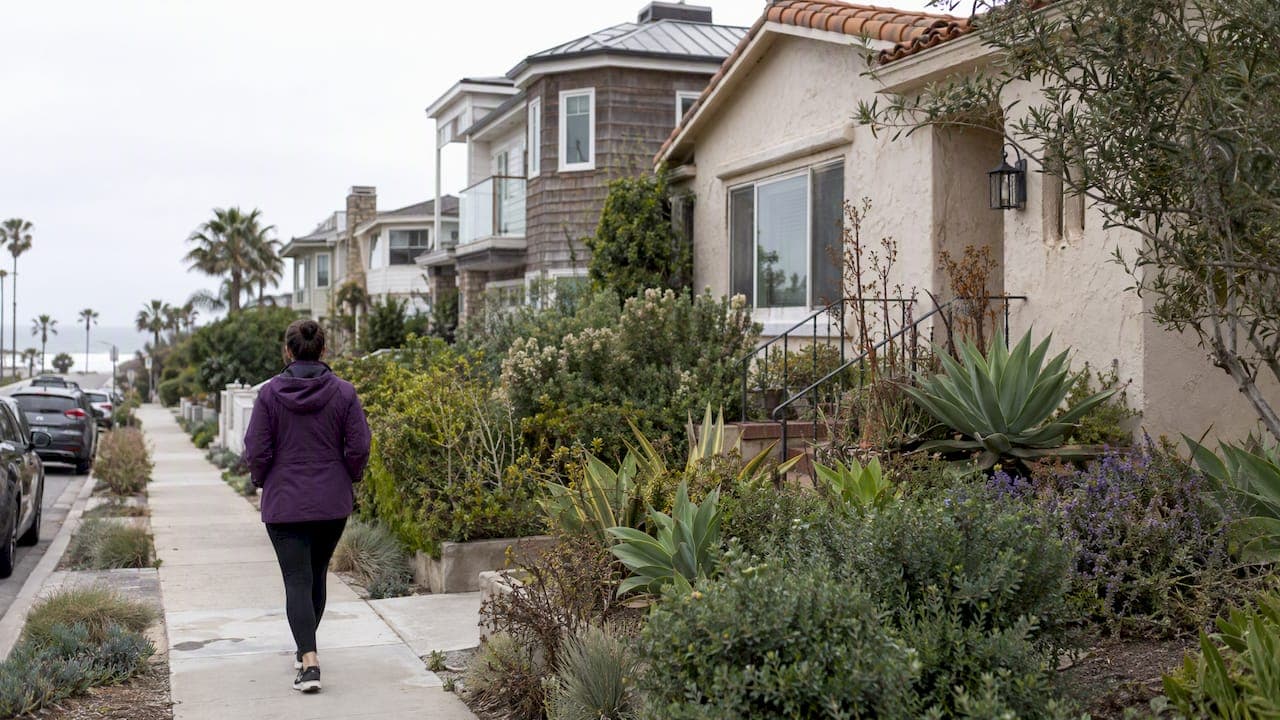
Del Mar remains a high-price, supply-constrained seller's market heading into 2026, and buyers should prepare strong financing along with a hazard-aware inspection plan before they write an offer. Statewide, the California Association of REALTORS® projects a median home price near $905,000 for 2026, and Del Mar's own prices sit well above that benchmark because of its coastal scarcity. Buyers who move here need patience and a clear-eyed view of the trade-offs.
TL;DR:
- Del Mar's limited housing supply will keep prices high, with inventory growth lagging the nearly 10% statewide increase expected in 2026.
- Buyers should prepare for mortgage rates around 6% to 7%, with jumbo loans influencing monthly payments significantly due to high prices.
- The city's build-out and coastal hazard restrictions mean new construction will remain slow, with the Housing Plan focusing on infill and ADUs.
- The median home price in California is projected near $905,000, but Del Mar's prices are well above that, especially for oceanfront estates.
- Buyers need strong financing, thorough inspections, and patience, as competition favors well-prepared, high-ability bidders.
Table of Contents
- Del Mar's 2026 Market Snapshot: Prices, Inventory, and Rates
- Why Del Mar's Housing Supply Stays Tight
- Del Mar Neighborhood Guide: Where the Premiums Come From
- How to Buy a Home in Del Mar: A Practical Playbook
- An Agent's View: What Showings in Del Mar Actually Reveal
- Del Mar's Long-Term Price Trends
- Who Is Buying in Del Mar: Demographic Shifts to Watch
- How the Local Economy Shapes Del Mar Home Prices
- Single-Family Homes, Condos, and Townhomes: Price Segmentation in Del Mar
- Renting and Investing in Del Mar
- What's Next for Del Mar: Development and Infrastructure
- A Straight Answer for Del Mar Buyers
- Buyer Services Built for Del Mar's Market
- FAQ
- Sources
Del Mar's 2026 Market Snapshot: Prices, Inventory, and Rates
Del Mar's housing stock is small, mostly single-family, and concentrated along a narrow coastal strip, a pattern confirmed in the city's own Community Profile. That scarcity keeps list prices far above the regional median and keeps inventory thin most months of the year. Multi-million dollar listings are common in Del Mar, and homes priced under $2 million are rare, a pattern local portal snapshots repeat even though exact daily figures shift too often to cite as fixed data.
Mortgage rates shape how far a buyer's budget stretches in a market like this one. The 30-year fixed mortgage rate series from FRED shows national rates hovering in the 6% to 7% range through 2026, and the C.A.R. A single percentage point of movement on a jumbo loan, which most Del Mar purchases require, changes a monthly payment by hundreds of dollars.
| Metric | 2026 figure | Source |
|---|---|---|
| California median home price | About $905,000 | C.A.R. 2026 forecast |
| California active listings | Up nearly 10% | C.A.R. 2026 forecast |
| 30-year fixed mortgage rate | Roughly 6% to 7% | FRED mortgage series |
Active listings statewide are projected to rise almost 10% in 2026, according to the C.A.R. forecast, though Del Mar's own built-out footprint means local inventory growth will likely lag the state trend by a wide margin.
Why Del Mar's Housing Supply Stays Tight
Del Mar covers a small land area along the coast, and the city's Community Profile documents minimal housing growth between 2018 and 2022, with low average annual growth projected through 2050 under regional SANDAG forecasts. There simply is not much vacant land left to build on, and the county hazard mitigation annex flags coastal bluff and slope instability as additional constraints on new construction near the water.
Del Mar's 6th Cycle Housing Plan responds to state RHNA allocations with a short list of realistic strategies rather than large subdivisions:
- Encouraging accessory dwelling units on existing lots to add units without new land.
- Pursuing infill opportunities on underused parcels within the existing footprint.
- Exploring a potential housing partnership tied to the State Fairgrounds site.
Because the city is functionally built out, buyers should expect these programs to add units gradually rather than reshape supply quickly, so near-term price relief is unlikely.
Del Mar Neighborhood Guide: Where the Premiums Come From
Del Mar's price bands track closely with proximity to the ocean and walkability to the Village. Buyers researching Del Mar's neighborhoods will notice the price gap between a Village condo and a bluff-top estate can span millions of dollars within a few blocks.
- Del Mar Village offers walkable restaurants and shops, with condos and smaller single-family homes forming the entry point to the market.
- The beach bluff and oceanfront strip commands the steepest premiums, driven by direct ocean views and private beach access.
- Crest Canyon and the surrounding hills trade some ocean proximity for larger lots, more privacy, and often newer construction.
- Small multiunit pockets near the Village give investors and downsizers a lower entry price while staying inside the 92014 zip code.
Event-driven demand from the Del Mar Racetrack season and the county fair also pushes short-term rental interest higher in the Village and nearby streets, which can tighten inventory further during peak months.
How to Buy a Home in Del Mar: A Practical Playbook
Buying in Del Mar rewards preparation more than speed, since the competitive pool is smaller but better financed than in most San Diego neighborhoods. A clear plan before you tour homes saves time once the right listing appears.
- Get fully underwritten pre-approval, not just pre-qualification, since jumbo loans dominate this price range and sellers expect proof of funds.
- Budget for specialized inspections, including bluff stability, soil and erosion assessment, and foundation condition, given the coastal hazard patterns the county's hazard mitigation annex documents for this area.
- Check permit history for additions, ADUs, and renovations, since older coastal homes sometimes carry unpermitted work that complicates resale.
- Structure your offer carefully, keeping an inspection contingency even in competitive situations and sizing earnest money to signal seriousness without overexposing your deposit.
- Time your closing to seller preferences, since many Del Mar sellers value a flexible rent-back period more than a slightly higher price.
Pro Tip: Ask your agent to run a bluff and drainage history check on any coastal-adjacent listing before you schedule a full inspection, since that single step can rule out a property in an afternoon.
Roof condition deserves attention too. Salt air accelerates wear on coastal homes, and a local roofing assessment before closing can reveal repair costs worth negotiating into the price.

An Agent's View: What Showings in Del Mar Actually Reveal
As a San Diego residential agent, I spend a lot of time walking Del Mar listings with buyers who are surprised by how much detail hides behind a polished listing photo. A short checklist at every showing catches most of it: permit records for any addition, visible drainage or bluff erosion signs, roof condition given salt air exposure, HVAC and insulation age, and whether insurance carriers are actively writing policies in that specific block.

Walk away when a seller cannot produce permits for a major renovation, when a bluff-adjacent yard shows active erosion, or when an insurer flatly declines to quote the property. Our Del Mar area page and our 2026 home buying guide go deeper into timing and financing specifics for buyers working this market.
Del Mar's Long-Term Price Trends
Del Mar's housing values have climbed steadily for decades, a pattern rooted in the same scarcity that defines the market today. The city's small geographic footprint, documented in its Community Profile, has kept new construction minimal for years, which means each cycle of regional price growth compounds on top of an already limited supply.
This differs from inland San Diego communities, where new subdivisions periodically expand supply and moderate price swings. Del Mar has no such release valve, so downturns tend to be shallower and recoveries tend to come faster once broader market conditions improve. Buyers researching countywide housing trends will notice Del Mar consistently sits above the county median, and that gap has widened over time rather than narrowed.
The comparison to nearby La Jolla is instructive here. Both are built-out coastal communities where land scarcity drives pricing more than any single economic cycle, a dynamic we break down further in our La Jolla market analysis. Buyers who expect Del Mar to behave like a typical suburban market, with prices tracking interest rates closely, are often surprised by how little short-term rate changes move local pricing. Structural scarcity tends to dominate the story.
Who Is Buying in Del Mar: Demographic Shifts to Watch
Del Mar's population skews older and wealthier than the San Diego County average, and the city's own Community Profile reflects a community with limited population growth projected through 2050. That stability matters for buyers: demand here comes less from first-time buyers and more from move-up purchasers, retirees relocating within California, and out-of-state buyers seeking a coastal second home.
This demographic mix shapes how homes show and sell. Sellers often have significant equity and no urgency to accept a low offer, which reinforces the seller's market dynamics. Remote work has also widened the buyer pool beyond San Diego commuters, since professionals who no longer need daily office access increasingly consider Del Mar a viable full-time residence rather than a weekend retreat.
Buyers should expect competition from a demographic that is financially flexible and patient, which changes negotiation dynamics compared to markets dominated by budget-constrained first-time buyers. A strong offer here needs to compete on certainty and timing as much as on price.
How the Local Economy Shapes Del Mar Home Prices
Del Mar's housing market does not move on local employment the way an inland suburb might, since relatively few residents work within the city itself. Instead, home values track the broader San Diego County economy and the income levels of buyers drawn from across the region and beyond. High earners in biotech, technology, and finance, many commuting from or maintaining ties to San Diego's broader job market, make up a large share of the buyer pool.
This dynamic insulates Del Mar somewhat from local economic swings but ties it closely to regional and national income trends among high earners. When national markets perform well, demand for second homes and relocation purchases in Del Mar tends to strengthen, reinforcing the price pressure that limited supply already creates.
Buyers should understand that affordability in Del Mar is rarely about median local wages, since few median-income households buy here. It is about the financial capacity of the specific buyer pool competing for a small number of listings each year, a dynamic also visible in our broader look at San Diego housing trends.
Single-Family Homes, Condos, and Townhomes: Price Segmentation in Del Mar
Property type matters enormously in Del Mar, where the gap between a Village condo and an oceanfront estate can exceed the entire median home price of most other San Diego neighborhoods. Single-family homes, particularly those on the bluff or with ocean views, command the highest prices and the most competition when they list.
Condos and townhomes in and around the Village give buyers a lower entry point into the Del Mar zip code, often appealing to downsizers or buyers who prioritize walkability over square footage. These units still carry a premium compared to condos in inland San Diego communities, but they remain more attainable than detached homes.
Multiunit properties are rare in Del Mar given its zoning and built-out status, which keeps that segment thin and makes any listing in this category move quickly when it appears. Buyers comparing property types should treat Del Mar less like a single market and more like several distinct micro-markets stacked within one zip code, each with its own pace and buyer pool.
Renting and Investing in Del Mar
Del Mar's rental market benefits from the same scarcity that drives ownership prices, with demand reinforced by seasonal visitors tied to the Del Mar Racetrack and the county fair. Short-term and vacation rentals see particular interest during race season, which can make Village-adjacent properties attractive to investors seeking seasonal income rather than steady year-round cash flow.
Long-term rental yields in Del Mar tend to run lower than inland San Diego communities because purchase prices are so high relative to achievable rents. Investors here usually prioritize appreciation and seasonal income over cap rate, a strategy that works best for buyers with a long holding horizon rather than those seeking immediate cash flow. Our guide to strategies home buyers can learn from real estate investors walks through how to weigh appreciation potential against carrying costs in a market like this one.
Buyers considering an investment purchase in Del Mar should also factor in insurance availability, since coastal risk factors documented in the county hazard annex can affect both premiums and underwriting decisions on bluff-adjacent properties.
What's Next for Del Mar: Development and Infrastructure
Del Mar's near-term development pipeline is modest by design, shaped by the same land constraints that keep prices elevated. The 6th Cycle Housing Plan outlines ADU promotion and infill as the primary levers for new housing, alongside exploratory discussions about a potential Fairgrounds housing partnership that could unlock additional units over a longer timeline.
No major new subdivisions or large multifamily projects are planned, which means buyers should not expect a supply surge to ease pricing in the next few years. Infrastructure investment in Del Mar tends to focus on coastal protection and drainage improvements rather than road expansion or transit projects, reflecting the city's priority on protecting existing properties from bluff erosion and sea-level exposure rather than accommodating growth.
For buyers, this points to continued scarcity as the defining feature of the market rather than a temporary condition tied to one housing cycle. Anyone waiting for a wave of new construction to bring prices down should expect a long wait, and planning a purchase around current conditions makes more sense than betting on future supply relief.
A Straight Answer for Del Mar Buyers
Del Mar in 2026 rewards buyers who come prepared rather than buyers who wait for a better moment. Prices will likely stay elevated relative to the rest of San Diego County, supply will grow slowly if at all, and the buyers who win here are the ones with strong financing and realistic expectations. If you are serious about a Del Mar purchase, a home valuation or a focused VIP home search is the most efficient next step.
— Jeff
Buyer Services Built for Del Mar's Market
Buying in a scarce, high-price market like Del Mar works best with someone who tracks every new listing before it gets competitive. Buy With Confidence service offers negotiation support and inspection coordination tailored to coastal properties, while VIP Home Search gives early access to listings matching specific criteria.

- Local access to listings and off-market opportunities before they reach broad portals.
- Negotiation support provided by an experienced San Diego real estate agent.
- Inspection coordination tuned to coastal hazard concerns like bluff stability and drainage.
- Valuation guidance so you know what a fair offer looks like before you submit one.
| Service | Best for | Where to start |
|---|---|---|
| Buy With Confidence | Buyers who want full representation from showing to closing | Jeffsellssandiego |
| VIP Home Search | Buyers who want early access to matching listings | Jeffsellssandiego |
| Home Valuation | Buyers or sellers who want current comps | Jeffsellssandiego |
Reach out through Buy With Confidence to start a focused search for your next Del Mar home.
This article is general information, not a substitute for advice from a qualified financial advisor. Consult a qualified financial professional about your own circumstances before acting on anything here.
FAQ
Is Del Mar expensive to live in?
Yes, Del Mar is one of the more expensive communities in San Diego County, with home prices well above the California median projected near $905,000 for 2026 by C.A.R.. The combination of limited land, coastal access, and strong demand keeps both purchase prices and rents elevated compared to inland San Diego neighborhoods.
What is the current state of the real estate market in the United States?
The national market in 2026 is seeing mortgage rates near 6% to 7%, based on the FRED 30-year fixed rate series, alongside a modest increase in inventory in states like California. C.A.R. forecasts active listings rising nearly 10% in California during 2026, which points to slightly easier conditions for buyers than recent years, though high-demand coastal markets like Del Mar remain tight.
How many houses a year does a realtor have to sell to make $200,000 a year?
This depends heavily on commission structure, average sale price, and local market conditions, so there is no fixed number that applies everywhere. In a high-price market like Del Mar, where individual transactions often exceed $2 million, far fewer sales are needed to reach that income level than in a market with lower median prices.
What is Warren Buffett saying about the housing market?
We do not have a sourced statement from Warren Buffett specific to the 2026 housing market to cite here. For market-specific guidance, the C.A.R. 2026 forecast and national mortgage-rate data from FRED offer a more reliable starting point for understanding current conditions.
What makes Del Mar's housing supply so limited?
Del Mar is largely built out, with a small land area and minimal room for new construction, as documented in the city's Community Profile. The 6th Cycle Housing Plan relies on ADUs, infill, and a possible Fairgrounds partnership rather than large subdivisions to add any new housing over time.
Sources
- Chapter 2: Community Profile (City of Del Mar)
- Multi-Jurisdictional Hazard Mitigation Plan: City of Del Mar Annex