
Seller disclosure is defined as the legal obligation to inform buyers of all known material defects and conditions affecting a property before the sale closes. The role of disclosures in selling goes far beyond a stack of paperwork. It is the foundation of a legally sound transaction and the single most effective trust signal a seller can send to a buyer. State laws, the National Association of Realtors (NAR) Code of Ethics, and California's Transfer Disclosure Statement (TDS) all require sellers to document what they know. Sellers who treat disclosure as a strategic tool, not just a legal checkbox, close faster and face fewer post-sale disputes.
What does a seller disclosure typically include?
Nearly all states require sellers to complete a standardized disclosure form before or at contract signing. That form covers material defects across structural components, mechanical systems, and repair histories. Knowing what falls into each category protects both you and your buyer.
The most common disclosure categories include:
- Structural defects: Foundation cracks, roof damage, settling, or drainage problems
- Mechanical systems: HVAC age and condition, plumbing leaks, electrical panel issues
- Pest and environmental hazards: Termite damage, mold, asbestos, lead paint (required federally for pre-1978 homes)
- Repair history: Prior water intrusion, roof replacements, permitted and unpermitted work
- Legal issues: Easements, HOA disputes, zoning violations, or pending assessments
Each category exists for a specific reason. Structural and mechanical defects directly affect a buyer's safety and the property's long-term value. Environmental hazards carry their own federal and state disclosure mandates, independent of the general seller disclosure form.
| Disclosure Category | Why It Matters to Buyers |
|---|---|
| Structural defects | Affects habitability and resale value |
| Mechanical systems | Signals near-term repair costs |
| Environmental hazards | Raises health and safety concerns |
| Repair history | Reveals recurring problems |
| Legal encumbrances | Impacts use and financing eligibility |

California's TDS is one of the most detailed forms in the country. It asks yes, no, or unknown for dozens of specific conditions. Sellers who review the San Diego seller disclosure checklist before completing the TDS avoid the most common gaps.
What are the legal risks of failing to disclose?
Non-disclosure is not a gray area. Failing to disclose known material defects can expose sellers to lawsuits for fraud, misrepresentation, and breach of contract. Courts award three types of damages in these cases:
- Out-of-pocket losses: The cost to repair the defect the buyer discovered after closing
- Benefit-of-the-bargain damages: The difference between what the buyer paid and what the property was actually worth
- Punitive damages: Reserved for egregious concealment, such as painting over mold or water stains
The most common legal trigger is concealed water damage. A seller who patches drywall over a known leak without disclosing it faces the highest legal exposure. Courts treat that as intentional fraud, not simple oversight.
Pro Tip: If you learned about a defect from a previous owner, a contractor, or a neighbor, you are legally required to disclose it. Known defects include those you did not personally observe but are aware of through any indirect source.
State statutes of limitations on disclosure claims vary, but buyers in California can file suit years after closing if they can prove the seller knew and concealed a defect. The safest position is full, documented disclosure at the time of sale. Sellers who guess on a disclosure form and guess wrong face the same liability as sellers who deliberately hide a problem.
How do truthful disclosures affect buyer psychology?
Transparency removes the single biggest obstacle in any purchase decision: uncertainty. Research confirms that disclosure transparency directly reduces buyer purchase hesitation, with a statistically significant effect (B = -0.582, p < 0.001). That means buyers who receive clear, complete information are measurably more likely to move forward without stalling.
The behavioral science behind this is straightforward. Buyers enter a home sale already suspicious. They assume sellers are hiding something. When a seller proactively discloses a minor flaw, that assumption collapses. The buyer shifts from defensive to collaborative.
"Buyers distrust perfection. A few frank negatives enhance credibility and accelerate closings by managing expectations and proving honesty." — The Transparency Sale by Todd Caponi
This concept is called "flawsome" selling. Revealing slight imperfections increases buyer trust and preference over overly polished presentations. In real estate, it works the same way. A seller who discloses a repaired roof leak, complete with the contractor invoice, signals competence and honesty. A buyer who finds that same leak during inspection, undisclosed, walks away or demands a steep price reduction.
Here is how transparency reshapes the negotiation dynamic:
- Buyers negotiate from information, not fear. When buyers know the full condition of a property, they price their offer based on facts, not worst-case assumptions.
- Sellers control the narrative. Disclosing a defect with documentation lets you frame it as a resolved issue, not a hidden problem.
- Deals close faster. Surprises during inspection kill deals. Disclosures eliminate most surprises before the inspection even starts.
- Post-closing disputes drop sharply. Buyers who felt fully informed rarely pursue legal action after closing.
The importance of transparency in selling extends directly into negotiation outcomes. Sellers who disclose early give buyers less ammunition to demand concessions at the last minute.
Best practices for preparing and presenting disclosures
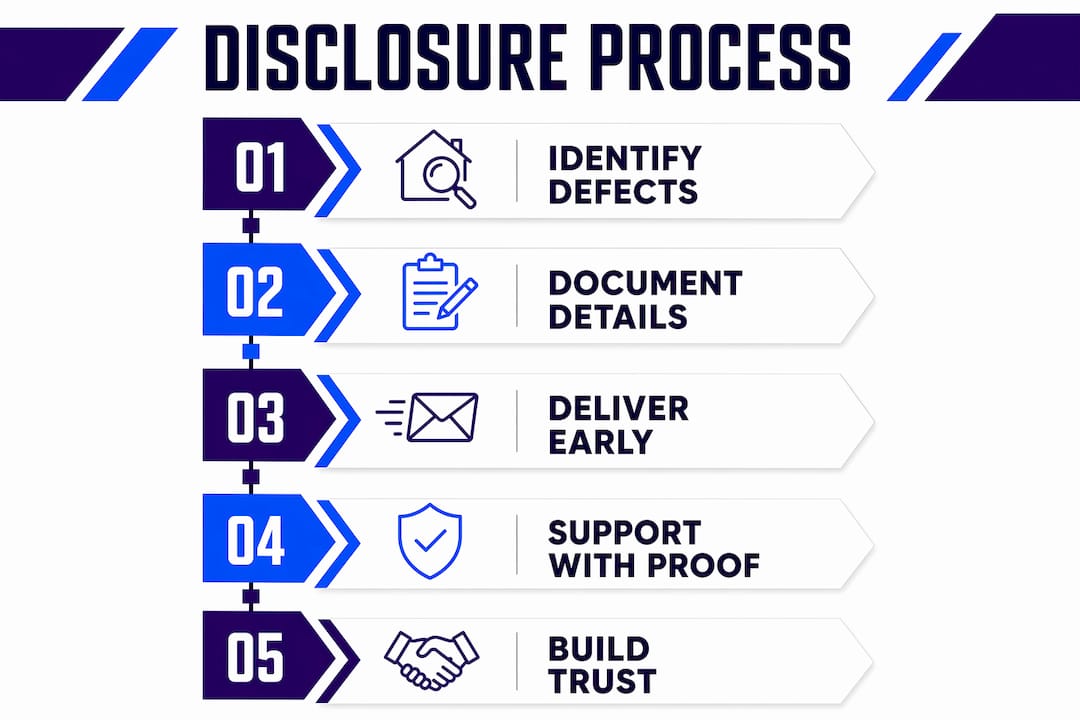
Completing a disclosure form accurately requires preparation, not guesswork. The goal is a document that is specific, honest, and supported by evidence.
Gather your documents first. Before you touch the disclosure form, collect:
- All inspection reports from the past several years
- Repair receipts and contractor invoices
- Permits for any additions, conversions, or major repairs
- HOA meeting minutes if disputes or special assessments are pending
- Any written communications about property conditions from neighbors or prior owners
A well-organized disclosure supported by inspection reports and repair receipts increases buyer confidence and provides legal protection. Documentation proves you disclosed in good faith and gives buyers the clarity they need to proceed.
Answer every question specifically. Vague answers like "some issues" create more suspicion than a detailed description of a resolved problem. Write what happened, when it was repaired, and by whom.
Use "unknown" when you genuinely do not know. Selecting "unknown" is legally safer than guessing when you lack actual knowledge about a system or repair. A false "no" is a liability. An honest "unknown" is not.
Pro Tip: Deliver disclosures as early as possible in the transaction. Early disclosure delivery reduces deal failures caused by surprises and helps you anticipate how defects may affect your net proceeds before you are already under contract.
Pair your disclosure package with a pre-listing inspection. A professional inspection report attached to your disclosures tells buyers you have nothing to hide. It also gives you the chance to repair issues on your timeline, at your chosen cost, rather than negotiating repairs under contract pressure.
Avoid the two most common seller mistakes: under-disclosure, which is omitting known issues to protect the sale price, and over-speculation, which is guessing at conditions you have no direct knowledge of. Both create liability. Accuracy is the only safe path.
Key Takeaways
Full, documented disclosure is the most effective legal and trust-building tool a seller has, and it consistently produces faster closings with fewer post-sale disputes.
| Point | Details |
|---|---|
| Disclosure is legally mandatory | Nearly all states require a standardized form covering structural, mechanical, and environmental conditions. |
| Non-disclosure carries serious risk | Sellers face fraud claims, out-of-pocket damages, and punitive awards for concealing known defects. |
| Transparency accelerates decisions | Research shows disclosure transparency directly reduces buyer purchase hesitation with statistical significance. |
| "Unknown" beats a wrong answer | Selecting "unknown" on disclosure forms is legally safer than guessing when you lack direct knowledge. |
| Early delivery prevents deal collapse | Providing disclosures before contract signing removes surprises and strengthens your negotiating position. |
What I have learned about disclosures after years in San Diego real estate
Sellers consistently ask me whether disclosing a problem will cost them money. My honest answer is: hiding it costs more. Every time.
I have watched sellers try to minimize disclosures to protect their asking price. What happens next is predictable. The buyer's inspector finds the issue. The buyer panics, assumes there are more hidden problems, and either walks or demands a credit far larger than the actual repair cost. The seller ends up worse off than if they had disclosed upfront with a contractor estimate attached.
The sellers who do best are the ones who treat their disclosure package like a marketing document. They disclose the repaired foundation crack with the structural engineer's sign-off. They disclose the replaced water heater with the permit. They hand buyers a complete picture, and buyers respond with confidence instead of suspicion.
San Diego buyers are sophisticated. They have seen enough listings to know that no home is perfect. What they are really evaluating is whether they can trust the seller. A thorough disclosure package answers that question before the buyer even asks it.
The benefits of full disclosure in sales are not theoretical. They show up in faster accepted offers, cleaner inspections, and closings that do not fall apart in the final week. Transparency is not a liability. It is your competitive advantage.
— Jeff
Working with Jeffsellssandiego to get disclosures right
Disclosures done correctly protect your sale and your legal standing. Jeffsellssandiego works with San Diego home sellers to prepare complete, accurate disclosure packages that satisfy California's strict requirements and build genuine buyer confidence.

From organizing your repair documentation to timing disclosure delivery for maximum impact, professional guidance reduces the risk of post-sale disputes and keeps your transaction on track. Sellers who work with an experienced agent avoid the most costly mistakes in the disclosure process. Whether you are listing your first home or your fifth, having an expert review your disclosures before they reach a buyer is one of the highest-value steps you can take. Connect with Jeffsellssandiego to get started on your San Diego home listing with confidence.
FAQ
What is a seller disclosure in real estate?
A seller disclosure is a legally required document in which the seller reports all known material defects and conditions affecting the property. Nearly all states mandate this form before or at contract signing.
What happens if a seller fails to disclose a known defect?
Sellers who conceal known defects face lawsuits for fraud or misrepresentation, with courts awarding out-of-pocket losses, benefit-of-the-bargain damages, or punitive damages in cases of intentional concealment.
Does disclosing problems lower the sale price?
Proactively disclosing minor flaws with supporting documentation typically builds buyer trust and prevents larger price reductions during inspection. Buyers distrust perfection and respond better to honest, specific information.
What should I write if I am unsure about a property condition?
Select "unknown" on the disclosure form. Choosing "unknown" is legally safer than guessing, because a false "no" creates direct liability while an honest "unknown" does not.
When should disclosures be delivered to the buyer?
Disclosures should be delivered as early as possible, ideally before the buyer submits an offer. Early delivery reduces deal failures caused by late surprises and gives you more control over how defects are framed in negotiations.