
Selling a condo is defined as transferring ownership of a unit within a shared-ownership building, and it involves a distinct set of legal, financial, and logistical steps that differ significantly from selling a single-family home. San Diego condo owners face specific challenges: HOA rules, shared building financials, tenant rights, and a competitive local market all shape your outcome. A clear selling condo how to guide cuts through that complexity and helps you move from listing to closing with confidence. Jeffsellssandiego works with San Diego condo sellers every day and has seen firsthand how preparation and pricing precision separate profitable sales from stressful ones.
What documents and preparations are required before listing your condo in San Diego
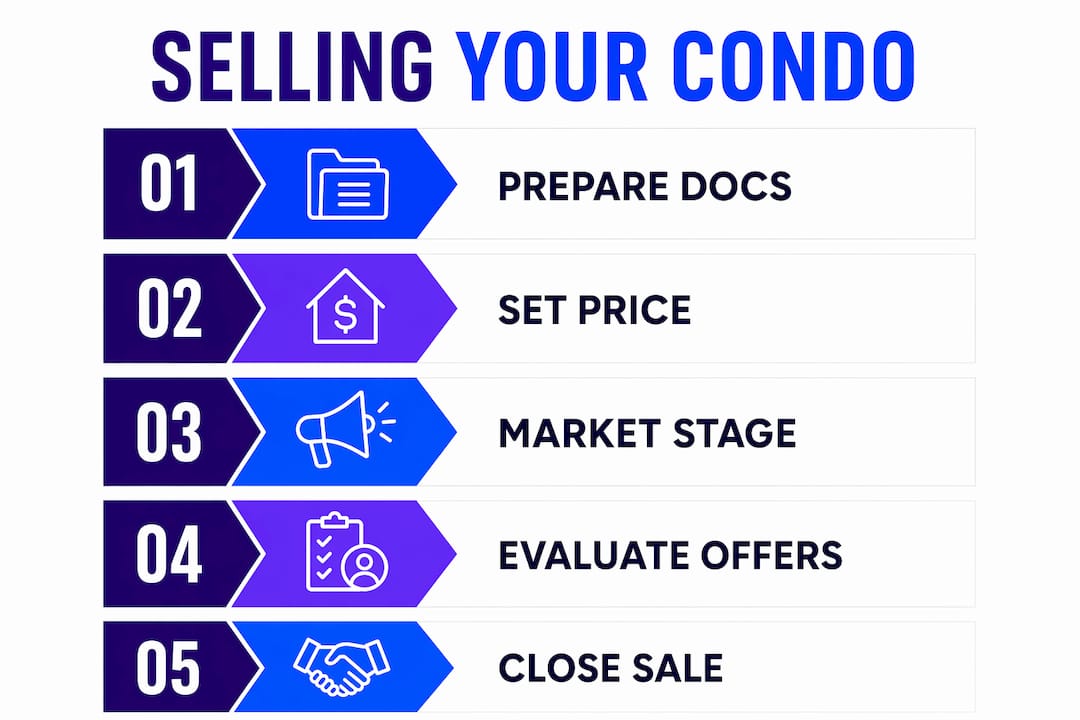
Preparation is the foundation of every successful condo sale. Buyers, lenders, and escrow officers all need specific documents before a transaction can close. Missing paperwork is the single most common cause of delayed closings in condo sales.
A complete documentation package including HOA Covenants, Conditions, and Restrictions (CC&Rs), financial statements, meeting minutes, and insurance policies is necessary to maintain lender confidence and prevent closing delays. Gathering these early gives buyers time to review them and reduces last-minute surprises. Your HOA management company is the fastest source for most of these records. For a deeper look at how HOA rules affect your sale, the HOA selling guide from Jeffsellssandiego covers the full picture.

Beyond paperwork, the physical condition of your unit matters enormously. Minor maintenance issues left unaddressed can drastically reduce perceived property value and create buyer hesitation. Buyers routinely overestimate repair costs, so a leaky faucet or chipped paint can cost you far more in negotiated price reductions than the actual fix would have. Walk through your unit with fresh eyes before listing.
Here is a practical pre-listing checklist for San Diego condo sellers:
- HOA documents: CC&Rs, bylaws, financial statements, meeting minutes, insurance certificate, and any pending special assessment notices
- Disclosure forms: California Transfer Disclosure Statement (TDS), Natural Hazard Disclosure (NHD), and any known material defects
- Tenant status: If your unit is occupied, confirm notice periods required by California law and establish a showing schedule with your tenant early
- Repairs and maintenance: Fix leaky faucets, replace burned-out bulbs, patch wall damage, and touch up paint
- Amenities access: Confirm buyers can tour shared spaces like the gym, pool, or rooftop during showings
Pro Tip: Request your HOA's most recent reserve study. Buyers and their lenders scrutinize reserve fund health closely, and a well-funded reserve is a genuine selling point you can highlight in your listing.
How to price your condo correctly for today's San Diego market
Correct pricing is the single most powerful lever you control as a condo seller. Price too high and your listing sits. Price too low and you leave money on the table. Neither outcome serves you.
A Comparative Market Analysis (CMA) focused on recently sold condos in your specific San Diego building or neighborhood is the standard tool for setting the right price. Your CMA should account for floor level, unit orientation, upgrades, square footage, parking spaces, storage, and HOA fees. Two units in the same building with identical floor plans can sell at meaningfully different prices based on these factors alone. Jeffsellssandiego builds CMAs specific to San Diego condo buildings, not just zip codes, because building-level data is far more accurate.
Pricing a condo is a blend of science and psychology. Slight overpricing is more harmful in condos than in single-family homes because buyers can directly compare near-identical floor plans within the same building. That comparison is instant and brutal. A unit priced 5% above its neighbors will be passed over in favor of the better-valued option every time.
The timing of your pricing decision is just as critical as the number itself. Accurate pricing within the first 7 to 10 days on market is vital to attracting competitive offers and preventing your listing from stagnating. That initial window is when buyer interest peaks. A listing that sits beyond two weeks starts to carry a stigma, and buyers begin to wonder what is wrong with it.
| Pricing factor | Impact on condo value |
|---|---|
| Floor level | Higher floors typically command a premium in San Diego high-rises |
| HOA fees | High monthly fees reduce buyer purchasing power and compress offers |
| Upgrades (kitchen, bath) | Updated units sell faster and at higher prices than original-condition units |
| Pending special assessments | Undisclosed assessments can kill deals at closing; disclose early |
| Building reputation | Well-managed buildings with strong reserves attract more qualified buyers |
Pro Tip: Pull sold data from the last 90 days, not 6 months. San Diego's condo market moves quickly, and older comps can mislead your pricing by thousands of dollars in either direction. Use San Diego pricing data to calibrate your CMA.
What are the most effective marketing and staging strategies to sell your San Diego condo?
Marketing a condo requires a different approach than marketing a house. You are selling a lifestyle as much as a unit. Buyers want to see how the space lives, not just how it looks.
Professional photography and virtual tours significantly improve buyer engagement and listing visibility across online platforms. Listings with high-quality media consistently outperform those without on the MLS and social media. A professional photographer knows how to make a 900-square-foot unit feel open and inviting. A virtual tour lets out-of-state buyers make confident decisions without flying in first.
Decluttering and depersonalizing help buyers visualize living in the condo and make spaces feel larger and more inviting. Remove bulky furniture, personal photos, and excess items from countertops and closets. Buyers need to mentally place themselves in the space. Personal items make that harder.
Effective staging and marketing for a San Diego condo includes:
- Staging with purpose: Assign a clear function to every room. A spare bedroom staged as a home office sells better than one filled with storage boxes.
- Showcase building amenities: Include photos of the pool, gym, rooftop, or lobby in your listing. These shared spaces are part of what buyers are paying for.
- MLS listing quality: Write a description that highlights floor level, views, parking, and HOA amenities. Generic descriptions get skipped.
- Social media and local platforms: Target San Diego-specific buyer audiences on Instagram and Facebook with geo-targeted ads.
- Open houses and private showings: Schedule open houses on weekend mornings when foot traffic peaks. For tips on maximizing open house results, Jeffsellssandiego's San Diego open house guide covers proven tactics.
Pro Tip: Ask your agent to photograph the view from your balcony or windows at golden hour. San Diego light is a genuine asset, and a sunset or ocean view photo can be the image that stops a buyer mid-scroll.
How to evaluate offers, negotiate, and close your condo sale successfully
Receiving an offer is exciting, but the price is only one part of what you are evaluating. A well-structured offer at a slightly lower price often beats a high offer loaded with contingencies.
Here is how to work through the offer and closing process:
- Review total offer terms. Look at the purchase price, financing type (cash vs. conventional vs. FHA), contingency periods, and proposed closing date. A cash offer with a 21-day close is frequently worth more than a financed offer at a higher price with a 45-day close.
- Disclose HOA details proactively. Condo buyers weigh HOA fees, board reputation, and pending special assessments heavily when evaluating offers. Transparency about the building's financial health builds buyer trust and speeds the closing process. Surprises at this stage kill deals.
- Deliver documents early. Provide your HOA package, disclosures, and any inspection reports to the buyer and their lender as soon as the offer is accepted. Early delivery reduces the chance of last-minute delays caused by document review periods.
- Coordinate inspections efficiently. Schedule the home inspection and any HOA-required inspections within the first week of escrow. Delays in inspections push back the entire closing timeline.
- Handle tenanted units with care. Tenanted units require legal notice periods and tenant cooperation. Restricted showings and staging limitations are a primary cause of sales delays in occupied condos. Establish a clear showing schedule with your tenant in writing before you list, not after you receive an offer.
One negotiation pitfall specific to condos: buyers sometimes use HOA fee increases or pending assessments discovered during escrow as leverage to renegotiate the price. Disclosing everything you know upfront removes that leverage entirely and keeps your negotiating position strong.
Key takeaways
Selling a San Diego condo successfully requires accurate pricing within the first 7 to 10 days, complete HOA documentation, and professional marketing that showcases both the unit and the building.
| Point | Details |
|---|---|
| Prepare documents early | Gather CC&Rs, financials, and disclosures before listing to prevent closing delays. |
| Price within the first 7–10 days | The initial market window is when buyer interest peaks; accurate pricing prevents stagnation. |
| Disclose HOA details upfront | Transparency about fees and assessments builds buyer trust and protects your negotiating position. |
| Use professional photography | High-quality photos and virtual tours increase listing visibility and buyer engagement. |
| Manage tenants proactively | Establish a written showing schedule with tenants before listing to avoid delays. |
What I have learned from selling condos in San Diego
Most sellers focus almost entirely on price. That is understandable. But in my experience working San Diego condo sales, the deals that fall apart rarely do so because of price. They fall apart because of documentation gaps, tenant conflicts, or HOA surprises that nobody addressed early enough.
The sellers who close fastest and at the best price are the ones who treat preparation as seriously as marketing. They pull their HOA documents before they even call me. They fix the small things. They have an honest conversation with their tenant before the sign goes in the ground. That groundwork is invisible to buyers, but it shows up in how smoothly escrow runs.
Pricing precision matters more in condos than in any other property type. When a buyer can pull up three identical floor plans in your building and compare prices side by side, you have almost no room for error. I have seen overpriced units sit for 60 days while the unit two floors below sold in a week. The difference was $15,000 on the asking price and a seller who listened to the data.
If your unit is tenant-occupied, plan for a longer timeline and build that into your expectations from day one. California tenancy law is not flexible, and buyers know it. A cooperative tenant is an asset. A difficult one can cost you the deal entirely.
Choose an agent who specializes in San Diego condos and understands HOA regulations. The difference between a generalist agent and one who knows your building's history, the HOA's financial standing, and the recent sales in your complex is measurable in both time and money.
— Jeff
Selling your condo with Jeffsellssandiego
Jeffsellssandiego provides San Diego condo sellers with building-specific CMAs, full HOA document coordination, and professional marketing that includes photography, virtual tours, and targeted digital campaigns. Every seller gets a clear plan before the listing goes live, not after.

The Seller's Guide on the Jeffsellssandiego website walks you through every phase of the condo selling process, from pre-listing preparation to closing day. For sellers who want to see what comparable units are currently doing in the market, the active San Diego listings page gives you real-time pricing context. Reach out to Jeffsellssandiego to get a no-pressure market analysis specific to your building and unit.
FAQ
What makes selling a condo different from selling a house?
Selling a condo requires HOA document disclosure, lender approval of the building's financials, and compliance with shared-building rules that do not apply to single-family homes. These additional layers make preparation and documentation more critical.
How do I find the right asking price for my San Diego condo?
A Comparative Market Analysis using recent sales of similar units in your building or neighborhood is the standard method. Floor level, HOA fees, upgrades, and parking all affect the final number.
Do I have to disclose HOA special assessments to buyers?
Yes. California law requires sellers to disclose known material facts, and pending special assessments qualify. Disclosing them early prevents deal-killing surprises during escrow.
How long does it take to sell a condo in San Diego?
Timeline varies by price point and market conditions, but the first 7 to 10 days on market are the most critical. Well-priced, well-prepared condos in San Diego frequently go under contract within that window.
Can I sell my condo if it is currently rented?
Yes, but California law requires proper notice to tenants before showings, and tenant cooperation directly affects your ability to market the unit effectively. Establishing a written showing agreement with your tenant before listing is the most reliable way to avoid delays.