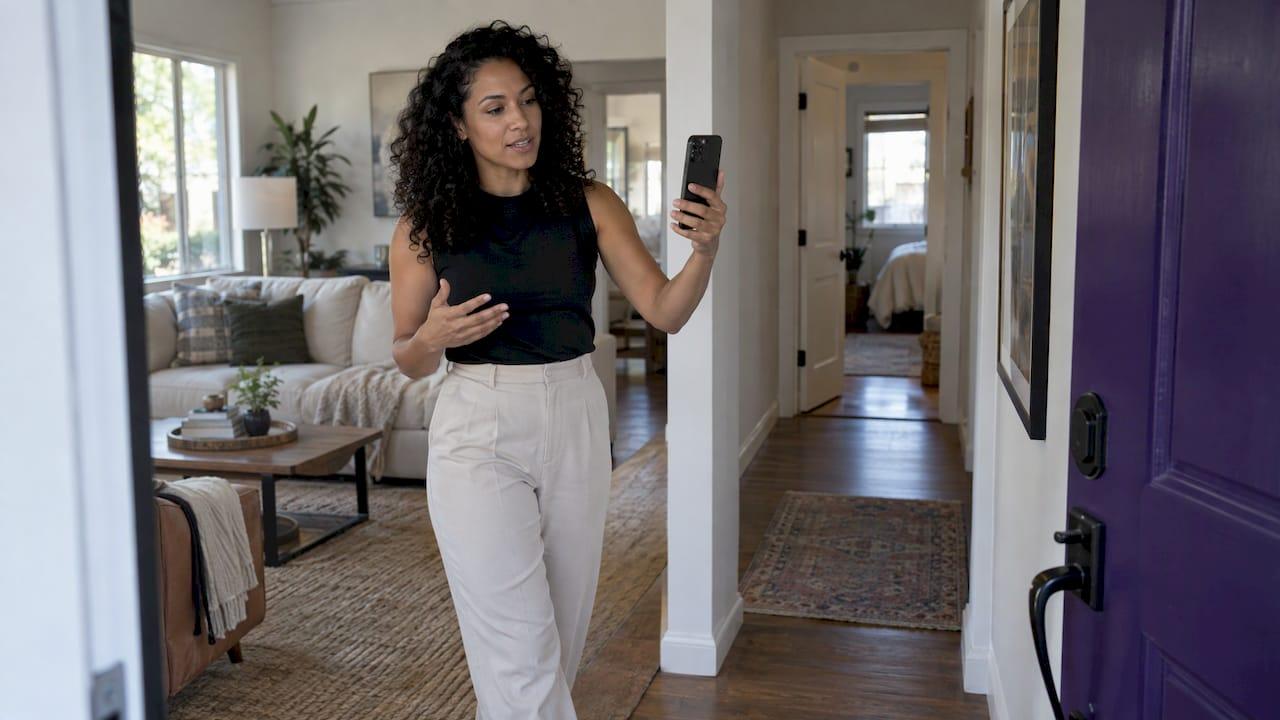
You can buy a San Diego home without setting foot in it before you offer, but only if someone on the ground does the things you cannot: walk the property, read the disclosures with you, and keep the closing on schedule. That is the job of a local agent who knows the neighborhoods, and it is why we built our buyer service around personal guidance from the first showing through closing. This guide walks through the whole remote process, where it goes wrong, and what to do at each step.
TL;DR
- Remote buying works when you pair live video tours with a local agent, an independent inspection and a full read of the seller's disclosures.
- In California, a seller's Transfer Disclosure Statement gives you a short window to back out if it arrives after your offer is signed, so read it the day it lands.
- Closing can be mostly digital, but do not assume it is fully remote: build a signing plan with escrow early.
- Wire fraud is the biggest financial risk for out-of-town buyers. Confirm wiring instructions by phone, using a number you verified independently.
- Start with a VIP Home Search so you see matching listings in your chosen neighborhoods before they get crowded.
Table of Contents
- The remote buying path from search to keys
- Step 1: Line up financing before you tour
- Step 2: Learn San Diego neighborhoods without living here
- Step 3: Search and tour when you cannot be there
- Step 4: Make the offer and know what you are agreeing to
- Step 5: Read the disclosures and inspect the home
- Step 6: Plan the signing and closing
- Step 7: Protect your money from wire fraud
- What the process costs in time
- Why we recommend working with one local agent
- Perspective
- How we help you buy from a distance
- FAQ
- Sources
The remote buying path from search to keys
A remote purchase follows the same stages as any other: preparing your finances, searching, touring, offering, inspecting, and closing through escrow. In California, escrow is the neutral third party that holds your deposit and documents until every condition is met. What changes when you are out of town is that each stage needs a stand-in for your eyes and your signature.
Here is the order we recommend:
- Get your financing in line. Talk to a lender and get a preapproval letter before you tour. Tell the lender up front that you are buying from out of state, since that affects how documents are signed.
- Define your neighborhoods. Narrow San Diego County to three or four areas by commute, lifestyle and budget.
- Set up a live search. Alerts matter in a market where good homes move quickly.
- Tour by video, then in person through your agent. Your agent walks every home you are serious about.
- Offer, then inspect. Your offer carries contingencies, which are conditions that let you renegotiate or cancel.
- Close through escrow with a signing plan made early.
Each of these has traps. The rest of this article takes them in turn.
Step 1: Line up financing before you tour
A remote buyer cannot rely on a quick drive over to make a competitive offer. That makes preapproval the most useful thing you can do first. A preapproval letter tells sellers that a lender has reviewed your income, assets and credit and is prepared to lend up to a stated amount.
Three practical points for out-of-town buyers:
- Know your down payment and where it sits. Funds moving between accounts leave a paper trail your lender will ask about. Do not move money around casually in the weeks before you offer.
- Plan your earnest money. This is the good-faith deposit that goes into escrow after your offer is accepted. You will need to be able to send it quickly and safely, which brings up the wire fraud issue covered below.
- Ask your lender about signing logistics. Some loan documents must be notarized and some do not. Knowing this early shapes your whole closing plan.
If you are buying for the first time, our guides on how to buy your first home in San Diego and home buying tips for first-time buyers cover the money side in more detail.
Step 2: Learn San Diego neighborhoods without living here
San Diego County is a patchwork. A coastal condo, a North Park craftsman and a ranch property in the inland valleys are different lifestyles with very different price points and commutes. Choosing from a map alone is how remote buyers end up disappointed.
Start with free online tools to build a shortlist:
- Use street-level and satellite imagery to virtually walk the block and look at what surrounds a property, such as freeways, flight paths, hills and the condition of nearby homes.
- Check walkability scores and crime maps to compare areas.
- Read local newspapers and regional magazines, which are often overlooked sources for what a neighborhood is actually like. Northwestern Mutual's guide to researching a neighborhood online lays out this toolkit.
One point catches many buyers out. Under the federal Fair Housing Act, agents cannot steer you by commenting on neighborhood safety or school quality, so you need to do that research yourself from official data. Our pieces on why local schools matter and family neighborhoods in San Diego show where to look.
If you want to live car-light, read walkable neighborhoods in San Diego. If you are heading here on military orders, relocating to San Diego on military orders gives neighborhood basics for that move. For a neighborhood-level example, see our North Park homebuyer tips, and our San Diego County area pages cover the broader map.
Step 3: Search and tour when you cannot be there
A remote search is only as good as the information that reaches you. Public listing portals show the photos the seller wants you to see. What you need is a local person who knows what the photos leave out.
A strong remote tour has four parts:
- A live video walkthrough, not a slideshow. Ask the agent to open cabinets, run taps, check windows and show the ceilings, the garage and the yard edges.
- The surroundings. Have the agent film the street at different times of day, the neighbors' properties and the view from the windows.
- Noise and smell checks. Traffic, aircraft and nearby businesses do not show up in photos.
- A debrief. After each tour, an honest comparison across the homes you have seen is worth more than any single video.
This is where having one agent who knows the area pays off. We use a VIP Home Search to send buyers personalized listings in specific neighborhoods and cities, and our property search tips for San Diego buyers explain how to set up your criteria so the matches are useful rather than noisy.
Step 4: Make the offer and know what you are agreeing to
A remote offer is built on three things: price, terms and contingencies. Your agent advises on price using a localized market analysis, meaning a comparison of recent nearby sales for homes like the one you want. Terms cover items like the closing date and how much earnest money you will deposit.
Contingencies are where remote buyers must be most careful. Because you have not stood in the house, you rely more heavily on:
- An inspection contingency, which gives you time to have the home professionally inspected and to ask for repairs or a credit, or to cancel under the terms of the contract.
- A loan contingency, which protects your deposit if financing falls through within the agreed period.
- An appraisal contingency, which addresses what happens if the lender's valuation comes in below the price.
Do not waive protections to look more attractive just because a market is competitive. A waived inspection is a far bigger risk when you have never seen the home yourself. Your agent can show you other ways to strengthen an offer, such as a clean preapproval, flexible timing and a prompt response, without giving up the protections that matter most.
Step 5: Read the disclosures and inspect the home
This is the step that replaces your own eyes, so give it time.
Seller disclosures
California requires most sellers of single-family homes to give the buyer a written Transfer Disclosure Statement covering known problems with the property. If it is delivered after your offer is signed, California Civil Code section 1102.3 gives you three days after delivery in person, or five days after delivery by mail, to terminate the offer. The clock is short, so read the disclosures the day you receive them and talk through every flagged item with your agent. We explain how to read them in the role of real estate disclosure for San Diego buyers.
Look especially for:
- Past repairs, additions and whether permits were pulled
- Water intrusion, drainage or foundation notes
- Roof age and condition
- Neighborhood noise or nuisance disclosures
- Any natural hazard information in the report package
Inspections
Your inspection is independent of the lender. An appraisal estimates value for the lender, while an inspector works for you and examines the roof, wiring, plumbing, foundation and more. Hire an inspector yourself, and ask for the full written report with photos. Then schedule a call with the inspector to go through it, with your agent on the line. Specialized inspections, such as sewer line, termite or pool, are worth considering depending on the home's age and features.

Attending by video is a good compromise. Many inspectors will let you watch live. If you cannot, the call after the report is the next best thing.
Title and other records
Title research confirms the seller can legally sell and shows liens or easements on the property. Escrow and the title company handle this, and your agent should walk you through the preliminary report when it arrives. Read it for anything unexpected, such as easements that affect how you can use the yard.
Step 6: Plan the signing and closing
Much of a California closing can now be done digitally, but a fully remote closing is not automatic. Your documents will fall into groups: those you can sign electronically, those that require a notary, and those your lender controls.

In a typical mortgage closing, the deed of trust (the security instrument) and any deed transferring title are notarized, while the promissory note and the Closing Disclosure usually are not. California has been phasing in remote online notarization, and the rules about which notaries may perform it have been changing, so the practical answer depends on your lender, escrow officer and the documents involved. Ask your escrow officer in the first week of escrow what a realistic signing plan looks like for someone out of state. Options may include a mobile notary who comes to you, or a notary platform, depending on what the lender and escrow accept.
Build in time for mail delays if wet-ink originals are required, and ask whether you can designate someone you trust to act for you. A power of attorney is itself normally notarized, and some lenders will not accept one, so check before relying on it.
Our role during this stage is to keep the pieces moving: confirming deadlines, following up with escrow and keeping you informed, so a signing issue does not become a missed closing date.
Step 7: Protect your money from wire fraud
Wire fraud is the most common financial danger for buyers who cannot walk into an office. Scammers pose as agents, escrow officers or lenders and send fake wiring instructions, sometimes claiming that banking details have changed at the last minute. A California title and escrow guide for buyers recommends confirming wiring instructions by calling a trusted number for the escrow company that you verified independently of any email, and checking email addresses closely for a single altered letter.
A simple routine:
- Get the escrow company's name and phone number from your purchase contract or your agent, not from an email carrying wiring instructions.
- Call that number and confirm the instructions word for word.
- Treat any message about a last-minute change as suspicious until you have phoned to verify it.
- Send a small confirmation of receipt request, and call again after wiring to be sure the funds arrived.
- Tell your agent when you send money so everyone is watching for the same transfer.
What the process costs in time
Typical stages vary by contract, but a remote buyer should expect the following rhythm:
| Stage | What you do | Who does the legwork on the ground |
|---|---|---|
| Search | Set criteria, review matches | Agent previews homes and filters |
| Tour | Watch live video, ask questions | Agent walks and films each property |
| Offer | Approve price and terms | Agent prepares the analysis and offer |
| Inspection | Review report, join the call | Inspector and agent |
| Disclosures | Read and flag items within your window | Agent explains each item |
| Escrow | Send deposit and sign | Escrow officer, notary, agent follows up |
| Closing | Confirm funds and signing | Agent tracks deadlines |
Why we recommend working with one local agent
Every step above rests on someone you trust being on the ground. Our positioning is simple: over two decades of San Diego-focused experience, strong negotiation, strategic marketing and a client-first approach with personalized guidance from the first showing through closing. For a remote buyer that means one person who learns what you want, shows you the homes that fit, and stays with the transaction until the keys change hands.
Perspective
Remote buyers tell us the hardest part is not the paperwork. It is trusting a home they have never stood in. Our answer is to make the process feel calm and precise: a clear search, honest video tours, a plain-English read of every disclosure, and someone available whenever you need to talk.
San Diego rewards local knowledge. A block can feel completely different from the one next to it, and a good negotiator can protect your position on price, repairs and timing. After more than two decades focused on this market, we believe that kind of guidance is the best way to buy from a distance with confidence.
Jeff
How we help you buy from a distance
If you are planning a San Diego purchase and cannot be here for every showing, our Buy With Confidence service covers representation from the first showing through closing. Pair it with a VIP Home Search to get personalized listings in the neighborhoods you care about, or browse current San Diego homes for sale to start narrowing your list.

If you also own a home elsewhere in San Diego County that you plan to sell as part of your move, our Sell With Strategy service and a home valuation are the place to begin.
FAQ
Can I really buy a San Diego home without visiting?
Yes, many buyers do. The safe way is to have your agent tour each home live on video, hire an independent inspector, read all seller disclosures and keep your contingencies in place. If you can manage one short trip before closing, a final walkthrough in person adds comfort, but it is not required.
Do I have to be in California to sign closing documents?
Not always, but you should not assume a fully remote closing. Some documents need a notary and some do not, and the rules on remote notarization in California have been evolving. Ask your escrow officer and lender for a signing plan early in escrow.
How do I send earnest money safely?
Use wiring instructions that come from the escrow company named in your contract, and confirm them by phone at a number you verified independently. Never act on an emailed change of instructions without calling first.
Is it a good time to buy a house in San Diego?
That depends on your budget, your timeline and current mortgage rates, which are published on a schedule and change often. A localized market analysis of the neighborhoods you want is a better guide than a general headline, and we can prepare one for you.
Sources
- California Civil Code section 1102.3
- How to research a neighborhood online if you can't visit in person
- California buyer and seller guide to title and escrow