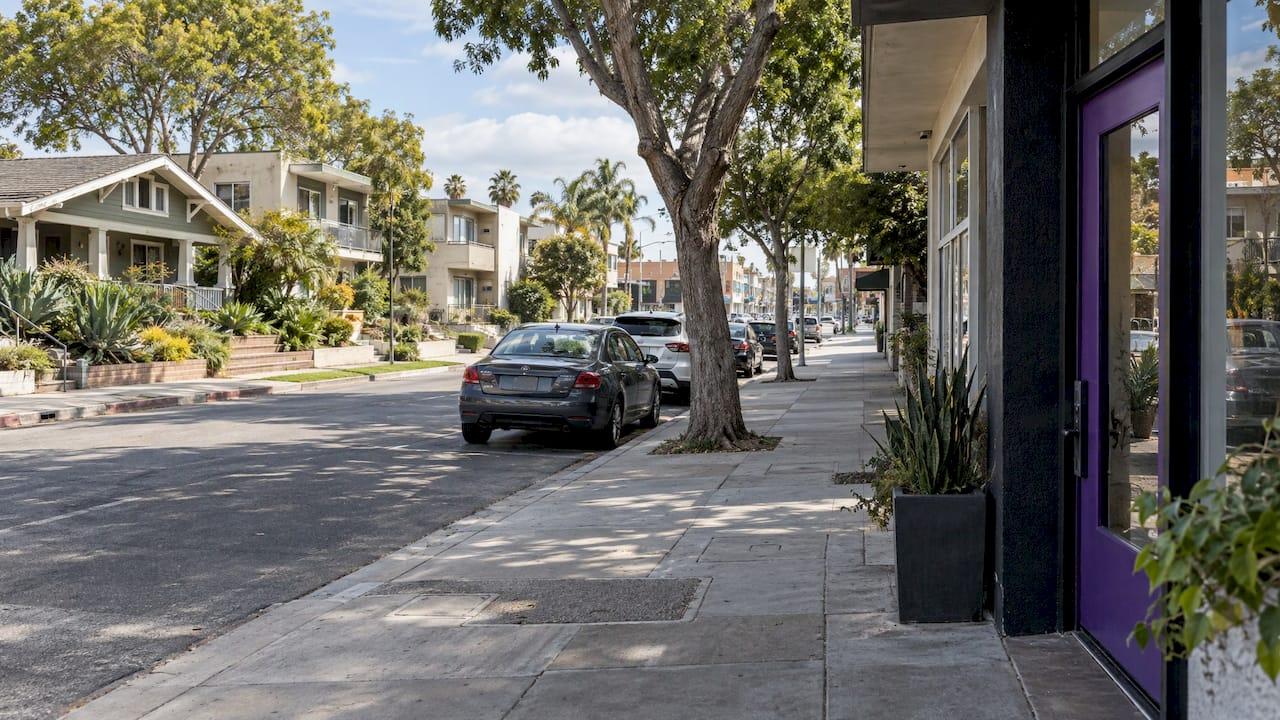
Hillcrest is a good place to live if you want a central, walkable, lively neighborhood next to Balboa Park, and it is a harder fit if you want a quiet street, a driveway and a yard. Most homes are condos and apartments, so the experience, and the value of your home, depends heavily on the specific block and building. This guide covers daily life, the real trade-offs and what they mean when you buy or sell.
TL;DR
- Hillcrest is among the most walkable parts of central San Diego, with restaurants, cafés, a farmers market and Balboa Park close by.
- Parking, evening noise and cost are the main trade-offs, and they change block by block.
- Most owners here hold condos, with single-family homes concentrated in nearby Mission Hills.
- Rents are well above the national median, so many buyers compare a monthly mortgage with a monthly lease.
- Visit at different hours, check off-street parking and get a local valuation before you decide to buy or list.
Table of Contents
- What daily life in Hillcrest is like
- Who Hillcrest fits best
- Getting around: walking, buses and driving
- Parking, noise and safety
- What it costs to live in Hillcrest
- The homes: condos, bungalows and Mission Hills next door
- Pros and cons at a glance
- If you are buying in Hillcrest
- If you are selling in Hillcrest
- Our perspective
- Ready to buy or sell in Hillcrest?
- FAQ
- Sources
What daily life in Hillcrest is like
Hillcrest sits just north of Balboa Park and is one of San Diego's oldest urban neighborhoods. San Diego Magazine's locals' guide describes a patchwork of old bungalows, midcentury motels, mixed-use towers and sidewalk storefronts. That mix is the character of the place: you can walk from a quiet block of Craftsman homes to a street of rooftop bars and taco stands in a few minutes.
Life centers on the University Avenue and Fifth Avenue corridors. According to San Diego Neighborhood Guide, those streets have the strongest walkability, while outer streets are less convenient for daily errands. The same guide notes that homes near the commercial corridors see more evening activity, while interior residential streets tend to be calmer.
The neighborhood also has a strong identity. It is the heart of San Diego's LGBTQ+ community, and the commercial strip hosts events such as Pride and CityFest, per the San Diego Magazine guide. Niche's neighborhood profile lists a population of 14,457, an urban feel, most residents renting, plenty of bars, restaurants, coffee shops and parks, and above-average public schools.
A typical week might include a Sunday farmers market, a run through Balboa Park, dinner within a few blocks and a short drive to Downtown or Mission Valley. If that sounds like your rhythm, Hillcrest is worth a serious look.
Who Hillcrest fits best
The people who tend to be happiest here share a few habits:
- Car-light households. Daily needs like groceries, coffee and dining are close together, so one car, or none, can work.
- Medical and hospital staff. Hillcrest is San Diego's hospital district, which shortens commutes for people at the nearby medical centers.
- Park and culture lovers. Balboa Park's museums, gardens and trails are a short walk away.
- Buyers who like an active street scene. Restaurants, events and nightlife are part of the package.
It fits less well if your priorities are a private yard, guaranteed driveway parking, a beach nearby or silence at 11 p.m. on a Saturday. The coast is a drive away, so Hillcrest is not a beach neighborhood.
Getting around: walking, buses and driving
Walkability is the neighborhood's headline feature. For a deeper look at how it compares with other areas, see our guide to walkable neighborhoods in San Diego where you can live car-light and our piece on walkable living in Mission Hills and Hillcrest.
A few specifics:
- Buses. SanDiego.tips' neighborhood guide notes frequent buses along University Avenue and Fourth and Fifth Avenues, and says there is no trolley stop in the neighborhood. If your commute depends on the trolley, factor in a bus transfer or a short drive.
- The Vermont Street Bridge. PBS SoCal describes this bridge as linking Hillcrest and University Heights across Washington Street, open to pedestrians, bicyclists and wheelchair users. It is a handy walking route if you are weighing both neighborhoods.
- Freeway access. The July 2026 neighborhood guide above lists proximity to Balboa Park, Downtown, Mission Valley and major freeways as practical advantages.
Walkability is not uniform. A condo on Fifth Avenue and a home on an outer residential street can feel like two different neighborhoods. Walk your actual daily route before you make an offer.
Parking, noise and safety
These three topics decide whether people love or leave Hillcrest, so look at them early.
Parking
Hillcrest is Area A of the City of San Diego's residential permit parking program. According to the City of San Diego's permit parking page, on-street parking in the area is prohibited from November 1 through October 31, Monday to Friday, 7 a.m. to 7 p.m., unless a vehicle has a valid permit or a disabled placard. In practice, that means anyone without a permit or off-street space faces real daily friction. Check the city page for how permits are issued and for current rules.
The San Diego Neighborhood Guide also points to tight street parking near the commercial corridors and recommends confirming whether a specific home has off-street parking. For buyers, a dedicated space can be one of the most valuable features of a Hillcrest condo. For sellers, it belongs at the top of your listing.

Noise and activity
Expect more activity near bars, restaurants and event areas. Interior residential streets are calmer. When you tour a home, come back on a Friday or Saturday evening and listen from the bedroom, not the sidewalk.
City records show that compliance matters too. In November 2025 the City Attorney's office filed a civil enforcement action against an unpermitted hostel on Essex Street in Hillcrest. The city reported more than 20 police calls there between April 2021 and September 2025 for noise, disturbances, excessive occupancy and illegal parking. It is one property, not the neighborhood norm, but it shows that the city acts on nuisance issues.
Safety
Hillcrest is a busy urban neighborhood and has the usual urban concerns. Sandispots describes it as generally safe, with car break-ins, occasional late-night incidents on the bar blocks and a visible unhoused population near the park edges. Practical habits help: keep valuables out of parked cars, and choose a building with secure entry and garage parking if that matters to you.
What it costs to live in Hillcrest
Hillcrest is one of the pricier central neighborhoods. San Diego Neighborhood Guide describes it as one of the more expensive central San Diego neighborhoods.
Rent figures show the pricing pressure clearly. As of November 2026, Zumper reports a median rent in Hillcrest of $2,395 a month, 26% above the national median. One-bedrooms average $2,195 and two-bedrooms $2,995. Zumper also shows rents down 4% over the last month and 2% year over year. Rent data like this is updated regularly, so check the live page before you compare.

That matters to buyers because rent is the benchmark many people use. If you are paying close to $3,000 a month for a two-bedroom, it is worth running the numbers on a purchase. Your real monthly cost of owning includes the mortgage, property taxes, homeowners association (HOA) dues for condos, insurance and parking. For the broader picture of county-wide prices and affordability, see our San Diego housing market overview.
The homes: condos, bungalows and Mission Hills next door
Hillcrest's housing is mostly multifamily. Sandispots notes that buying here is mostly condos, with the few single-family blocks in nearby Mission Hills running far higher in price. The listing mix runs from older mid-century buildings to newer University Avenue complexes, and building age, HOA fees and parking assignments often matter as much as square footage.
If you want a house with a yard but still want the walkable lifestyle, widen your search to Mission Hills, which shares much of the same character. Our Mission Hills and Hillcrest neighborhood page and Hillcrest area page are good places to see what is available.
Pros and cons at a glance
| What you get | What to plan for | |
|---|---|---|
| Location | Close to Balboa Park, Downtown, Mission Valley and freeways | Coast is a 15 to 20 minute drive |
| Lifestyle | Restaurants, cafés, farmers market, events | More evening activity near the corridors |
| Transit | Frequent buses on University and Fourth/Fifth | No trolley stop in the neighborhood |
| Housing | Condos, bungalows, mixed-use buildings | Few single-family homes; HOA dues on condos |
| Cost | A central, in-demand address | Rents and prices sit above much of the county |
| Parking | Garage spaces add real value | Permit rules and tight street parking |
The coast distance and the parking and noise points come from the sources cited above; the exact experience varies by block, which is why a visit matters more than any summary.
If you are buying in Hillcrest
A Hillcrest purchase rewards a short checklist that goes beyond bedrooms and baths:
- Confirm parking. Is there an assigned space, and is it deeded with the unit? Street parking in this permit area will not fill the gap.
- Visit at three times. Weekday morning, Friday night and Sunday during the farmers market show you the neighborhood's full range.
- Read the HOA documents. Dues, reserves, special assessments and rental rules shape both your monthly cost and your resale.
- Walk your routine. Time the walk to groceries, a bus stop and the park.
- Compare to nearby areas. Mission Hills, North Park and University Heights offer different tradeoffs. Our North Park buyer tips show how we think through a neighboring area.
If you have a specific building or block in mind, our VIP Home Search is built around personalized listings for buyers in specific neighborhoods.
If you are selling in Hillcrest
Sellers have the mirror-image job: show buyers the lifestyle and remove their doubts. Lead with what Hillcrest does best, which is walkability, location and park access, and answer the likely objections up front. Show the parking arrangement clearly, explain the HOA, and photograph the home when light and street activity show it at its best.
Pricing matters most. Because building, floor, view, parking and HOA all move value, a neighborhood average will not tell you what your unit is worth. Start with a home valuation grounded in localized market analysis, then build a plan around it.
Our perspective
We have spent over two decades working in San Diego, and Hillcrest is a neighborhood where the details decide everything. Two condos a block apart can offer very different daily lives, depending on parking, which side of the building faces the street and how close the front door is to the nightlife.
That is why we start with how you want to live, not a price range. A buyer who loves the farmers market and a ten-minute walk to the park needs a different search than one who wants quiet evenings and a garage. A seller needs the same honesty in reverse: which features of this exact home a buyer will pay for, and how to show them.
Our approach is client-first. We guide you from the first showing through closing, negotiate hard on your behalf and aim to keep the process calm and precise, with availability when you need it.
Jeff
Ready to buy or sell in Hillcrest?
If Hillcrest is on your shortlist, we can walk you through the buildings and blocks that match your lifestyle and budget. Our Buy With Confidence service supports buyers from the first showing through closing, and Sell With Strategy gives homeowners a marketing and negotiation plan built around their property.
To see how your home or a target property compares, start with our Hillcrest page or get in touch through jeffsellssandiego.com.
FAQ
Is Hillcrest a good area to live in San Diego?
Yes, for people who want a central, walkable and active neighborhood. It offers dining, events, a farmers market and quick access to Balboa Park, Downtown and Mission Valley. The tradeoffs are parking, evening noise near the main corridors and a higher cost of living than many parts of the county.
Is Hillcrest expensive?
It is one of the more expensive central San Diego neighborhoods. As of November 2026, Zumper's data puts median rent at $2,395 a month, 26% above the national median. Rent changes monthly, so check the live figure when you compare it with a mortgage.
Is Hillcrest walkable without a car?
Mostly. Walkability is strongest around University and Fifth Avenues, and buses run frequently along University and Fourth/Fifth. There is no trolley stop in the neighborhood, so commutes that rely on rail need a bus or a short drive.
What is the parking situation in Hillcrest?
Hillcrest is Area A of the city's residential permit parking program, with weekday daytime restrictions for vehicles without permits, per the City of San Diego. Tight street parking near commercial areas makes off-street parking an important feature when buying or selling.
What kinds of homes can I buy in Hillcrest?
Mostly condos in a mix of older and newer buildings, along with some bungalows and mixed-use properties. Single-family homes are more common in nearby Mission Hills, which shares much of the same walkable character.
Sources
- The Locals' Guide to Visiting Hillcrest, San Diego Magazine
- Living in Hillcrest: Pros and Cons, San Diego Neighborhood Guide
- Hillcrest neighborhood profile, Niche
- Hillcrest local guide, SanDiego.tips
- Scenic and historic pedestrian bridges, PBS SoCal
- Residential Permit Parking, City of San Diego
- City Attorney civil enforcement press release, November 2025
- Living in Hillcrest, Sandispots
- Average Rent in Hillcrest, Zumper