
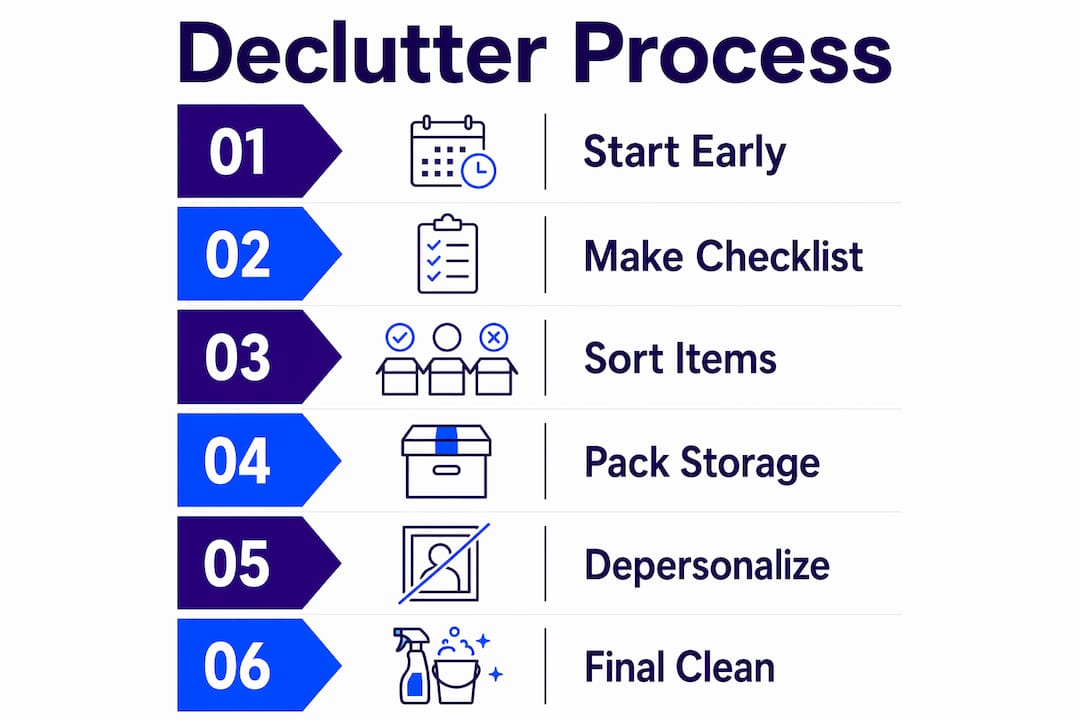
Decluttering before selling your home is one of the highest-return moves you can make before listing. Start 6–8 weeks out, sort every item into four categories (keep, donate, sell, discard), and work through rooms in this order:
- Entryway and living areas first — buyers form their first impression here within seconds
- Kitchen and bathrooms next — these rooms drive purchase decisions more than any others
- Bedrooms and home office — neutralize personal effects so buyers can picture their own life there
- Storage spaces last (garage, basement, attic, closets) — empty these down to show real capacity
- Yard and exterior — curb appeal sets the tone before buyers ever walk through the door
Remove personal photos, religious or political items, and unique collections throughout. Clear every horizontal surface down to one or two items. Staged homes may sell for more than unstaged ones, and thorough decluttering alone can improve sale price compared to cluttered homes. Use temporary off-site storage for anything you plan to keep but don't need during the selling period. Book a professional cleanout at the end to haul everything in a single visit rather than making a dozen dump runs yourself.
Table of Contents
- How to declutter before selling: why it matters so much
- Room-by-room decluttering checklist to sell your house
- What expert stagers know that most sellers don't
- Key Takeaways
How to declutter before selling: why it matters so much
Buyers decide fast. First impressions form within seconds, and clutter acts as a cognitive barrier that pulls attention away from the home's actual features. A crowded room reads as neglect, even when the structure is sound and the finishes are fresh.
The financial case is straightforward. Decluttering alone can yield a 3–5% price premium compared to cluttered equivalents in the same neighborhood, and it forms the foundation that makes professional staging work. Without it, even the best stager is fighting an uphill battle.
Personal items create a subtler problem. Family photos, diplomas, and collections make it harder for buyers to project themselves into the space. Removing those items creates a blank canvas buyers can mentally move into, which is the whole point of a showing. Neutral decor invites more buyers to envision themselves living there.
There's an operational benefit too. A decluttered home is easier to keep show-ready. You can accommodate last-minute showing requests without a panic clean, which typically leads to more viewings and more offers. Less stuff means less to manage every single day of the selling period.
Room-by-room decluttering checklist to sell your house
Start 6–8 weeks before your list date so you have time to sort thoughtfully rather than rush. Rushed decisions are where sellers end up keeping what they meant to donate and tossing what they meant to keep. Work one room at a time, and tackle the high-traffic areas first.

Pro Tip: Before you touch a single item, walk through the entire house with a notepad and write down every room that feels crowded. That list becomes your priority order.
Entryway
The entrance sets the tone for the entire showing. A crowded hallway with overflowing coat racks and shoe piles creates immediate doubt.
- Clear coat racks and shoe storage down to one or two items per person
- Remove all mail, keys, and miscellaneous items from entry tables
- Leave only one small decorative element if desired
- Sweep, mop, and replace worn doormats
Kitchen
Kitchens drive purchase decisions more than any other room. Buyers open every cabinet and drawer, so the inside counts as much as the countertops.
- Clear countertops down to one or two small appliances maximum
- Empty at least a third of your cabinets and pantry — buyers will open them
- Strip everything off the refrigerator door: magnets, photos, kids' art
- Box up excess cookware, gadgets, and duplicate utensils
- Purge expired food from the pantry and fridge
Living room
The living room needs to show how the space handles furniture without feeling cramped. Buyers are mentally staging their own couch and coffee table.
- Remove excess seating and any furniture that blocks natural pathways
- Clear coffee tables, mantels, and open shelving down to no more than three items per surface
- Pack away family photos, diplomas, and personal collections
- Tuck away visible cords, remote controls, and charging stations
- Consolidate or remove bulky bookcases if they dominate the room
Bedrooms
A hotel-like simplicity works best here. Buyers want to picture restful nights, not sort through someone else's life.
- Trim furniture down to the essentials: bed, two nightstands, one dresser
- Leave closets no more than 70% full so they read as spacious
- Pack away personal photos, religious or political items, and any decor unique to your taste
- Use simple, neutral bedding
- Clear nightstands of everything except one or two items
Bathrooms
A clean bathroom feels luxurious regardless of the home's age or price point. The goal is spa-like, not sterile.
- Clear counters of all personal toiletries
- Swap worn towels, bath mats, and shower curtains for fresh neutral sets
- Organize medicine cabinets and under-sink storage — buyers will check
- Toss nearly empty bottles and expired products
- Use matching containers to organize anything that must stay visible
Home office
Paperwork piles and overloaded bookshelves signal chaos. A tidy office reads as a functional bonus room.
- File or shred paperwork that has been accumulating
- Clear the desk surface completely
- Box up books you won't need during the selling window
- Remove personal awards, certificates, and family photos from walls
Kids' rooms
Eliminate toys and gear from shared spaces first, then address the kids' rooms themselves.
- Remove toys, sports equipment, and hobby materials from all public spaces
- Pare down furniture to the basics
- Pack away personalized decor and artwork
- Organize remaining toys in matching bins or baskets
Hallways and windows
These are often overlooked, but buyers notice them. Cluttered hallways shrink a home visually, and dirty windows kill natural light.
- Clear hallway tables, benches, and floors completely
- Clean all windows inside and out
- Remove heavy window treatments that block light
- Keep window sills clear of plants, figurines, and accumulated items
Garage, basement, and attic
These spaces signal storage capacity. A half-empty basement reads as room to grow; a packed one reads as not enough space.
- Haul out old appliances, broken furniture, and half-finished project materials
- Organize what stays on shelving and keep the floor space visible
- Sweep and wipe down surfaces
- Plan a professional cleanout here — this is where the volume lives
Yard and garden
Curb appeal starts before buyers step inside. A messy exterior can turn a buyer away before they ever open the front door.
- Clear broken patio furniture, dead planters, and yard debris
- Clean the porch and entryway thoroughly
- Trim bushes, mow the lawn, and freshen up garden beds
- Store garden tools, toys, and unnecessary outdoor furniture out of sight
- Pressure wash driveways, sidewalks, and decks if needed
- Add one welcoming touch: a new doormat or a pair of potted plants
Sorting and categorizing: the four-bucket system
Every item in your home lands in one of four categories. Move through them in this order:
- Keep — anything you use weekly and plan to bring to your next home. Pack it neatly, label every box, and move it off-site if possible.
- Sell — high-value pieces like quality furniture, working appliances, and antiques. Facebook Marketplace, consignment shops, and estate sales all work well.
- Donate — usable clothing, housewares, and smaller furniture. Donations are often tax-deductible, and they keep usable items out of the landfill.
- Discard — anything broken, heavily worn, or not worth the time to sell or donate.
Handling sentimental items
Sentimental items are where most sellers stall. The practical approach: box them up and move them off-site immediately. You're not throwing them away; you're storing them so buyers can see the home instead of your history. If you haven't looked at something in a year and it holds no functional value, it belongs in storage or in the donate pile. Give yourself a deadline for each room so sentiment doesn't become a reason to stop.

Packing and storage during the selling period
Rent a small off-site storage unit for non-essential items you plan to keep. Move seasonal clothing, holiday decorations, excess furniture, and hobby equipment there. Use attractive storage solutions for anything that must stay in the home: woven baskets for remote controls and magazines, matching containers for bathroom toiletries, uniform hangers and storage boxes inside closets buyers will open. Maintain a 15-minute daily reset routine to keep rooms show-ready between viewings.
Pro Tip: Keep a "viewing basket" near the front door where you can quickly stash last-minute items before a showing. It takes 30 seconds and prevents the panic sweep.
What expert stagers know that most sellers don't
Professional stagers operate on one principle: less furniture shows more square footage. Removing unnecessary pieces isn't about making a home look empty; it's about letting buyers see the bones of the space. A room with too much furniture forces buyers to navigate around it mentally, and most won't bother.
Storage visibility is a proxy for overall home capacity. Clearing 30–50% of closets and pantries visually signals ample room and directly influences buyer perception of the home's value. Buyers read visible order as "this home has room to grow." Hiding excess items behind closed doors doesn't work because buyers open everything.
Furniture arrangement after decluttering matters just as much as what you remove. Pull seating away from walls to create conversation areas rather than pushing everything to the perimeter. Remove any piece that blocks a natural pathway or obscures a window. The goal is a traffic flow that lets buyers walk freely through each room without thinking about where to step.
Depersonalization is the step sellers resist most and regret skipping. Removing family photos, religious or political symbols, and unique collections creates the emotional space buyers need to picture themselves in the home. Replace removed items with neutral artwork and simple decorative elements that appeal broadly. This isn't about erasing your life; it's about giving buyers permission to imagine theirs.
A professional cleanout at the end replaces weeks of personal dump runs and gets the home photo-ready in a single pass. After the haul, bring in a professional cleaning service. The combination of a fully decluttered and deeply cleaned home photographs dramatically better than either step alone, and listing photos do most of the selling before a buyer ever walks through the door.
At Jeffsellssandiego, the sellers who get the strongest offers in the San Diego market are almost always the ones who treat decluttering as a preparation step, not an afterthought. The homes that sit are usually the ones where buyers couldn't see past the stuff. A well-prepared home in a competitive market like San Diego doesn't just sell faster; it attracts multiple offers, and that's where the real price gains happen. If you want to understand how decluttering fits into the full picture of maximizing your sale price, the strategy goes well beyond a clean countertop.

Ready to list your San Diego home and want a clear plan from someone who knows this market? Jeffsellssandiego works with sellers across San Diego to prepare, price, and position homes for the best possible outcome. Start with the seller's guide to see exactly what the process looks like from first walkthrough to closing.
Key Takeaways
Thorough decluttering before listing, combined with depersonalization and strategic furniture editing, can yield a 3–5% price premium and significantly faster offers compared to cluttered homes in the same neighborhood.
| Point | Details |
|---|---|
| Start 6–8 weeks early | Beginning early gives you time to sort thoughtfully and avoid rushed decisions that cost sellers money. |
| Use the four-bucket system | Sort every item into keep, sell, donate, or discard to move through rooms without stalling. |
| Clear storage to 30–50% capacity | Emptying closets and pantries signals ample room and directly influences buyer perception of home value. |
| Depersonalize every room | Remove family photos, religious symbols, and collections so buyers can picture their own life in the space. |
| Book a professional cleanout last | One professional haul-out replaces weeks of dump runs and gets the home photo-ready in a single visit. |