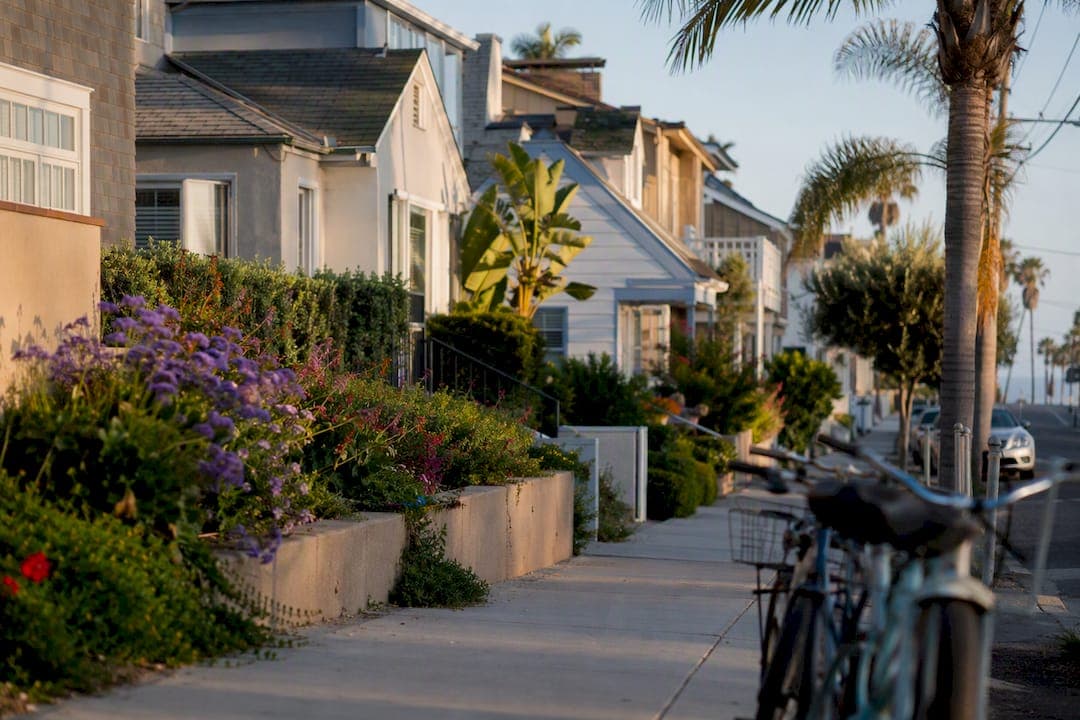
As of mid‑2026, the Encinitas housing market leans toward sellers, though the edge has narrowed compared to a year ago. Median sold prices sit around two million dollars, with asking prices varying widely depending on the data provider. Roughly between one hundred seventy and two hundred twenty-six homes are actively listed at any given time, and homes typically go under contract in about 40 to 60 days.
- Median sold price: about two million dollars
- Active listings: ranging between one hundred seventy and two hundred twenty-six depending on the source and month
- Typical time to contract: typically between 40 and 60 days
If you're buying: get pre‑approved now and target listings priced within your realistic band before rate moves shrink your budget further. If you're selling: price close to recent comps, not last year's headlines, and expect negotiation on repairs.
Key Takeaways
Encinitas home prices in 2026 sit in a wide $1.8M to $2.8M range depending on the data source, with limited new supply keeping the market historically resistant to sharp corrections.
| Point | Details |
|---|---|
| Prices vary by source | Medians range from about $1.8M to $2.8M because providers sample different listing and sales windows. |
| Days on market elevated | Homes typically take 40 to 60 days to go under contract, longer than the 2021 to 2022 peak frenzy. |
| Zoning limits new supply | Restrictive coastal zoning and Coastal Commission review keep new construction to infill and ADUs. |
| Rent growth changes seller math | Median rent near $8,000 a month is pushing some owners to hold rather than sell. |
| Local expertise matters | Jeffsellssandiego offers Encinitas buyers and sellers a neighborhood-level valuation and search strategy tailored to current zip-code conditions. |
A Local Take From Jeff
Whichever number you focus on, the Encinitas market rewards buyers and sellers who move on current data rather than last year's headlines. If you're ready to see how these trends apply to your specific street or price band, I'd rather walk you through it directly than let you guess from a national average. Start with a listings tour or request a valuation, and we'll go from there.
Work With a Local Encinitas Real Estate Agent
Most Encinitas buyers and sellers end up piecing together their picture of the market from three or four conflicting websites. Jeffsellssandiego does that reconciliation for you, pairing citywide portal data with zip-code-level knowledge of which Encinitas blocks are actually moving and why.

Whether you're weighing a purchase near $1.9M or pricing a listing against this month's actual closings, working with an agent who tracks Encinitas street by street beats relying on a single provider's average. Browse current Encinitas homes for sale to see what's active right now, or review the Buyer's Guide if you're still building your search criteria. Ready to see where your budget lands in today's market? Reach out to schedule a walkthrough of available listings this week.
This article is general information, not a substitute for advice from a qualified financial advisor. Consult a qualified financial professional about your own circumstances before acting on anything here.
Table of Contents
- What the Encinitas Housing Market Looks Like Right Now
- How Do Encinitas Neighborhoods and Zip Codes Differ?
- What Should Buyers Do in This Market?
- How Should Sellers Price and Prepare Their Homes?
- How Do Mortgage Rates Affect Encinitas Affordability?
- What Is Jeff Seeing on the Ground in Encinitas?
- How Have Encinitas Home Prices Changed Over the Past Decade?
- What's Driving Demand: Population, Jobs, and Local Industry
- What Types of Homes Are Available in Encinitas?
- How Do Zoning and Local Policy Shape Encinitas Housing?
- What Do Experts Project for the Encinitas Market Going Forward?
- Are There New Developments Planned in Encinitas?
- Sources
What the Encinitas Housing Market Looks Like Right Now
Pin down one number for this market and another source will contradict you within a week. That's not a flaw in the data. It reflects how differently each platform samples the market.
Realtor puts the median listing price at $2,839,000 and the median sold price at $2,147,000, with 226 active listings and a median of 43 days on market. Meanwhile, SearchListingsSanDiego's July 2026 report shows a median asking price closer to $1.9M, alongside a short-term inventory bump that tilts negotiating power toward buyers. Zillow's home-value model lands in between, at roughly $1.8M to $1.9M, with pending times near 39 days. PropertyFocus reports a 12‑month median around $1.95M.
The gap between $1.8M and $2.8M isn't a typo. Active-listing samples and closed-sale windows measure different slices of the market, which is why treating these as a range rather than a single fixed number produces a far more honest read. Rent tells its own story: Realtor.com clocks median rent at $8,000 a month, with year-over-year growth that has significantly outpaced typical regional gains.
How Do Encinitas Neighborhoods and Zip Codes Differ?
Encinitas isn't one market. It's several, stitched together under one zip code umbrella, and the differences show up fast once you start comparing listings block by block.
- Leucadia trades on character and walkability to the coast; smaller lots and older homes here often move faster than the citywide median days on market.
- Olivenhain skews toward larger inland lots and horse-property zoning, drawing buyers who want space over surf proximity, with pricing that can undercut coastal blocks by a meaningful margin.
- 92024 (central Encinitas) covers the widest price spread in the city, with zip-level MLS data from North San Diego County REALTORS® showing months-of-supply and percent-of-list-price-received figures that shift block to block.
Coastal-adjacent listings command a premium and tend to see stronger rent growth, since renters chase the same beach access buyers do. Inland pockets offer relative value and can be the better entry point if you're priced out near the coast. School ratings, tracked by GreatSchools, also factor into why certain Olivenhain and central Encinitas streets command a premium over comparable inland listings elsewhere in San Diego County.
What Should Buyers Do in This Market?
Buyers who treat Encinitas like a single price point lose out. The smarter move is matching your strategy to the specific listing, not the citywide median.
- Get fully underwritten pre‑approval, not just a pre‑qualification letter, before you tour anything above $1.5M.
- Set your real budget using local $/sq ft data rather than the county average, since coastal Encinitas runs well above it.
- On well-priced, high-demand listings, come in strong on the first offer. Overpriced or stale listings (60+ days) leave room to negotiate.
- Budget for a full inspection contingency on coastal homes. Marine air, aging plumbing, and drainage issues are common repair flashpoints.
- Use inspection findings as a negotiating lever for credits, not just a pass/fail decision.
Pro Tip: Ask your agent to pull the specific zip code's months-of-supply figure before you write an offer. A 92024 listing sitting at four months of supply behaves very differently than one at six weeks.
How Should Sellers Price and Prepare Their Homes?
Pricing an Encinitas home off last year's headlines is one of the fastest ways to sit on the market past 60 days. Start with recent, comparable closings, not asking prices.
- Anchor your list price to closed sales in your specific zip code and $/sq ft band, not the citywide median.
- Prioritize outdoor living upgrades. Coast-facing decks, drought-tolerant landscaping, and indoor-outdoor flow consistently outperform kitchen remodels for Encinitas buyers.
- Set repair and concession expectations using current sale-to-list ratios. If homes are closing near 97 to 98% of list, expect some buyer requests to stick.
- With median rent near $8,000 a month, some owners are weighing holding the property as a rental over selling into a softening short-term window.
Pro Tip: A pre-listing inspection on coastal properties heads off the repair-credit fights that stall escrow after 30 days. For pricing mechanics specific to San Diego County, see this guide on how to price your home to sell.
How Do Mortgage Rates Affect Encinitas Affordability?
Rate movement matters more in Encinitas than in most markets simply because the dollar amounts are so much larger. A half-point swing on a $1.9M loan changes your monthly payment by hundreds of dollars, not tens.
Current national mortgage rate reporting, tracked by Money.USNews, shows 30-year fixed rates fluctuating in a range that makes rate-shopping worth the effort. Consider two scenarios on a $1.9M purchase with 20% down (a $1.52M loan):
- At a 6.5% rate, the principal-and-interest payment runs close to $9,600 a month.
- At a 7.0% rate, that same loan pushes past $10,100 a month, a difference of roughly $500 monthly for half a point.
Shop at least three lenders before you write an offer, and ask each about a rate lock the moment you're under contract. In a market this price-sensitive, a locked rate can be worth more than a small price concession.
What Is Jeff Seeing on the Ground in Encinitas?
Buyers this year are less willing to overpay for a listing just because it's in Encinitas. They're asking harder questions about days on market, and they're walking away from anything that feels stale past 45 days. On the seller side, the homes moving fastest all share one thing: usable outdoor space that photographs well and shows well in person.
Some patterns worth watching if you're active in this market right now:
- Ocean-view listings under $2M still draw multiple offers within the first two weeks.
- Inland Olivenhain properties with acreage are taking longer to sell but holding their asking price better than expected.
- Buyers are increasingly requesting a neighborhood-specific breakdown before committing to a search radius.
Request a free home valuation or set up alerts for new Encinitas listings to stay ahead of what's coming to market.
How Have Encinitas Home Prices Changed Over the Past Decade?
Encinitas prices have climbed steadily for most of the past ten years, with the sharpest jump landing between 2020 and 2022 when remote work sent coastal San Diego demand into overdrive. Homes that traded in the high six figures before the pandemic routinely cleared $1.5M to $2M by 2022, and that repricing has largely held rather than reversed.
The 2023 to 2024 stretch brought a cooling period as mortgage rates climbed off historic lows, which slowed the pace of price gains without producing the price crash some buyers were hoping for. Inventory tightened instead, and sellers who didn't need to move simply stayed put, which kept a lid on supply even as demand softened.
By 2025 into 2026, the market settled into the pattern you see today: prices holding near record highs, but with longer days on market and more room for negotiation than the frenzied bidding wars of 2021. PropertyFocus's 12‑month trend data reflects this leveling, showing a median price near $1.95M without the double-digit annual jumps that defined the pandemic years.
The throughline across a decade of data: Encinitas has never had a true down cycle in the way some inland San Diego suburbs did after 2008. Coastal scarcity has kept the floor firm even when the ceiling stalls.
What's Driving Demand: Population, Jobs, and Local Industry
Encinitas draws buyers for reasons that don't show up in a price chart directly, but they explain why the floor under this market stays so firm.
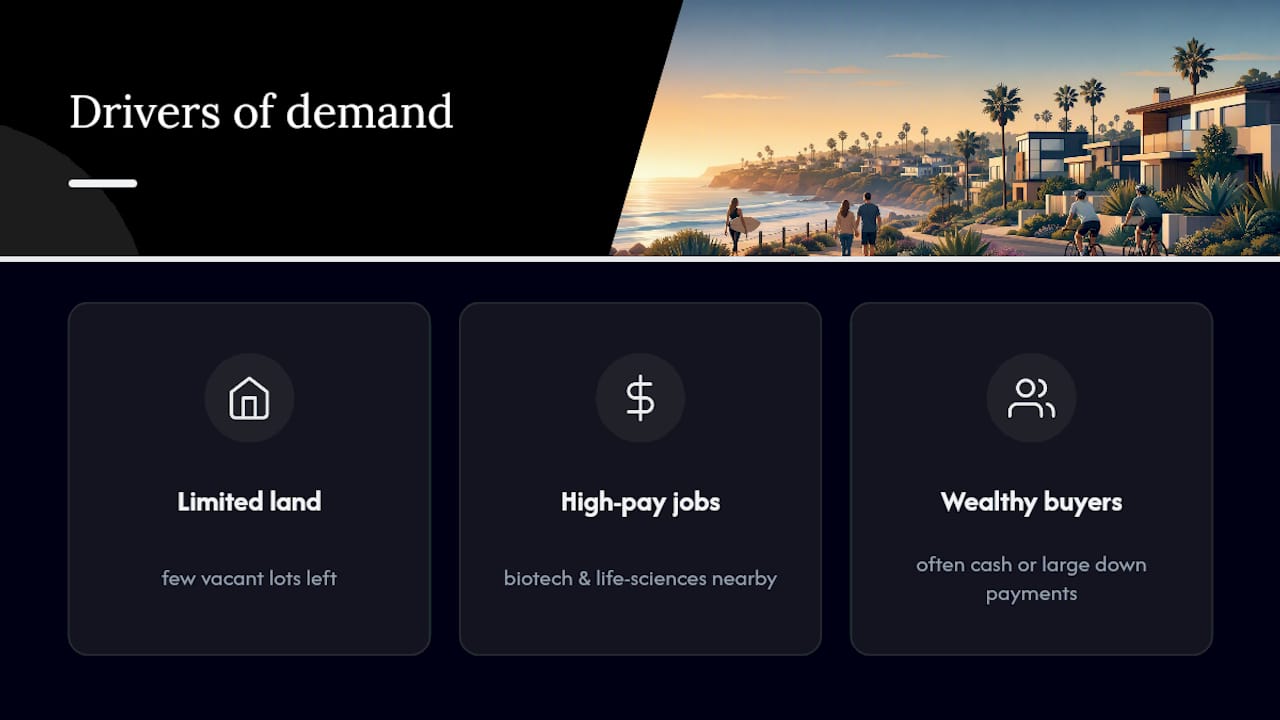
The city's population has held relatively steady rather than booming, which matters because it means price pressure comes from limited supply, not a wave of new residents. Coastal Encinitas is largely built out. There's little vacant land left for large subdivisions, so every new listing competes against a fixed, shrinking pool of comparable homes.
Employment in the surrounding region skews toward biotech, life sciences, and remote-friendly professional work concentrated in nearby Carlsbad and San Diego's life-sciences corridor. Those jobs pay well and often allow flexible or hybrid schedules, which lets employees choose a coastal commute over a downtown one. That dynamic pulled a wave of higher-income buyers into Encinitas during the remote-work shift, and many of them never left once rates rose, since selling would mean giving up a rate secured years earlier.
Retirees and move-up buyers from pricier coastal enclaves add a second demand layer, often paying cash or bringing large down payments from a prior sale. That combination of limited land, high-paying regional employment, and buyers with strong purchasing power is why Encinitas rarely sees the price softness that hits less land-constrained suburbs first.
What Types of Homes Are Available in Encinitas?
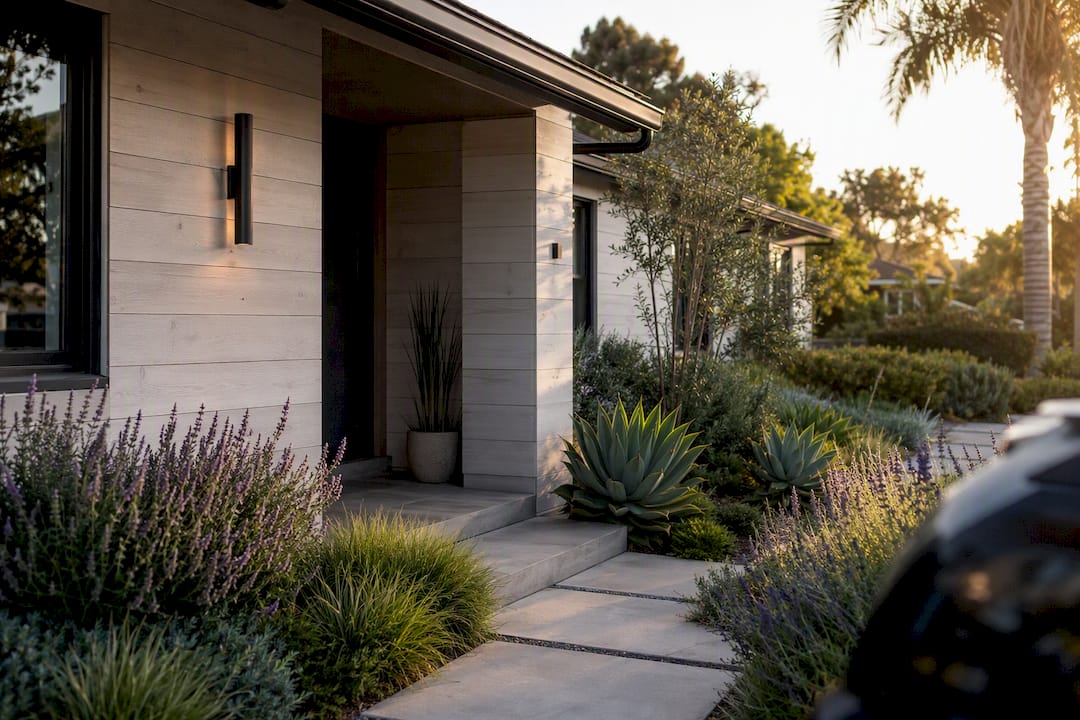
Single-family detached homes dominate the Encinitas market and represent the large majority of both active listings and closed sales, particularly in Olivenhain, Leucadia, and the hillside neighborhoods east of the coast highway. These properties command the highest price points and see the widest range of lot sizes, from compact coastal cottages to multi-acre inland parcels.
Condos and townhomes make up a smaller but meaningful share of inventory, concentrated closer to downtown Encinitas and along the coast corridor. They typically offer the most accessible entry point into the market for buyers priced out of single-family homes, often trading at a significant discount to detached properties on a per-unit basis, even when the $/sq ft gap narrows.
New construction is limited compared to inland North County cities, since Encinitas has little raw land left to develop. What does come to market tends to be infill projects: teardown-rebuilds on existing lots, small-lot subdivisions, or accessory dwelling unit additions rather than large master-planned communities. That scarcity of new supply is a structural reason inventory stays tight regardless of demand swings, and it's part of why existing single-family stock continues to absorb most buyer demand rather than new product pulling buyers away from resale listings.
How Do Zoning and Local Policy Shape Encinitas Housing?
Encinitas has some of the more restrictive zoning in coastal San Diego County, and that restriction is doing real work on the price side of the equation. Much of the city is zoned for low-density single-family use, with height limits and lot-coverage rules that make large multi-unit projects difficult to build even where demand would support them.
The city's own housing element planning has pushed toward more accessory dwelling units and modest density increases near transit corridors, but coastal development permitting through the California Coastal Commission adds another layer of review that can slow projects considerably. Any new development within the coastal zone faces additional scrutiny around view corridors, environmental impact, and public beach access, which lengthens timelines and raises costs for builders.
The practical result for buyers and sellers: don't expect a wave of new supply to loosen this market anytime soon. Zoning constraints that have held for decades aren't likely to shift fast enough to meaningfully change the inventory math in the next few years. That keeps upward pressure on prices for existing single-family stock, and it's a major reason infill and ADU additions, rather than large subdivisions, will keep defining what "new construction" means in this city.
What Do Experts Project for the Encinitas Market Going Forward?
Most of the pricing signals point toward a market that stays firm rather than corrects sharply, even as the pace of appreciation slows from pandemic-era highs. The spread between provider estimates (roughly $1.8M to $2.8M depending on the source and sampling window) suggests a market still finding its footing between buyer hesitation over rates and seller reluctance to give up years of built-up equity.
Short-term signals matter here. A month-over-month dip in median listing price can coexist with a solid year-over-year gain, and PropertyFocus's trend data captures exactly that pattern rather than a straight-line trajectory in either direction. Read one month in isolation and you'll draw the wrong conclusion; read the trailing twelve months and the picture steadies.
The most likely path forward is continued price stability with days-on-market staying elevated compared to the 2021 to 2022 frenzy, unless mortgage rates drop meaningfully enough to pull hesitant buyers back into aggressive bidding. Rent growth adds a wildcard: if rents keep climbing near the pace Realtor.com has tracked, more owners may choose to hold and rent rather than sell, which would tighten for-sale inventory further and put fresh upward pressure on prices even without a jump in buyer demand.
Are There New Developments Planned in Encinitas?
Given how little vacant land remains within city limits, most upcoming residential activity in Encinitas centers on infill construction rather than large new subdivisions. Teardown-rebuild projects on existing coastal and hillside lots continue at a steady pace, often replacing older single-story homes with larger, higher-value builds that reset the comparable pricing for their block.
Accessory dwelling unit construction has become one of the more active categories of new housing, driven by state-level policy encouraging ADUs as a way to add units without changing a neighborhood's overall density character. These additions rarely show up as standalone listings, but they do add rental supply and, in some cases, give owners a path to multigenerational living or supplemental income.
Any larger multi-unit or mixed-use proposal near the coastal zone faces the added layer of Coastal Commission review, which tends to stretch timelines well beyond what a similar project would face inland. Buyers hoping for a surge of new inventory shouldn't expect it. The realistic near-term picture is incremental infill and ADU growth, not a wave of new subdivisions that would meaningfully expand the city's housing stock.
Sources
- Realtor
- Encinitas Housing Market Jul '26: $1.9M Median | Search Listings SD
- Encinitas, CA Housing Market: 2026 Home Prices & Trends | Zillow
- Encinitas Housing Market Overview & Trends in 2026