
A probate sale is defined as the court-supervised sale of real estate owned by a deceased person, required to settle the estate before assets pass to heirs. The process is governed by state probate law and involves a court-appointed executor or administrator, a formal appraisal, and in many cases a confirmation hearing before any sale closes. Buyers and sellers who understand the probate sale process gain a real advantage because the rules differ sharply from a conventional transaction. Timelines run longer, deposits are larger, and the property sells as-is without repair negotiations. Jeffsellssandiego works with both buyers and heirs navigating these transactions in San Diego, and the guidance below reflects what actually happens at each stage.
What is a probate sale and how does it work step by step?
The probate sale process begins when a court appoints an executor named in the will, or an administrator when no will exists. That appointment grants legal authority to manage and sell estate property. Without it, no one can list or transfer the home.
The executor must then obtain a formal probate appraisal, sometimes called a "probate referee" valuation in California. Probate appraisals are court-reviewed before any sale proceeds, protecting both heirs and creditors from undervalued deals. The appraised value sets the floor for acceptable offers.

Once the property is listed and an offer is accepted, the executor files a petition with the probate court. Court confirmation hearings are typically scheduled within 20–40 days of that filing. At the hearing, the judge either approves the sale or opens the floor to competing bids.
The full timeline is longer than most buyers expect. Probate sales typically take 6–12 months from filing to closing, compared to roughly 70 days for a traditional sale. That gap exists because creditors must be notified and given time to file claims. Creditors receive 3–6 months to submit claims before estate assets can be distributed.
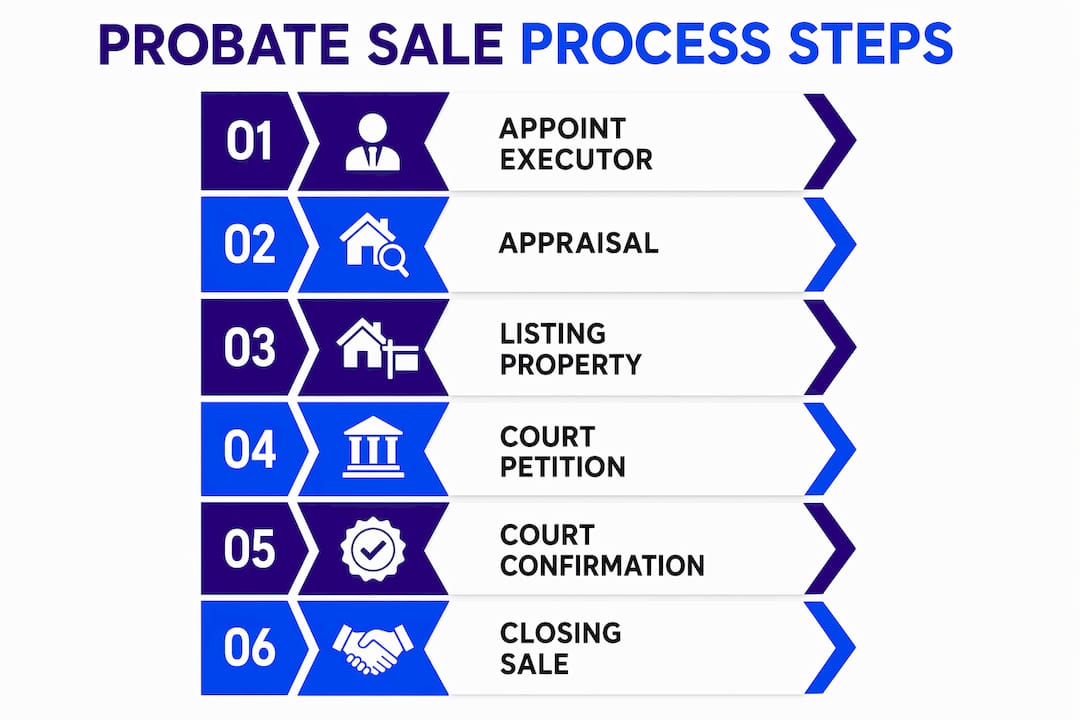
The numbered steps below summarize the full sequence:
- Court appoints executor or administrator.
- Executor obtains a court-accepted probate appraisal.
- Property is listed, usually at or above appraised value.
- Buyer submits an offer with a minimum 10% deposit.
- Executor petitions the court for sale confirmation.
- Confirmation hearing is held within 20–40 days.
- Court approves the sale or conducts an overbid auction.
- Closing occurs approximately two weeks after court approval.
Pro Tip: Get your financing fully approved before submitting an offer on a probate property. Delays in loan approval can cost you the deal if the court hearing arrives before your lender is ready.
What are the differences between supervised and independent authority probate sales?
Court involvement varies significantly depending on the authority level granted to the personal representative. The two main types are supervised probate and independent administration.
Supervised probate requires court confirmation for every major sale decision. The executor cannot accept an offer, set a price, or close escrow without a judge's sign-off. This adds time but provides maximum protection for heirs and creditors.
Independent administration gives the executor broader authority to sell without a confirmation hearing in most cases. California's Independent Administration of Estates Act, for example, allows executors to complete sales with far less court involvement if no heir objects. That can cut months off the timeline.
| Feature | Supervised probate | Independent administration |
|---|---|---|
| Court confirmation required | Yes, for every sale | Usually not required |
| Typical timeline | Longer, 9–12+ months | Shorter, 6–9 months |
| Overbid auction risk | High | Low to none |
| Executor flexibility | Limited | Broad |
| Best for | Contested estates | Cooperative heirs, clear wills |
Pro Tip: Ask the listing agent which authority level applies before you write an offer. Independent administration deals close faster and carry less auction risk, which changes your negotiation approach entirely.
What should buyers expect when buying a house in probate?
Buying a house in probate requires a different mindset than a standard purchase. The property sells as-is, the timeline is unpredictable, and your accepted offer is not a binding contract until a judge says so.
Probate homes sell as-is with minimal buyer repair contingencies allowed. Executors have no legal authority or financial incentive to make improvements, so buyers absorb all condition risk. A thorough inspection before submitting an offer is not optional. It is the only protection you have.
Accepted probate offers remain subject to court approval and can be outbid at the confirmation hearing. That is a fundamental difference from conventional real estate contracts, where an accepted offer creates mutual obligation. In probate, another buyer can walk into the courtroom and take the property from you with a higher bid.
Key financial requirements buyers must prepare for:
- Minimum 10% deposit paid by cashier's check at offer submission, not at closing.
- Cashier's check at the hearing if you plan to overbid or defend against competing bids. Probate buyers must bring cashier's checks to the court hearing for any overbid deposits.
- Closing within two weeks of court approval, which means financing must be ready well before the hearing date.
- No repair credits or seller concessions in most cases, since the estate has no obligation to negotiate condition.
- Longer escrow periods that can stretch 6–12 months from listing to keys in hand.
Common pitfalls to avoid:
- Assuming your accepted offer is final. A signed purchase agreement does not finalize the sale without court confirmation, and skipping that step can void the entire transaction.
- Skipping the inspection because the price looks low. Deferred maintenance on probate properties is common, and repair costs can erase any discount.
- Underestimating the deposit requirement. Ten percent of a $900,000 San Diego home is $90,000 in cashier's checks you need available before the hearing.
Pro Tip: Review common buyer mistakes before you submit your first probate offer. The rules are different enough that standard homebuying habits can work against you.
What are the benefits and challenges for sellers and heirs?
Sellers in a probate transaction are almost always heirs or estate representatives, not the original owner. Their goals and obligations differ from a typical seller in important ways.
The primary pressure is speed balanced against value. Estates carry ongoing costs: property taxes, insurance, utilities, and sometimes mortgage payments. Every month the property sits unsold drains the estate. At the same time, the executor has a legal duty to maximize value for heirs and creditors, which rules out quick low-ball deals.
Key benefits for sellers and heirs:
- Court oversight protects heirs. The confirmation process prevents any single heir or executor from selling below market without accountability.
- Creditor claims get resolved. The sale proceeds pay outstanding debts before distribution, giving heirs a clean transfer.
- Professional appraisal sets a fair baseline. Heirs do not need to guess at market value; the court-accepted appraisal does that work.
Key challenges sellers face:
- Legal delays are unavoidable. Even cooperative families wait months for hearings and creditor periods to expire.
- Selling as-is limits the buyer pool. Buyers who need move-in-ready homes often pass on probate listings, which can reduce competition.
- Tax implications require planning. Selling before probate closes can affect the stepped-up cost basis heirs receive, which changes capital gains exposure significantly.
Working with an agent who has handled selling an inherited home before is not a luxury in probate. It is a practical necessity. Errors in timing, pricing, or court filings can delay distribution by months or expose the executor to personal liability.
Key Takeaways
A probate sale is a court-supervised process that takes 6–12 months, requires as-is terms, and demands specialized preparation from both buyers and sellers.
| Point | Details |
|---|---|
| Court approval is mandatory | A signed offer does not close the deal; a judge must confirm the sale or it can be voided. |
| Timeline runs 6–12 months | Probate sales take far longer than the roughly 70-day average for traditional transactions. |
| Buyers need cashier's checks ready | A 10% deposit is required at offer, and additional funds must be available for overbid auctions at the hearing. |
| Properties sell as-is | Executors cannot negotiate repairs or offer credits, so buyers must inspect thoroughly before bidding. |
| Authority level changes everything | Independent administration closes faster with less court risk; supervised probate adds time and auction exposure. |
What I've learned from watching buyers and sellers underestimate probate
Most people walk into a probate transaction thinking it is just a slower version of a normal sale. It is not. The legal structure is different, the risks are different, and the mistakes are more expensive.
The single biggest misconception I see is that an accepted offer means the deal is done. It does not. I have watched buyers skip the inspection, waive contingencies, and mentally move into a home, only to lose it at the confirmation hearing to a higher bidder they never saw coming. That is not a technicality. That is how probate works, and every buyer needs to internalize it before submitting an offer.
For sellers and heirs, the pressure to close fast is real but dangerous. Rushing the appraisal, pricing below the court-accepted value, or failing to notify all creditors properly can expose the executor to personal liability. The legal oversight that feels like an obstacle is actually the thing protecting everyone at the table.
My honest advice: use an agent who has closed probate deals before, not one who has read about them. The difference shows up in how they price the listing, how they prepare buyers for the hearing, and whether they catch a filing error before it costs the estate three extra months. San Diego probate rules have specific local nuances, and general real estate experience does not substitute for that knowledge.
— Jeff
Probate properties in San Diego: how Jeffsellssandiego can help
Probate transactions in San Diego require local market knowledge and experience with California's specific probate procedures. Jeffsellssandiego works directly with buyers and heirs on inherited and probate properties across San Diego County.

Whether you are an heir preparing to list an estate property or a buyer searching for probate listings, Jeffsellssandiego offers hands-on guidance at every step. Browse current San Diego home listings to see what is available, or visit the buyer's guide for a full breakdown of what to expect in the San Diego market. For sellers managing an estate, the seller's guide covers pricing, timing, and the steps specific to probate transactions. Reach out directly to get current market data and personalized advice before you make a move.
FAQ
What is a probate sale in real estate?
A probate sale is the court-supervised sale of a deceased person's property to settle the estate. The executor manages the sale, but a judge must confirm it before it closes.
How long does the probate sale process take?
Probate sales typically take 6–12 months from filing to closing, compared to roughly 70 days for a standard home sale. The extended timeline reflects mandatory creditor notice periods and court scheduling.
Can a buyer back out of a probate sale?
Yes, a buyer can withdraw before court confirmation since the accepted offer is not a binding contract until the judge approves it. After court confirmation, backing out carries the same consequences as any real estate contract breach.
What happens at a probate property auction?
At a court confirmation hearing, the judge may open the sale to overbidding. Any qualified buyer in the courtroom can submit a higher bid, and the winning bidder must have a cashier's check for the required deposit on the spot.
Do probate homes sell below market value?
Probate homes sometimes sell below market value because they are sold as-is and carry longer timelines that deter some buyers. However, the court-accepted appraisal sets a floor, so significant underpricing requires judicial approval and is not guaranteed.