
An as-is sale is defined as a real estate transaction where the seller offers the property in its current condition, with no obligation to make repairs or improvements before closing. The term "as-is" appears in the purchase contract and signals that what you see is what you get. Sellers still carry legal disclosure duties, and buyers still hold inspection rights. Understanding what an as-is property sale actually means, versus what people assume it means, is the difference between a smart deal and a costly mistake.
What is an as-is sale in residential real estate?
An as-is sale means the seller will not repair, replace, or credit anything related to the property's condition. The buyer agrees to accept the home in whatever state it is in at the time of purchase. This does not mean the buyer is flying blind. It means the seller has drawn a clear line: no negotiations over repairs after the inspection.

The phrase "as-is" is a contract term, not a legal shield. Sellers remain bound by state and federal disclosure laws regardless of how the contract reads. A seller in California, for example, must complete a Transfer Disclosure Statement covering known material defects. Skipping that step because the listing says "as-is" is not a legal defense. It is a fast path to post-sale litigation.
As-is sales are most common in foreclosures, probate cases, and inherited property situations where the owner either cannot or does not want to invest in repairs. The property condition reflects years of deferred maintenance, an estate being settled, or a lender disposing of a repossessed asset.
What does selling a house as-is mean for sellers?
Selling as-is gives sellers one major advantage: speed. Selling as-is eliminates repair negotiations, which removes one of the most time-consuming phases of a standard transaction. For sellers facing financial hardship, a job relocation, divorce, or a probate deadline, that speed is worth more than the extra money repairs might bring.
The seller's disclosure duty does not disappear. Sellers must still report known material defects such as foundation cracks, mold, roof leaks, or unpermitted additions. Disclosure requirements apply even when the contract says as-is. Concealing a known defect exposes the seller to fraud claims and potential rescission of the sale.
Pricing is where sellers often miscalculate. An as-is listing priced at market rate will sit. Buyers factor in repair costs, carrying costs, and the risk of finding something worse than expected. Sellers who maximize home sale value understand that a realistic price, not a hopeful one, is what attracts serious offers.
Pros and cons for sellers at a glance:
- Pro: Faster closing with fewer contingencies
- Pro: No out-of-pocket repair costs before sale
- Pro: Attracts cash buyers and investors who move quickly
- Con: Lower sale price compared to a repaired and staged home
- Con: Smaller buyer pool, since some loan types require minimum property standards
- Con: Stigma around the listing if not marketed carefully
Pro Tip: If you are selling as-is, get a pre-listing inspection anyway. Knowing what is wrong lets you price accurately and disclose confidently. Surprises during a buyer's inspection kill deals.
What buyers need to know before purchasing an as-is property
Buying an as-is home does not mean waiving your right to inspect it. Buyers retain inspection rights even when the contract includes an as-is clause. The inspection contingency and the as-is clause are two separate things. Confusing them is one of the most expensive mistakes a buyer can make.
Here is what a careful buyer does in an as-is transaction:
- Order a full professional inspection. Hire a licensed home inspector and, depending on the property, add specialists for roofing, foundation, plumbing, and electrical. One general inspection is rarely enough on a distressed property.
- Use the inspection period strategically. Inspection contingency periods typically last 7–17 days depending on state and contract terms. Use every day of that window.
- Decide: negotiate, cancel, or proceed. If the inspection reveals serious problems, you can request a price reduction, ask for a credit at closing, or cancel the contract entirely. The seller is not obligated to agree to changes, but you are not obligated to proceed either.
- Check your financing. FHA and VA loans require the property to meet minimum property standards. A home with a failing roof or active mold may not qualify. Cash buyers and conventional loan buyers have more flexibility here.
- Get repair estimates before closing. Bring in licensed contractors during the inspection period. You need real numbers, not guesses, before you commit.
Investors approach as-is purchases differently than owner-occupant buyers. An investor calculates the After Repair Value and works backward to determine the maximum purchase price. Owner-occupants need to think about livability: can you safely move in, and can you afford the repairs on top of your mortgage payment?
Pro Tip: Always maintain your inspection contingency in an as-is deal. Experienced buyers keep this right to protect themselves from hidden defects that no seller disclosure will catch.
Review common buyer mistakes before signing anything on a distressed property.
What do as-is clauses actually cover legally?
An as-is clause limits the seller's repair obligations. It does not limit the seller's disclosure obligations. That distinction is critical. As-is clauses do not exempt sellers from disclosing known defects, and they do not prevent buyers from walking away after an inspection.
"As-is means no repairs. It does not mean no disclosure, no inspection, and no recourse." This is the legal reality that both buyers and sellers frequently misunderstand.
Federal law adds another layer. The Residential Lead-Based Paint Hazard Reduction Act requires sellers of pre-1978 homes to disclose known lead paint hazards regardless of contract language. State laws in California, Texas, Florida, and most other states add their own mandatory disclosure forms covering everything from flood zones to neighborhood nuisances.
Common defects sellers must disclose even in as-is sales include:
- Foundation issues: cracks, settling, or structural movement
- Roof condition: known leaks, age, or prior damage
- Mold or water intrusion: past or present moisture problems
- Unpermitted work: additions or conversions done without permits
- Pest damage: termite history or active infestations
- Environmental hazards: lead paint, asbestos, or underground storage tanks
Buyers who skip attorney review on an as-is contract take on unnecessary risk. A real estate attorney can identify clauses that go beyond standard as-is language and may waive rights you did not intend to give up. Due diligence is not optional on these deals.
How are as-is properties priced compared to standard sales?
Pricing an as-is property follows a specific formula. Professional pricing uses After Repair Value minus estimated repair costs minus a buyer risk margin. That final number is what a rational buyer will pay. Sellers who ignore this math overprice their homes and watch them sit.
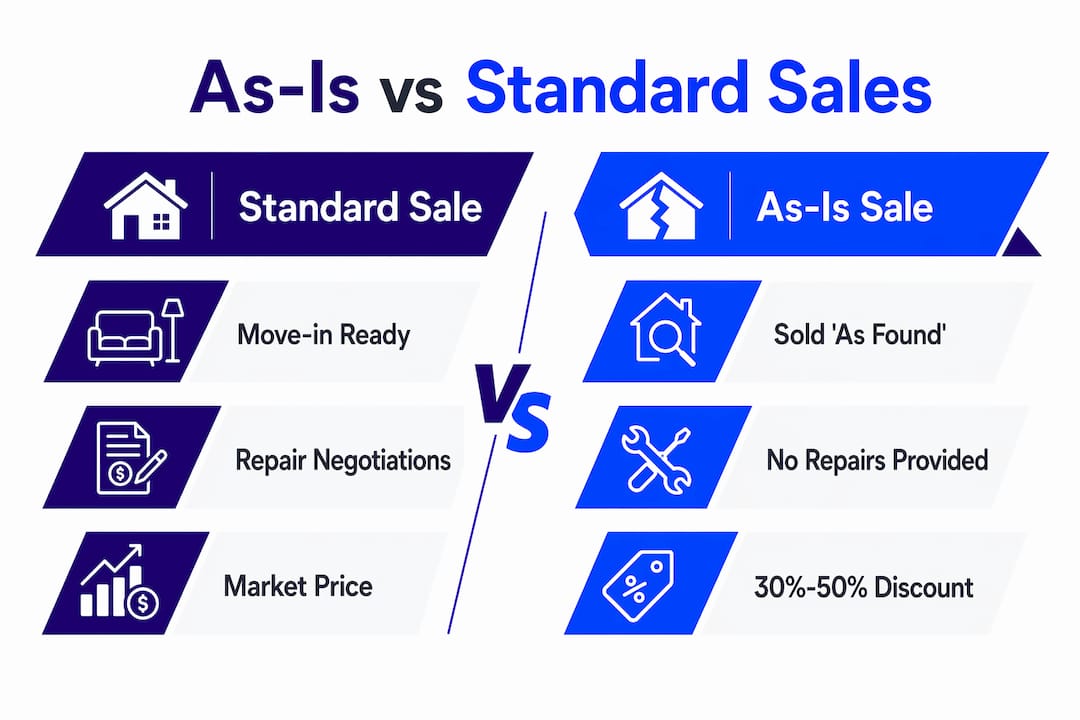
Properties sold as-is to cash buyers often list 30%–50% below market value reflecting repair costs and the risk premium buyers demand. That discount range is wide because it depends on the severity of repairs needed, local market conditions, and how motivated the seller is.
| Pricing Factor | Standard Sale | As-Is Sale |
|---|---|---|
| Condition | Move-in ready | Sold as found |
| Repair credits | Negotiated after inspection | Not provided |
| Buyer pool | Broad, including FHA/VA | Narrower, often cash or conventional |
| Days on market | Typically shorter | Can be longer without correct pricing |
| Price basis | Comparable sales | ARV minus repairs and risk margin |
| Negotiation leverage | Balanced | Buyer holds more leverage |
Local market conditions shift these numbers significantly. In a tight San Diego market with low inventory, an as-is property in a desirable neighborhood will attract more competition and command a better price than the same property in a slower market. Sellers benefit from understanding current absorption rates and active competition before setting a price.
Accurate repair estimates are the foundation of good as-is pricing. Sellers who guess at repair costs, or who use outdated contractor quotes, either leave money on the table or price themselves out of the market. Get three current bids from licensed contractors before you list.
Key Takeaways
An as-is sale transfers the property in current condition, but sellers must still disclose known defects and buyers must still exercise their inspection rights to protect themselves.
| Point | Details |
|---|---|
| As-is means no repairs, not no disclosure | Sellers must reveal known material defects regardless of the as-is clause. |
| Buyers keep inspection rights | The inspection contingency survives an as-is clause and lets buyers cancel for unacceptable findings. |
| Inspection periods are time-limited | Contingency windows typically run 7–17 days, so buyers must act fast and hire specialists. |
| Pricing follows a formula | As-is price equals After Repair Value minus repair costs minus a buyer risk margin. |
| Cash buyers dominate as-is deals | FHA and VA financing often cannot meet minimum property standards on distressed homes. |
What I have learned from working as-is deals in San Diego
The biggest mistake I see sellers make is treating "as-is" as a way to avoid hard conversations. They list the property, skip the disclosure details, and hope buyers will not notice the roof that has been leaking for three years. That strategy fails every time. Either the buyer's inspector finds it, the deal falls apart, or the buyer closes and sues later. Disclosure is not optional, and pretending otherwise costs sellers far more than the repair would have.
On the buyer side, the mistake I see most often is waiving the inspection contingency to compete. In a hot market, buyers feel pressure to strip their offers down to win. Waiving inspection on an as-is property is a different level of risk than waiving it on a turnkey home. You are already accepting the condition. Removing your only exit ramp is how buyers end up owning a foundation problem they cannot afford to fix.
As-is sales make genuine sense in specific situations. Inherited properties where heirs live out of state, foreclosures where the bank has no knowledge of the property's history, and sellers who simply cannot fund repairs before closing are all legitimate as-is scenarios. The deal structure fits the situation. What does not fit is using as-is language to obscure problems that should be disclosed.
My advice: if you are a seller, get a pre-listing inspection and price honestly. If you are a buyer, keep your contingency, hire good inspectors, and get real contractor bids before you close. Speed matters in real estate, but not more than knowing what you are buying.
— Jeff
Browse San Diego listings and get expert guidance
Whether you are considering an as-is purchase or thinking about listing your home in its current condition, Jeffsellssandiego has the local knowledge to help you make a confident decision.

Search current San Diego home listings to see what is active in your target neighborhoods, including properties priced to reflect their condition. If you are a buyer new to distressed properties, the Buyer's Guide covers the full process from offer to close. Sellers weighing an as-is approach can find honest guidance on the Seller's Guide page. Reach out directly to Jeff for a no-pressure conversation about your specific situation.
FAQ
What does as-is mean in a real estate contract?
As-is means the seller will not make repairs or provide credits for the property's condition before closing. The buyer accepts the home in its current state, but retains the right to inspect and cancel during the contingency period.
Can a buyer still inspect an as-is property?
Yes. Buyers retain the right to inspect even in as-is sales. The as-is clause removes the seller's repair obligation, not the buyer's right to evaluate the property and walk away if the findings are unacceptable.
Do sellers have to disclose defects in an as-is sale?
Sellers must disclose all known material defects regardless of the as-is clause. Disclosure requirements remain in force under state and federal law. Concealing a known defect exposes the seller to fraud claims after closing.
How much less should you pay for an as-is home?
As-is cash sales often close 30%–50% below market value depending on repair scope and local conditions. The right discount equals the full cost of repairs plus a margin for unexpected issues and the time required to complete the work.
What types of homes are typically sold as-is?
As-is sales are most common in foreclosures, probate estates, and inherited properties where the owner cannot fund repairs or needs a fast close. These situations account for a large share of distressed inventory in most markets.