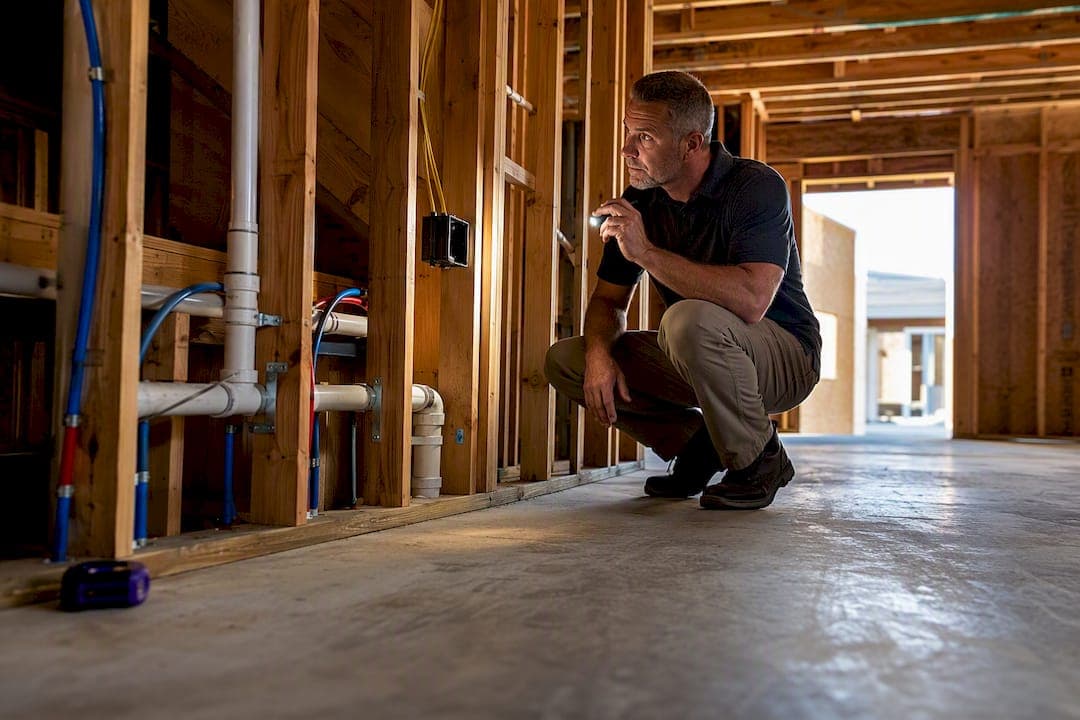
For San Diego buyers and sellers of new construction, the highest-impact step is to secure independent representation and a contract review before paying any deposit. Builder contracts are written by builder attorneys, inspections happen in phases you have to schedule yourself, and warranty coverage is more layered than a typical resale disclosure. An experienced buyer and seller agent in San Diego can walk clients through exactly this sequence before money changes hands.
TL;DR:
- Buyers should have independent legal review of contracts before signing or paying deposits, as builder contracts favor the builder's attorney and are often non-negotiable.
- Coordinating phased inspections at foundation, pre-drywall, and final stages, with documented punch lists and signed cure deadlines, is crucial to catch defects early and avoid delays.
- Pulling outside loan estimates and comparing APRs against builder offers helps avoid inflated fees and identify true incentives, especially with potential appraisal gaps in new subdivisions.
- Confirming the certificate of occupancy before closing and documenting warranty transferability are vital for post-sale protections and resale planning.
- Understanding California's legal protections, HOA restrictions, and change order protocols ensures buyers are less vulnerable to pitfalls and cost increases during construction.
Table of Contents
- Your New Construction Guide San Diego Checklist for Buyers
- How Does New Construction Differ From Buying Resale?
- How Do You Negotiate Builder Incentives and Financing?
- What Should Buyers Check During Inspections and Builder Vetting?
- What Happens at Closing, and How Does It Affect Resale?
- A Quick Checklist for Sellers of New or Recent Builds
- Legal Protections California Gives New-Construction Buyers
- How Do HOA Rules and Fees Work in New San Diego Subdivisions?
- How Do Change Orders Affect Cost and Timeline?
- Local Lessons From Closing New Construction Deals in San Diego
- How Jeff Can Help You Buy or Sell New Construction
- Sources
Your New Construction Guide San Diego Checklist for Buyers
Buying new construction in San Diego rewards a specific order of operations. Skip a step and you either lose leverage or lose your deposit.
- Record every reservation deadline. When you put down a reservation deposit, write down the exact refund terms, the design-selection deadline, and the rate-lock window. Builders rarely volunteer extensions.
- Get the contract reviewed before signing. A real estate attorney who works independently of the builder's sales office should read the arbitration clause, the deposit forfeiture language, and the closing-date terms line by line.
- Schedule phased inspections now, not after framing is closed up. Hire your own inspector, not one the builder recommends.
- Pull an outside loan estimate to compare against the builder's preferred-lender offer.
- Document every punch-list item with photos and written cure deadlines at your final walkthrough.
- Keep the certificate of occupancy and warranty booklet in a dedicated closing file. You'll need both if a system fails in year one.
Pro Tip: Ask the builder's sales office for the exact date the certificate of occupancy was (or will be) issued. If they can't produce it, treat that as a scheduling risk, not a formality.
This sequence mirrors the structured process that governs most new-home transactions, from lot reservation through post-closing warranty claims. Buyers who follow it in order rarely end up negotiating from a weak position.
How Does New Construction Differ From Buying Resale?
New construction runs on a different set of rules than a resale purchase, and the differences show up in the contract before they show up in the house.
Builder purchase agreements function much like contracts of adhesion: the builder's legal team writes every clause, and buyers have little room to negotiate terms like arbitration requirements, deposit forfeiture triggers, or who controls the closing date. That's structurally different from a resale deal, where both sides typically negotiate a standard state contract with mutual disclosure obligations.
Timelines vary by build type, and that matters for financing and moving plans:
- Spec or quick-delivery homes are often move-in ready or close within 30 to 45 days, similar to a resale closing.
- Semi-custom homes still let you pick finishes but lock in a build schedule, often three to six months out.
- Custom homes and presale reservations can run a year or more, with pricing and specs finalized well before the slab is poured.
Warranty coverage also works differently. New homes typically carry a 1-2-10 structure, one year on workmanship, two years on systems, ten on structural defects, rather than the "as-is with disclosures" model of resale. And because a new subdivision has no sales history, title chains are clean but appraisals lean heavily on the builder's own recent sales, which isn't always the buyer's advantage.
How Do You Negotiate Builder Incentives and Financing?
Builder incentives look generous on a sales flyer, but they're often structured to help the builder's bottom line more than yours. The fix is running the numbers yourself, side by side with outside financing.
- Price reductions lower your loan amount permanently.
- Rate buydowns lower your monthly payment for a set period, sometimes just one or two years, then reset.
- Closing cost credits reduce your cash to close but don't touch the purchase price or your appraisal basis.
Outside lender comparisons matter because a builder's preferred lender may offer an attractive rate on paper while baking in higher fees elsewhere. Pull a loan estimate from at least one outside lender and compare the APR, not just the headline rate, against the builder's package before you commit.
In slower markets, production builders still negotiate on lot premiums, upgraded appliance packages, and closing cost credits, even when they hold firm on base price. Ask directly what's flexible this month; builder incentive menus change with sales pace.
Appraisal gaps are common in new subdivisions because comparable sales are limited to the builder's own recent closings. Bring your own comps from nearby resale inventory and ask your lender how they'll handle a shortfall before you're staring at one during underwriting. For San Diego-specific rate strategies, a local mortgage rate guide is worth reading before you sit down with any lender.
Pro Tip: Ask the builder to itemize the dollar value of each incentive separately, then price out what you'd pay with zero incentives and a market-rate outside loan. That comparison tells you the real cost of the deal.
What Should Buyers Check During Inspections and Builder Vetting?
Catching a defect during framing costs a phone call. Catching the same defect after drywall goes up costs a change order and a delay. That's why phased inspections exist, and why skipping them is the single most common regret buyers report after closing.
- Foundation and framing stage. Check for square walls, correct rough openings, and proper footing depth before anything gets covered.
- Pre-drywall stage. This is your last chance to see plumbing runs, electrical wiring, and insulation before walls close them in permanently.
- Final walkthrough. Test every fixture, outlet, and appliance, and walk every room with a punch list in hand.
Hire an inspector who specifically lists new-construction experience, not just general resale inspections. New-build defects, like improperly nailed sheathing or missed insulation baffles, aren't always what a resale-focused inspector is trained to spot.
When you find punch-list items, get them in writing with a signed cure date, not a verbal promise from the site superintendent. Builders juggling dozens of closings in a single quarter will prioritize whichever items are documented and dated.
Vetting the builder itself matters as much as vetting the house. Check the San Diego building department's permit history for the community, ask for contact information from two or three recent buyers in the same subdivision, and ask specifically how the builder has handled structural warranty claims in the past. A builder who stalls on that question is telling you something.
Independent representation changes this whole dynamic. Buyer's agents who owe fiduciary duty to you, not to the builder's sales office, are structurally positioned to push for these inspections and document these deadlines on your behalf.
What Happens at Closing, and How Does It Affect Resale?
Closing on new construction hinges on one document you can't skip: the certificate of occupancy. Lenders won't disburse funds until the CO is issued, and builders sometimes push closing dates before that paperwork clears. Confirm the CO status directly with the building department, not just the builder's sales office.
- Confirm the CO before scheduling movers or final walkthroughs.
- Bring your own comparable sales data if the appraisal comes back light, since new subdivisions often lack resale history to draw from.
- File warranty paperwork in a dedicated folder, including transfer procedures if you sell before coverage expires.
- Note resale-relevant features now: energy-efficiency ratings, new-system warranties, and HOA amenities all become selling points later.
By 2025, the price gap between new and resale homes had narrowed in many markets as builders leaned harder on incentives to compete with existing inventory. That trend makes documenting your home's warranty status and efficiency upgrades even more valuable when you eventually list, since those are the features that differentiate a five-year-old build from a comparable resale.
A Quick Checklist for Sellers of New or Recent Builds
Selling a new-construction or recently finished home comes with its own short list.
- Confirm warranty transferability in writing; some structural warranties transfer to a new owner automatically, others require builder notification.
- Close out any open punch-list items with the builder and keep receipts for completed repairs.
- Price against nearby new-home comps, not older resale stock, and lead your marketing with warranty coverage and efficiency ratings.
- Verify the CO and final inspection sign-offs are on file before advertising the home as move-in ready.
A San Diego home selling guide covers the broader listing process if this is your first time selling in the local market.
Legal Protections California Gives New-Construction Buyers
California law gives new-construction buyers several protections resale buyers don't automatically get, and knowing them changes how you read a builder contract.
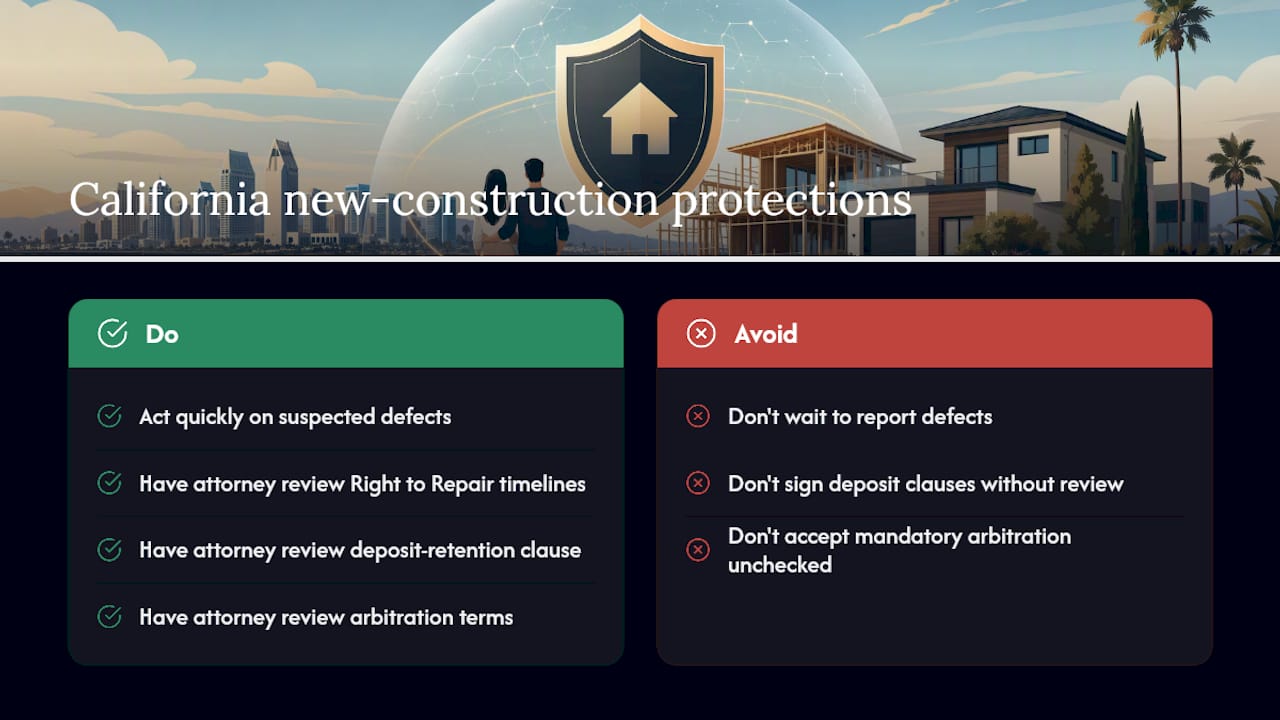
The state's Right to Repair Act (Civil Code sections 895 through 945.5) sets specific standards for construction defects in homes sold after 2003, covering everything from water intrusion to structural issues, and it requires builders to follow a pre-litigation repair process before a buyer can sue. That process has strict timelines on both sides, so a buyer who suspects a defect needs to act quickly rather than wait.
Deposit protections matter too. California generally limits how much of a buyer's deposit a builder can retain if the buyer defaults, though the exact percentage depends on contract terms and timing, which is exactly why an attorney needs to read that clause before signing rather than after a dispute starts.
Arbitration clauses are common in builder contracts and are generally enforceable in California, but they can waive a buyer's right to a jury trial for defect claims. An attorney can flag whether the clause is mandatory, whether it covers structural defects specifically, and whether there's a cost-sharing provision that favors the builder.
None of this replaces professional legal advice for your specific contract. A real estate attorney familiar with contract disputes can walk through these clauses before you sign, and that conversation typically costs far less than litigating a defect claim after the fact.
How Do HOA Rules and Fees Work in New San Diego Subdivisions?
Most new subdivisions in San Diego County come with a homeowners association, and the fees and restrictions attached to it directly affect your monthly cost and what you can do with the property.
HOA dues in new communities often start lower than they will in five or ten years, because reserve funds haven't built up yet and shared amenities like pools, gates, or landscaping are still new. Ask for the HOA's current budget and reserve study, not just the current monthly fee, since a thin reserve fund often means a special assessment down the road.
Architectural review committees are standard in new developments and can restrict everything from paint colors to whether you can install solar panels or build an accessory dwelling unit later. If you're considering an ADU as a future income source or in-law suite, check the HOA's covenants before you buy, since some communities restrict them even where San Diego permitting allows them. A local ADU permit guide covers what the city requires, but the HOA's own rules sit on top of that and can be more restrictive.
Review the CC&Rs (covenants, conditions, and restrictions) for rental caps, pet limits, and parking rules before you're under contract, not after. These documents are usually available during your due diligence period, and skipping them is one of the more common regrets new buyers report after move-in.
How Do Change Orders Affect Cost and Timeline?
Change orders, any modification to the builder's standard plan or included finishes, are where a fixed-price contract quietly stops being fixed.
Every change order should come with a written cost and a written timeline impact before you approve it. Builders typically charge a markup on both materials and labor for custom changes, and that markup is rarely disclosed upfront unless you ask directly. A single upgraded countertop or moved electrical outlet can add days to the schedule if it requires resequencing subcontractors who are already booked on other homes in the community.
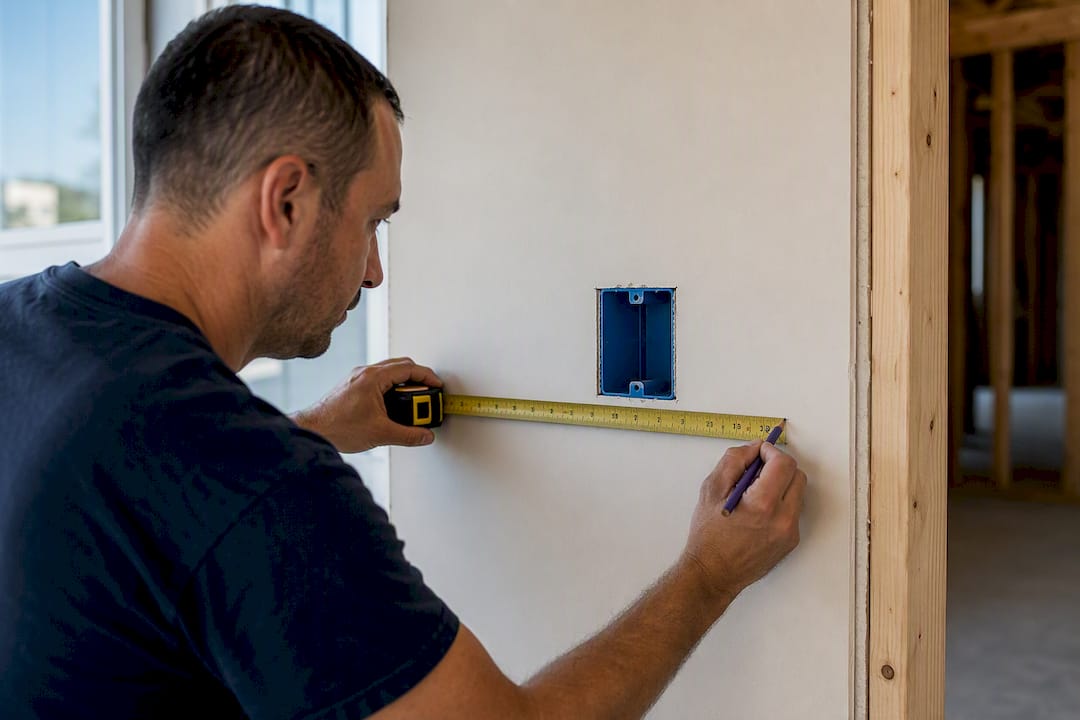
Structural change orders, like moving a wall or altering a floor plan, carry the highest risk. These often require re-engineering, updated permits, and sometimes a full schedule reset, which can push your closing date by weeks or months depending on the city's permit review pace at the time.
Get every change order in writing with three things specified: the exact scope, the total added cost, and the revised completion date. Verbal approvals from a sales representative or superintendent don't hold up if a dispute arises later, and builders juggling multiple communities won't remember informal conversations. If your contract has a closing-date guarantee, confirm whether approved change orders void that guarantee, since many builder contracts include language that resets the clock the moment you sign a change order.
Local Lessons From Closing New Construction Deals in San Diego
San Diego's permitting pace varies enough by jurisdiction that a certificate of occupancy timeline in one community can run weeks behind a similar project a few miles away. Buyers who lock a closing date without buffer room for that variability are the ones who end up scrambling on movers and bridge financing.
The most common red flag Jeff sees in sales office meetings is a rushed signature request tied to an "incentive expires today" pitch. Real incentives rarely vanish overnight, and a legitimate builder will give you time to have your attorney review the contract.
Consult an attorney before signing anything with a deposit attached, and hire your inspector the moment framing starts, not after.
— Jeff
How Jeff Can Help You Buy or Sell New Construction
Navigating a builder's sales office alone means negotiating against a team that represents the builder, not you. Experienced agents coordinate contract review, phased inspections, and closing timelines in new-construction transactions to support clients while they compare loan estimates and track punch-list deadlines.

If you're evaluating a specific community or presale reservation right now, start by browsing current San Diego listings to see how new-construction pricing compares to resale inventory nearby. Buyers who want a fuller walkthrough of the representation process before reaching out can review the Buyer's Guide first. Sellers weighing whether to list a recently completed build should check the Seller's Guide for pricing and marketing steps specific to new-build inventory. Reach out to Jeff directly to walk through your contract or timeline before you sign anything.
Sources
For legal context, the Cornell Law School Wex entry on adhesion contracts explains why independent attorney review matters. For market data, the NAHB's pricing analysis tracks new-versus-resale price trends. For transaction mechanics, the Real Estate Transaction Authority's overview maps the full closing sequence. Consult your attorney for contract questions, your lender for financing terms, and the local building department for permit and CO status.
- Adhesion contract — Cornell Law School Wex
- Prices for new homes drop as existing rises — NAHB blog (May 2025)
- New construction real estate transactions — Real Estate Transaction Authority