
Complying with San Diego regulations means meeting all applicable property, licensing, tax, and safety rules to legally operate and transact within the city. For property owners and real estate businesses, that covers everything from Business Tax Certificates issued by the City Treasurer to Short-Term Residential Occupancy (STRO) licenses, fire safety clearances, and building permits. The City's Code Compliance Division actively enforces these rules, and penalties for violations can reach $5,000 per incident. This San Diego compliance guide breaks down each requirement so you can act with confidence, not guesswork.
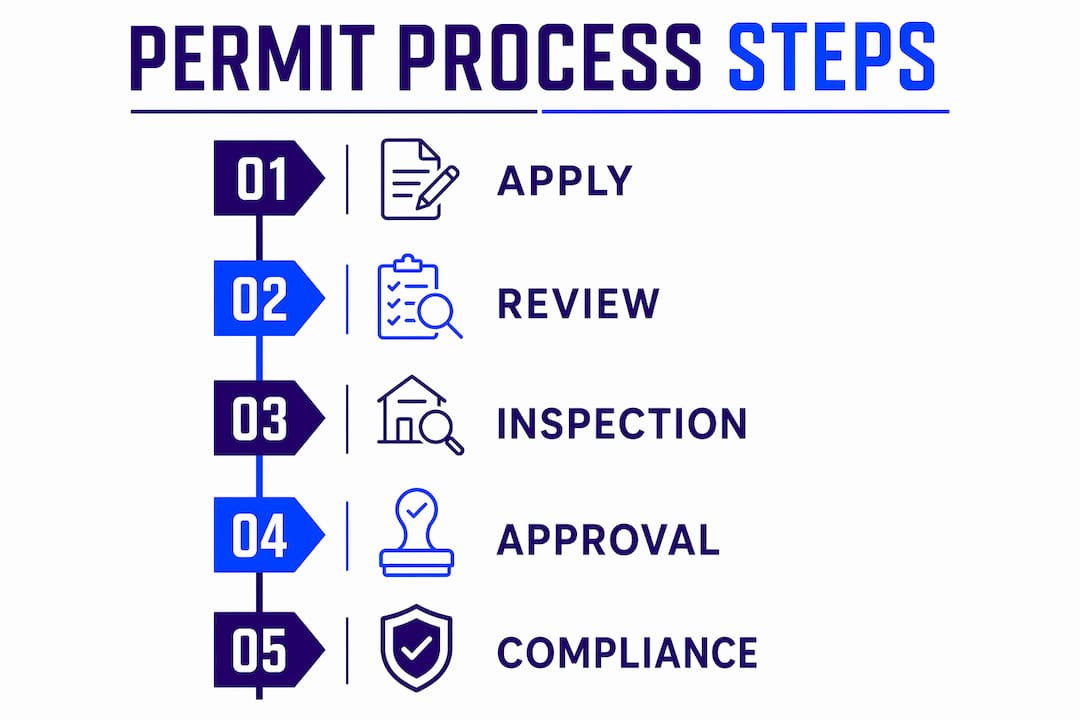
What licenses and permits do you need to comply with San Diego regulations?
San Diego requires every business, including home-based operations, to obtain a Business Tax Certificate within 15 days of starting. Missing that window triggers late fees and surcharges on top of the base fee. Renewal is annual, and fees scale with business size.
Short-term rental hosts face a separate, stricter layer of licensing. San Diego requires all rentals under one month to hold an STRO license, and the city enforces this aggressively. STRO fines reach $5,000 per violation, and licenses must be renewed every two years.
The STRO program uses a tiered structure based on how you use the property:
- Tier 1: Home sharing where the host lives on-site. No cap on nights per year.
- Tier 2: Whole-home rentals for primary residences. Capped at 90 nights per year.
- Tier 3: Whole-home rentals for non-primary residences. Subject to a citywide cap and a lottery system.
- Tier 4: Mission Beach properties with a separate allocation.
Processing time for an STRO license runs 60–120 days. Apply before you list, not after.
Short-term rental hosts must also register for Transient Occupancy Tax (TOT). San Diego's TOT rate is 10.5% on gross rental receipts. You collect it from guests and remit it to the City Treasurer, even if a booking platform collects it on your behalf. Non-payment leads to penalties and potential license revocation.
| License or Registration | Who Needs It | Key Requirement | Renewal |
|---|---|---|---|
| Business Tax Certificate | All businesses, including home-based | Apply within 15 days of start | Annual |
| STRO License (Tier 1–4) | Short-term rental hosts | Tier eligibility and property type | Every 2 years |
| TOT Registration | All short-term rental hosts | Collect and remit 10.5% tax | Ongoing |
Pro Tip: Maintain a "Good Neighbor" protocol with a 24/7 local contact and detailed guest records. This reduces complaints and protects your license during enforcement reviews.
How do San Diego fire safety and zoning regulations affect property compliance?
San Diego's fire safety rules are among the most demanding in California, and they directly affect what you can build, how you must maintain it, and when you need to act. Two-thirds of San Diego land falls within Very High Fire Hazard Severity Zones. That classification triggers specific legal obligations.
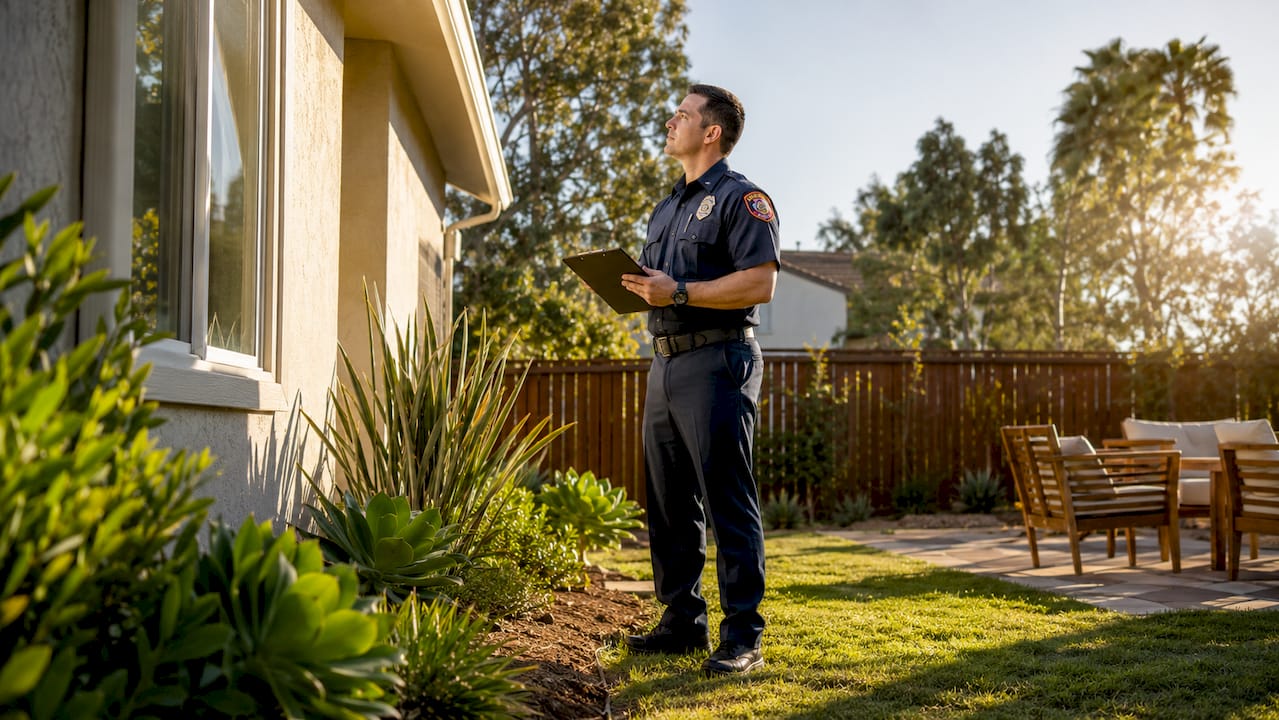
California's new "Zone Zero" rule requires ember-resistant clearance of 5 feet around all structures in these zones. For new construction, the deadline was february 28, 2026. Existing properties have until 2027 to comply voluntarily, but that window closes fast. Zone Zero prohibits combustible mulch, wood fencing directly attached to the home, and most vegetation within that 5-foot perimeter.
Zoning regulations add another layer. San Diego's zoning code controls how a property can be used, what structures are allowed, and what density is permitted. A property zoned RS-1-7 (single-family residential) cannot legally operate as a multi-unit rental without a variance or rezoning approval. Misreading a zoning designation before purchase is one of the most expensive mistakes buyers make.
A fire safety and zoning compliance checklist for San Diego property owners:
- Confirm your property's Fire Hazard Severity Zone classification through the California Department of Forestry and Fire Protection (CAL FIRE) map.
- Clear all combustible materials within 5 feet of the structure.
- Replace wood fencing attached to the home with non-combustible alternatives.
- Verify the zoning designation matches your intended use before signing any purchase contract.
- Check whether your planned improvements require a Conditional Use Permit under the San Diego Municipal Code.
- Confirm compliance with San Diego Fire Department inspection requirements for rental properties.
Pro Tip: For properties on slopes, order a geotechnical report early. San Diego building permits for lots over 25% slope require this report, and missing it is one of the most common causes of plan review rejection.
What are the key tax and financial compliance requirements for San Diego property owners?
San Diego's financial compliance rules cover wages, taxes, and recordkeeping. Each area carries its own deadlines and penalties, and they compound quickly when ignored.
San Diego's minimum wage as of july 1, 2026 is $17.75 per hour, which exceeds California's statewide floor of $16.90 per hour. Hospitality employers follow a separate phase-in schedule managed by the City Office of Labor Standards Enforcement. If you employ anyone at a rental property or real estate business, this rate applies to you.
Franchise taxes apply to LLCs and corporations operating in California. The California Franchise Tax Board charges a minimum $800 annual tax regardless of revenue. Entities that miss filings risk suspension, and a suspended entity cannot legally enter into contracts or close real estate transactions. Centralized compliance calendars reduce the risk of missing these deadlines.
Key financial compliance steps for San Diego property owners and businesses:
- Register for TOT with the City Treasurer before your first rental night.
- Collect 10.5% TOT from every short-term rental guest and remit monthly.
- Pay the California Franchise Tax Board minimum $800 annually for LLCs and corporations.
- Track all rental income and expenses with monthly reconciliation.
- File Statements of Information with the California Secretary of State on time to keep your entity in good standing.
- Keep payroll records for at least four years per California Labor Code requirements.
Accurate bookkeeping is not optional. The City Treasurer and the California Franchise Tax Board both conduct audits, and missing records shift the burden of proof onto you.
How do you navigate the San Diego permit and approval process?
Getting a permit in San Diego takes longer than most property owners expect. Understanding the process before you start saves weeks and thousands of dollars.
Building permits cover structural changes, additions, and most renovation work. Coastal zone properties require a separate Coastal Development Permit (CDP) in addition to the standard building permit. A CDP adds 8–12 weeks and $2,000–$8,000 in fees beyond what you budgeted for the building permit alone. Many coastal property owners discover this requirement only after submitting plans, which restarts the clock.
California's Residential Private Permitting Review Act gives you a useful option when the city falls behind. If San Diego's Development Services Department delays beyond 30 business days, you can hire a licensed private plan checker to review residential permits. This option cuts approval time significantly on straightforward projects.
Essential steps for the San Diego permit process:
- Confirm whether your property falls within the Coastal Overlay Zone using the San Diego GIS map.
- Determine whether a Coastal Development Permit is required before submitting any building permit application.
- Commission a geotechnical report for any lot with slopes exceeding 25%.
- Submit complete plans with all required reports to avoid rejection at the first review.
- Track your application status through San Diego's Development Services online portal.
- If the city exceeds 30 business days without action, engage a licensed private plan checker under the Residential Private Permitting Review Act.
Pro Tip: Align your entity name exactly across all permit applications, tax registrations, and Secretary of State filings. Mismatched entity names are a leading cause of permit holds and transaction delays that nobody sees coming.
Key Takeaways
Meeting San Diego's regulatory requirements for property and real estate requires active management of licenses, permits, taxes, and safety standards across multiple city and state agencies.
| Point | Details |
|---|---|
| Business Tax Certificate | Apply within 15 days of starting any business or rental operation to avoid late fees. |
| STRO license tiers | Choose the correct tier based on property type and occupancy status before listing. |
| Zone Zero fire clearance | Remove combustible materials within 5 feet of your structure to meet 2026 fire safety rules. |
| Coastal Development Permit | Budget an extra 8–12 weeks and up to $8,000 if your property sits in the Coastal Overlay Zone. |
| Franchise tax and TOT | File entity documents on time and remit 10.5% TOT monthly to avoid penalties and license risk. |
What I've learned about San Diego compliance after years in this market
Most compliance problems I see are not caused by ignorance of the rules. They come from treating compliance as a one-time task instead of an ongoing system. A property owner gets their STRO license, lists the unit, and then forgets the two-year renewal. The license lapses. The fines start. That sequence is completely avoidable with a simple calendar reminder.
The fire safety rules catch people off guard more than any other area right now. Zone Zero is new, and the 5-foot clearance requirement sounds minor until you realize it means ripping out established landscaping, replacing attached wood fencing, and potentially modifying hardscape. Sellers who have not addressed this before listing face disclosure obligations and negotiation pressure from buyers who know the rules. The 2026 San Diego real estate market rewards sellers who come to the table with clean compliance records.
The permit process is where I see the most expensive surprises. Coastal Development Permits blindside buyers and sellers who assumed a standard building permit covered everything. The fix is simple: check the Coastal Overlay Zone map before you make any improvement plans, not after. The same logic applies to geotechnical reports on sloped lots. Order the report early, not as a reaction to a rejection letter.
My honest advice is to build a compliance calendar with hard deadlines for every license, tax filing, and permit renewal. Pair it with a single folder, physical or digital, where every certificate, report, and filing lives. When a transaction moves fast, you will not be scrambling. You will hand over a complete compliance package and close on time.
— Jeff
Working with Jeffsellssandiego on your San Diego property transaction
San Diego's regulatory requirements touch every stage of a real estate transaction, from the first property search to the closing table. Jeffsellssandiego works with buyers and sellers who need an agent who understands how zoning designations, STRO licensing, and disclosure requirements affect deal terms and timelines.

Whether you are buying a property and need to understand its compliance history, or selling and want to present a clean record to buyers, Jeffsellssandiego brings the local knowledge that makes a difference. Browse current San Diego listings or use the home valuation tool to see where your property stands in today's market. Compliance-aware representation is not a bonus. It is the baseline.
FAQ
What is a Business Tax Certificate in San Diego?
A Business Tax Certificate is a required local registration for any business operating in San Diego, including home-based and rental operations. You must apply within 15 days of starting, and renewal is annual.
How much is the Transient Occupancy Tax in San Diego?
San Diego's Transient Occupancy Tax is 10.5% of gross rental receipts. Hosts must collect it from guests and remit it to the City Treasurer, regardless of whether a booking platform collects it.
What is the Zone Zero fire safety rule?
Zone Zero requires property owners in Very High Fire Hazard Severity Zones to maintain a 5-foot ember-resistant clearance around all structures. New construction must comply as of february 28, 2026; existing properties have until 2027.
Do I need a Coastal Development Permit for my San Diego property?
Properties within San Diego's Coastal Overlay Zone require a Coastal Development Permit in addition to any standard building permit. This adds 8–12 weeks and up to $8,000 in fees to your project timeline.
What happens if I operate a short-term rental without an STRO license?
Operating without a valid STRO license exposes you to fines starting at $1,000 and escalating to $5,000 per violation. The City also has authority to revoke your license and refer cases for further enforcement action.