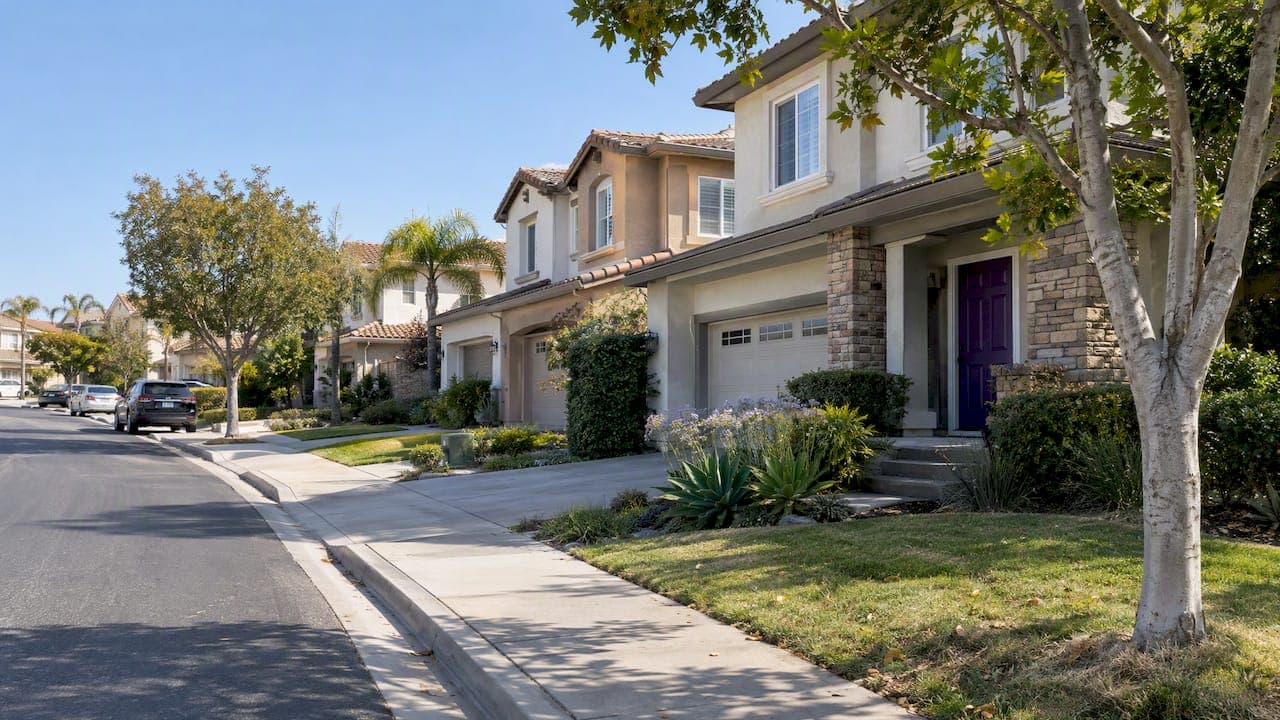
Carmel Valley prices are holding steady with modest upward pressure heading into 2026, and inventory remains tight enough that well-priced listings still move quickly. Buyers can afford to be selective on condition and location but should be ready to act fast on the right property. Sellers who price to current comparables, rather than last year's peak, are the ones attracting the renewed demand we're seeing. That reading lines up with the statewide C.A.R. 2026 forecast and with what I'm seeing on the ground here in Carmel Valley.
TL;DR:
- Buyers should target homes listed for more than three weeks, where negotiation room improves, and lead with clean financing and documented preapproval.
- Sellers should price against closed sales from the past 60 to 90 days; even 3% to 5% above comparables can add weeks and force cuts.
- C.A.R. projects average fixed mortgage rates near 6.0% in 2026; below 5.5% could intensify competition, while above 6.5% may widen seller concessions.
- School boundaries and home condition create distinct micro markets: top school zones command premiums, while dated homes and condos generally take longer to sell.
Table of Contents
- Current Market Snapshot: Prices, Inventory, and Days on Market
- What Changed in the Last 6 to 18 Months, and Why
- Short-Term Outlook: What the Next 12 to 24 Months Likely Hold
- Price Bands and Home Types Across Carmel Valley's Micro-Markets
- How the Carmel Valley Planned District Ordinance Shapes Supply
- Your Next Move: A Buyer and Seller Checklist
- What I'm Seeing on the Ground in Carmel Valley
- Infrastructure and Transportation Access Shaping Values
- Renting Versus Buying in Carmel Valley Right Now
- Who's Driving Demand in Carmel Valley Today
- How Schools and Amenities Shape Property Values
- The Honest Read on Carmel Valley Right Now
- How We Help You Navigate This Market
- FAQ
- Sources
Current Market Snapshot: Prices, Inventory, and Days on Market
Carmel Valley and the surrounding 92130 ZIP code remain among the higher-priced submarkets in San Diego County, a status tied directly to school reputation, newer housing stock, and proximity to the UTC job corridor. Price per square foot here consistently outpaces county averages, reflecting both the age and quality of construction in this master-planned community and the limited land available for new building.
Inventory has stayed lean relative to buyer demand, which keeps competition alive for move-in-ready homes in good school zones even as higher borrowing costs have cooled urgency compared to the frantic pace of a few years ago. Listings that are priced realistically from day one tend to see multiple showings in the first week, while overpriced homes sit and eventually require a price adjustment to generate fresh interest.
A few patterns stand out right now:
- Well-maintained single-family homes in sought-after school zones draw the fastest offers and the least negotiation room.
- Condos and townhomes move more slowly than detached homes but still attract steady interest from downsizers and first-time buyers priced out of single-family inventory.
- Homes needing cosmetic or structural updates sit longer and typically close below the initial list price.
- Properties listed in spring and early summer historically see the most competitive activity, consistent with the broader seasonal pattern across San Diego housing trends.
For anyone comparing notes against other North County submarkets, it helps to look at how pricing has diverged in nearby communities. Our recent breakdown of Carlsbad's housing market shows a similar dynamic: tight inventory and strong school districts keep certain pockets insulated from broader cooling trends, which is exactly what we see play out street by street in Carmel Valley.
What Changed in the Last 6 to 18 Months, and Why
Mortgage rates have been the single biggest swing factor for buying power in Carmel Valley over the past year and a half. As rates climbed and then stabilized, monthly payment math shifted enough to push some buyers to the sidelines or into smaller search radii, even in a community this desirable. C.A.R. projects the average 30-year fixed rate will land around 6.0% in 2026, a level that should keep demand steady rather than triggering another surge.
On the supply side, new construction in Carmel Valley is scarce because the community is largely built out, so any changes in inventory come mostly from resale turnover rather than fresh development. That scarcity is a structural feature of this market, not a temporary blip.
Demand has stayed resilient for a few clear reasons:
- Families continue to target specific elementary and middle school boundaries, which concentrates competition in certain pockets regardless of broader rate conditions.
- Proximity to the UTC, Sorrento Valley, and Del Mar Heights employment centers keeps commute-sensitive buyers anchored to this part of the county.
- Lifestyle amenities, including parks, trails, and the community's master-planned layout, continue to draw move-up buyers from elsewhere in San Diego.
Rising insurance costs and property tax considerations have nudged some buyers toward smaller homes or condos, while seasonality still shapes when the best inventory appears. Investor participation here is modest compared to more affordable submarkets, since price points limit rental yield potential.
Pro Tip: If you're watching rates, focus less on the headline number and more on your actual monthly payment. A half-point swing matters less than most buyers assume once you factor in a realistic offer price.
Short-Term Outlook: What the Next 12 to 24 Months Likely Hold
The C.A.R. 2026 forecast projects statewide median home prices rising moderately to around $905,000, with the average 30-year fixed rate holding close to 6.0%. For a premium submarket like Carmel Valley, that statewide trend typically translates into modest, steady appreciation rather than sharp swings in either direction, since limited inventory already supports pricing here.
Two scenarios seem most plausible for 2026 and into 2027:
- Modest price growth, if rates hold near the 6.0% range and buyer demand continues absorbing the limited resale inventory without a meaningful uptick in new listings.
- Flat pricing with longer days on market, if rates climb unexpectedly or broader economic uncertainty causes buyers to pause, giving sellers less leverage on price.
A rate drop below 5.5% would likely reignite stronger competition and shorter days on market, while a jump above 6.5% would probably push more sellers to negotiate on price or concessions.
Practically, this means buyers should expect to build in a modest negotiation buffer on homes that have sat more than three weeks, while sellers should plan for a realistic 30 to 45 day window to contract on well-priced listings rather than assuming an immediate bidding war. Offer strategies that worked during the low-rate years, like waiving contingencies aggressively, matter less now than clean financing and a quick, well-documented pre-approval.
Price Bands and Home Types Across Carmel Valley's Micro-Markets
Carmel Valley isn't one uniform price tier. It's a collection of micro-markets, each shaped by school boundaries, build era, and lot size, and understanding those bands helps you target your search or your pricing strategy realistically.
- Entry-level condos and townhomes typically appeal to first-time buyers and downsizers looking for lower maintenance and a foothold in the community's school boundaries.
- Mainstream single-family homes, generally built during the neighborhood's main development waves in the 1990s and 2000s, make up the bulk of inventory and see the most competitive bidding.
- Premium single-family homes, often featuring larger lots, views, or recent renovations, command the top of the local price range and tend to move more slowly simply because the buyer pool is smaller.
Certain pockets consistently command a premium over the broader Carmel Valley average. Homes zoned for the most sought-after elementary schools routinely draw stronger offers, even when the physical home itself is comparable to one just outside the boundary. Newer, more recently developed sections of the community also tend to price higher, reflecting updated layouts and modern finishes that buyers are willing to pay extra for.
Within any given price band, the details that move the needle are predictable: updated kitchens and bathrooms, usable backyard space, and views or privacy from neighboring lots. A home with two of those three features will often outprice a similar home with none of them, even on the same street.
How the Carmel Valley Planned District Ordinance Shapes Supply
Carmel Valley's housing supply is governed by a Planned District Ordinance that the City of San Diego uses to control phased growth and ensure new development conforms to an approved precise plan. In practice, this means new housing in Carmel Valley doesn't appear organically the way it might in an unzoned or loosely regulated area. It follows a defined sequence tied to infrastructure and facilities planning.
That structure matters for anyone trying to time a purchase or a sale:
- The PDO requires new development to conform to precise plans, which limits where and how quickly new units can be built.
- Phased growth controls mean new supply tends to arrive in planned waves tied to specific sections of the community, not spread evenly across the whole area.
- Because the community is largely built out already, most of the ordinance's practical effect today is to keep future supply constrained rather than to open new tracts.
This planning friction is a quiet but real reason established Carmel Valley neighborhoods tend to hold their value: new competition for resale inventory simply can't appear overnight.
Your Next Move: A Buyer and Seller Checklist
If you're actively planning a purchase or sale in Carmel Valley, here's where to focus:
- Get prequalified before you start touring homes. A clean, verified pre-approval carries real weight with sellers in a market where multiple offers still happen on the best listings.
- Separate your must-haves from your nice-to-haves. School zone and commute distance usually matter more long-term than a renovated kitchen you could update later.
- Price your listing against the last 60 to 90 days of closed comparables, not last year's numbers. Overpricing by even 3% to 5% can cost you weeks on market and force a harder price cut later.
- Handle staging and minor repairs before you list. Buyers notice worn doors, dated closets, and an aging roof immediately, and those details shape first impressions during showings.
- Expect a realistic 30 to 45 day window from listing to contract on a well-priced home, with closing typically following 30 to 45 days after that depending on financing.
Pro Tip: If your home is zoned for one of Carmel Valley's top-rated schools, consider listing in late winter or early spring so your closing timeline aligns with families trying to settle in before the next school year starts.
What I'm Seeing on the Ground in Carmel Valley
Working San Diego's residential market day to day, the pattern I keep seeing in Carmel Valley is consistency: homes in strong school zones with clean presentation still generate multiple showings in the first weekend, while anything overpriced or dated sits and needs a correction. Buyers are more price-sensitive than they were a few years ago, but they move quickly once they find the right fit.
I lean on recent closed sales, current PDO constraints, and school-zone boundaries to set pricing strategy for sellers and to help buyers understand where real negotiation room exists. You can see more of this neighborhood-level detail on our Carmel Valley area page, and for a sense of how this approach plays out elsewhere in the county, our San Carlos neighborhood page shows the same micro-market thinking applied to a different part of San Diego.
Infrastructure and Transportation Access Shaping Values
Carmel Valley's housing values are closely tied to how easily residents can reach the region's major job centers, and that access hasn't changed dramatically in the recent past. The community's position relative to the UTC, Sorrento Valley, and Del Mar Heights employment corridors remains one of its biggest draws, since shorter commutes consistently support stronger demand and faster sales.
Local road capacity and the pace of regional transportation improvements matter more here than new commercial development, since the community itself is largely built out. Buyers and sellers should keep an eye on any planned road or transit updates that touch the I-5 and I-805 corridors, since even incremental improvements to commute times can shift buyer interest toward or away from specific sections of Carmel Valley.
For now, the biggest transportation-related value driver remains simple proximity. Homes within an easy drive of the major job hubs, without relying on congested surface streets, tend to command a premium over otherwise comparable properties farther from those access points. That premium is unlikely to shrink unless meaningful new infrastructure changes the commute calculus for this part of the county.
Renting Versus Buying in Carmel Valley Right Now
Carmel Valley's rental market caters largely to families and professionals who want access to the area's schools and job proximity without committing to a purchase at current price points. Rental demand tends to track closely with the local job market and school enrollment cycles, with the busiest leasing activity in summer months ahead of the new school year.
For many renters, the math increasingly favors at least exploring ownership, especially for those planning to stay five or more years, since rent increases over time while a fixed-rate mortgage payment stays predictable. The gap between a typical rent payment and a mortgage payment on a comparable home has narrowed in some price bands as rate conditions stabilized, though it still depends heavily on down payment size and loan terms.
Renters considering a jump to ownership in Carmel Valley should weigh the same school-zone and commute priorities that drive buyer demand here, since those factors affect both resale value and long-term livability. A conversation with a lender about current loan options is usually the fastest way to see where that break-even point actually lands for your situation.
Who's Driving Demand in Carmel Valley Today
Demand in Carmel Valley continues to skew toward families prioritizing top-rated schools, alongside professionals working in the nearby UTC and Sorrento Valley job corridors who want a manageable commute. This is reflected in the community's identity as a planned suburban development within the City of San Diego, built from the outset with family-oriented infrastructure in mind.
Move-up buyers already living elsewhere in San Diego County make up a meaningful share of demand as well, often trading a smaller or older home for more space and better schools once their financial situation allows it. Downsizers and empty nesters add another layer of demand for the community's condo and townhome inventory, drawn by lower maintenance living without leaving the area's amenities behind.
This mix of buyer types helps explain why Carmel Valley's different price bands move somewhat independently of each other: family-driven demand for single-family homes in top school zones behaves differently than downsizer demand for low-maintenance condos, even in the same overall market cycle.

How Schools and Amenities Shape Property Values
School zoning is one of the strongest, most consistent price drivers in Carmel Valley, and it shows up clearly when comparing otherwise similar homes on opposite sides of a boundary line. Buyers routinely pay a premium to secure a specific elementary or middle school assignment, and that premium tends to hold even when broader market conditions soften.
Beyond schools, the community's parks, trail systems, and recreational amenities contribute to sustained demand. Neighborhoods with easy access to trails and green space, like those near the areas detailed in local park and trail resources, often see steadier interest than comparable homes farther from those features.

Retail and dining options within easy reach also factor into buyer decisions, though to a lesser degree than schools. Taken together, these amenities are a bigger driver of Carmel Valley's price resilience than any single large-scale commercial project, since they shape daily quality of life in ways buyers consistently value.
The Honest Read on Carmel Valley Right Now
If you're buying, aim for homes that have sat two or three weeks rather than chasing the first weekend's hottest listing, since that's where real negotiation room still exists. If you're selling, price to the last 60 days of comparables, not last year's ceiling. Carmel Valley's planning limits and school-driven demand mean patience, not panic, wins here.
— Jeff
How We Help You Navigate This Market
Carmel Valley's tight inventory and school-driven pricing mean the difference between a smooth transaction and a frustrating one usually comes down to local knowledge and timing. Through Buy With Confidence, we guide buyers through competitive offer strategy, school-zone tradeoffs, and realistic pricing so you're not guessing at what a home is actually worth. Through Sell With Strategy, we help you price against real comparables and prepare your home to attract the buyers who are actively searching right now.

If you're weighing whether now is the right time to make a move, our free Home Valuation gives you a clear, no-pressure read on where your property stands in today's market. For sellers getting ready to list, a quick fix like replacing worn interior or closet doors through One Day Doors & Closets can make a noticeable difference in how a home shows, often within a single day and with minimal mess. Reach out whenever you're ready to talk through your specific situation.
FAQ
What Is the Average Cost of Living in Carmel, CA?
Carmel Valley, San Diego, and Carmel, California up the coast near Monterey are different places, so cost-of-living figures vary widely depending on which one you mean. If you're asking about Carmel Valley within San Diego, the defining cost factor is housing, since home prices here run well above the county median due to school quality and limited inventory.
Why Are San Diego Houses So Expensive?
San Diego home prices stay high largely because of limited land for new construction, strong job growth near the coast, and persistent demand from buyers drawn to the climate and lifestyle. In communities like Carmel Valley, added planning controls under the Planned District Ordinance further limit new supply, reinforcing price resilience.
What Is the 3-3-3 Rule in Real Estate?
The framework is rough rather than a fixed standard, so your actual comfort level will depend on your full financial picture.
Is Carmel Valley Part of the City of San Diego?
Yes, Carmel Valley is a planned suburban community located within the City of San Diego, situated in the northwestern part of the city. The 92130 ZIP code associated with Carmel Valley also includes parts of adjacent communities, which is worth knowing when comparing listings or market data.
Sources
- C.A.R. releases its 2026 California Housing Market Forecast
- City of San Diego municipal code: Planned Districts — Carmel Valley