
Yes, most businesses should invest in professional photography. A single well-planned shoot raises conversion rates, builds brand credibility, and creates a reusable visual library that feeds your website, social media, ads, and print materials for years.
Here is what that investment actually delivers:
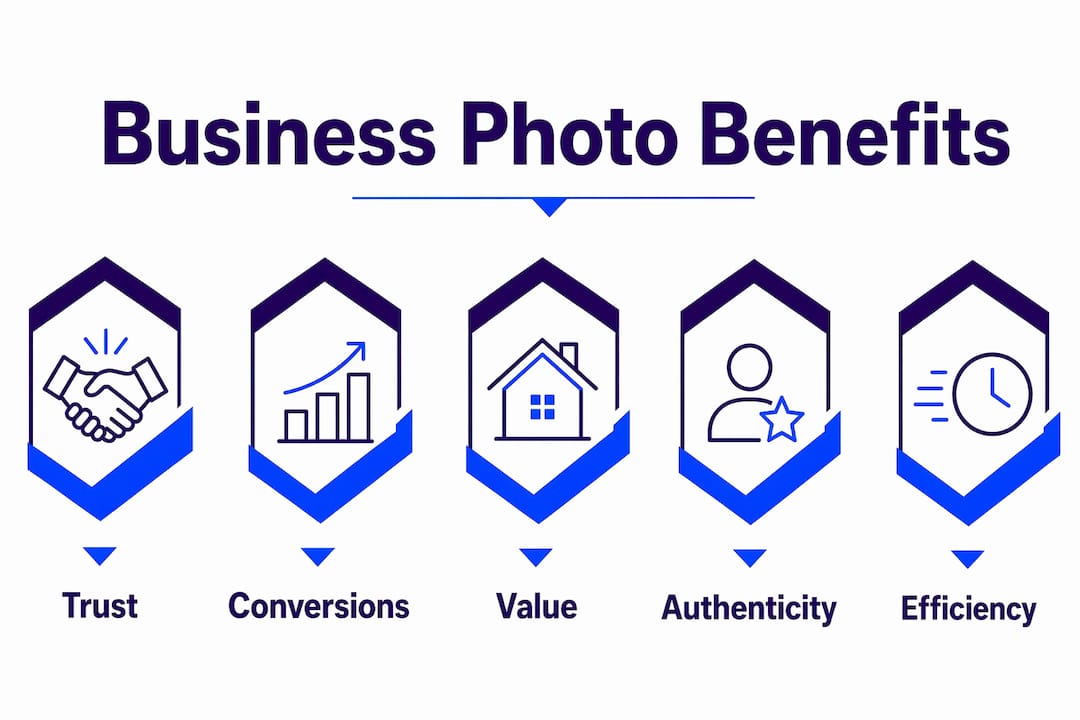
- Higher conversions — quality images reduce purchase anxiety and keep visitors on the page longer
- Stronger brand trust — polished visuals signal attention to detail before a word is read
- Authenticity over stock — original photos build trust faster than generic imagery
- Better ad performance — professional creative assets lower cost-per-click and improve click-through rates
- SEO lift — properly formatted original images support organic visibility
- Listing power — in real estate, professional photos directly affect showing requests and perceived value
Table of Contents
- 1. Why professional photos pay off across your whole business
- 2. Where professional photos move the needle fastest
- 3. What actually makes a photo look professional
- 4. How to plan a shoot and pick the right photographer
- 5. Real estate case study: what professional photos actually change
- Key Takeaways
- The thing most sellers underestimate about listing photos
- Listing marketing that starts with the right images
- Useful sources and further reading
1. Why professional photos pay off across your whole business
The case for professional photography is not about aesthetics. It is about business outcomes: more clicks, faster trust, and marketing assets that work across every channel without constant replacement.
Conversion and engagement
High-quality images help buyers form strong impressions fast and reduce the hesitation that kills online sales. A blurry product shot or a poorly lit headshot signals carelessness. A sharp, well-composed image signals that you take your work seriously. That impression happens in under a second.

Brand credibility and perceived value
There is a direct link between image quality and pricing power. If you charge premium rates, your visuals need to match. Luxury offers presented with low-quality photography lose buyers before the conversation starts. The visual and the price have to tell the same story.
Authenticity vs. stock
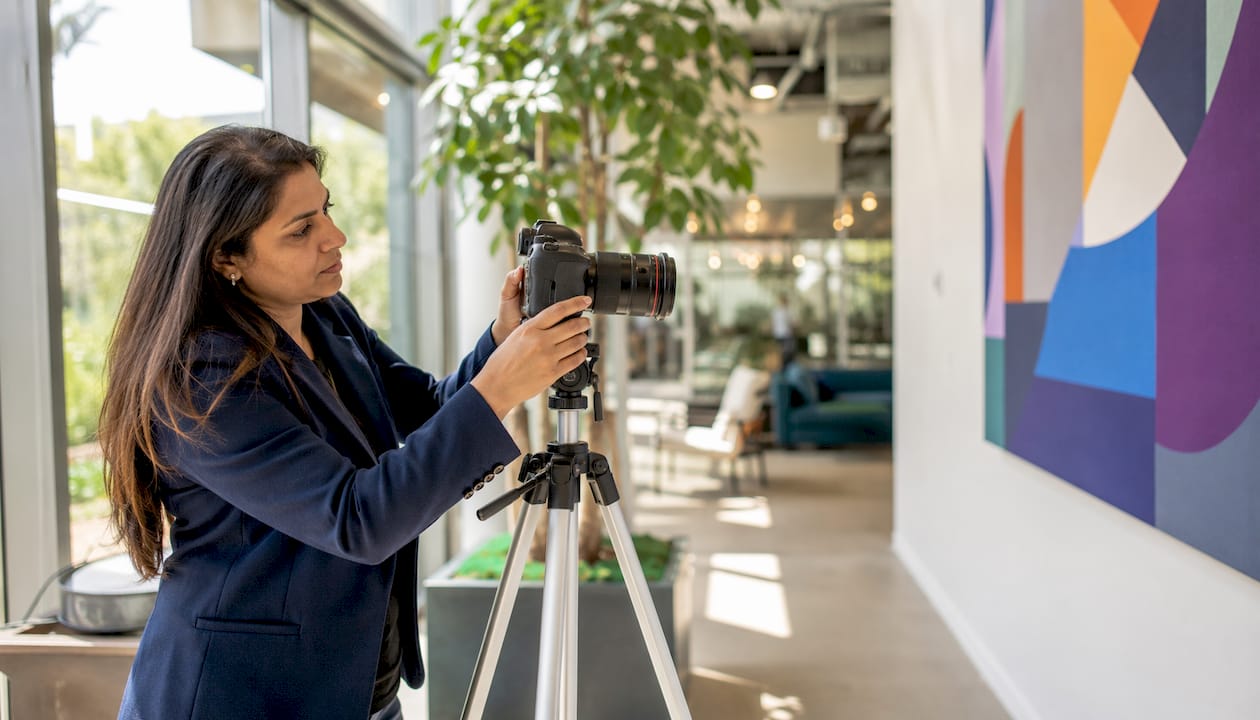
Stock photos are recognizable, and not in a good way. Visitors have seen the same smiling-team-in-a-conference-room image on dozens of sites. Real photos of your actual people, space, and products create connection that stock never can. They are also exclusively yours, which matters for differentiation.
Operational efficiency and reuse
One professional shoot can supply your website hero, social posts, email headers, print ads, and presentation decks for an extended period, often lasting a year or two. That is the visual library model that saves marketing time and prevents the brand dilution that comes from mixing mismatched images across channels.
SEO and discoverability
Original images, properly compressed and tagged with descriptive alt text, support organic search visibility. The key word is "properly." Unoptimized images — professional or not — slow pages and hurt rankings. The technical step of formatting images for web use is what preserves both quality and speed.
Stat worth noting: A professional shoot is a strategic collaboration. Most of the value comes from pre-shoot planning — defining your target buyer, usage formats, and shot list — not just the final images themselves.
2. Where professional photos move the needle fastest
Not every placement demands the same level of technical perfection. Knowing where to spend your best assets first gets you faster returns.
- Website hero and home page banners — the highest-stakes placement. Visitors judge your business in seconds. A weak hero image undermines everything below it.
- Product pages and e-commerce galleries — multi-angle, high-resolution shots reduce returns and purchasing anxiety. Customers cannot touch the product; the image has to do that work.
- Team and leadership headshots — for service businesses, faces build trust. A consistent set of professional headshots signals that the organization is established and serious.
- Real estate listings and print collateral — listing photos directly affect showing volume and buyer perception. Poor photos mean fewer clicks; fewer clicks mean fewer offers.
- Social ads and paid media — ad creative is where image quality translates directly into cost-per-acquisition. A stronger image lowers the cost of every lead.
Pro Tip: Reserve your highest-quality assets for hero banners and product pages. Those two placements carry the most conversion weight. For Instagram Stories or behind-the-scenes content, a well-lit phone photo is often sufficient.
3. What actually makes a photo look professional
The gap between a phone snapshot and a professional image is not the camera. It is the control of light, composition, and consistency across a set of images.
The technical checklist
- Lighting control — directional light with fill to eliminate harsh shadows. Flat, overhead lighting is the most common amateur mistake.
- Composition and framing — rule of thirds, a clear focal point, and enough negative space for text overlays when images will be used in ads or banners.
- Color accuracy and consistent grading — all images in a set should share the same color treatment. Mismatched tones across a website look unfinished.
- Sharpness and appropriate depth of field — product shots need edge-to-edge sharpness; portraits often benefit from a shallow depth of field that separates the subject from the background.
- Resolution for intended use — a web hero needs different specs than a billboard. Confirm output resolution before the shoot.
- File delivery and web optimization — request JPG and WEBP exports, responsive sizes, and properly compressed files. Properly sized and formatted images preserve visual quality without slowing your pages.
Quick review checklist for proofs
- Does every image in the set share the same color temperature?
- Are shadows controlled, or do they distract from the subject?
- Is there clean space for text if the image will be used in an ad?
- Do the images look consistent when placed side by side on a page?
Smartphone photography lacks the technical control needed for brand-defining assets. A pro handles lighting, composition, and color accuracy in ways that a phone camera simply cannot replicate consistently.
4. How to plan a shoot and pick the right photographer
Most of the value in a professional shoot is decided before the photographer arrives. A clear brief, a defined shot list, and agreed deliverables are what separate a useful session from an expensive afternoon.
Pre-shoot planning
- Define your use cases: website hero, social content, print ads, email headers.
- Build a shot list with specific scenes, people, and products.
- Create a mood board showing the visual style you want.
- Confirm usage scope: how many channels, for how long, in what markets.
Cost expectations
Half-day shoots for small businesses typically cost a moderate amount depending on location, retouching, and whether a stylist or assistant is involved. Full-day sessions and product packs with extensive editing cost more. A short, well-planned session with a local pro can be affordable and deliver images that remain usable for years.
Timeline and deliverables
- Scheduling: book 2–4 weeks out for most local photographers
- Proof delivery: typically 5–10 business days after the shoot
- Final delivery: 2–4 weeks including revisions
- Request: edited images in multiple crops, web-optimized exports, and social-sized variants
Usage rights
Ask for royalty-free commercial use across all your intended marketing channels. Confirm whether exclusivity applies and for how long. Always verify that the license covers every channel you plan to use before signing. This is a legal matter; confirm the terms in writing.
Questions to ask before hiring
- Does your portfolio include work in my industry or for similar use cases?
- What is your editing workflow and typical turnaround?
- What is your backup plan if weather or a key person is unavailable?
- Can you provide references from business clients?
Pro Tip: Treat the shoot as a strategic collaboration. Photographers who understand your target buyer and your usage formats deliver far higher ROI than those who focus only on getting a great single shot.
5. Real estate case study: what professional photos actually change
A San Diego seller lists a three-bedroom home in a competitive neighborhood. The first attempt uses phone photos taken on a cloudy afternoon. Showing requests are slow. The listing sits.
The seller works with Jeffsellssandiego to prepare the home for a professional shoot: furniture is decluttered, natural light is maximized, and key rooms are staged to photograph well. A professional photographer captures wide-angle interior shots, exterior curb appeal, and lifestyle details. Within days of relisting with the new images, showing requests increase and buyer interest sharpens noticeably.
Why did the photos move the result? Sharper listing previews on Zillow and Redfin generate more clicks. Better ad creative in social campaigns lowers cost-per-click. And buyers arrive at showings already emotionally engaged because the images gave them something to connect with before they walked through the door.
Practical takeaways for your listing shoot:
- Declutter every surface before the photographer arrives; less is always more in a frame
- Schedule the shoot when natural light is strongest in the main living areas
- Stage the focal point of each room — the fireplace, the kitchen island, the view — and let the photographer frame around it
- Request wide-angle and detail shots so you have assets for both listing portals and social ads
Key Takeaways
Professional photography is one of the highest-leverage investments a business or seller can make because a single shoot creates a multi-channel visual library that raises perceived value, supports premium pricing, and reduces marketing effort for months.
| Point | Details |
|---|---|
| One shoot, many channels | A single professional session supplies website, social, email, ads, and print for 12–24 months. |
| Quality matches pricing | Luxury or premium offers must be supported by equally strong visuals or conversion suffers. |
| Plan before you shoot | Define use cases, shot list, and usage rights before the photographer arrives to maximize ROI. |
| Real estate impact | Professional listing photos increase showing requests and buyer engagement before the first walkthrough. |
| Jeffsellssandiego approach | Jeffsellssandiego coordinates listing preparation and professional photography as part of a full marketing strategy for San Diego sellers. |
The thing most sellers underestimate about listing photos
Most people know professional photos look better. Fewer understand what that actually costs them when they skip it.
The buyers browsing listings on their phones are making a yes-or-no decision in about three seconds. If the first image is dark, slightly blurry, or shot at an awkward angle, they scroll past. The price, the square footage, the neighborhood — none of it gets read. The photo was the gate, and it was closed.
What changes with professional images is not just aesthetics. It is the quality of the buyer who shows up. When a listing looks polished and well-presented, it attracts buyers who are already emotionally invested before they arrive. Those buyers ask fewer skeptical questions, move faster, and are more likely to make competitive offers.
The same logic applies to any business. A service firm with strong headshots and real workspace photography attracts clients who have already decided they trust the team. A product brand with sharp, consistent imagery spends less convincing buyers at the point of sale. The image does the pre-selling.
Spending on photography is not a marketing cost. It is a filter that improves the quality of every conversation that follows.
Listing marketing that starts with the right images
Sellers who want their San Diego home to stand out in a competitive market need more than good photos. They need a coordinated marketing approach where the photography, the listing copy, and the channel strategy all reinforce the same message.
Jeffsellssandiego builds that coordination into every listing. From helping sellers prepare their home for a professional shoot to deploying those images across listing portals, social ads, and buyer outreach, the goal is simple: get the right buyers through the door faster. Sellers who want to see what a fully marketed listing looks like can browse current San Diego listings or connect directly through the seller's guide to talk through next steps.
Useful sources and further reading
- The ROI of professional photos (with real examples) — practical breakdown of how professional photography pays back across marketing channels
- Why your brand needs real photos, not generic imagery — Entrepreneur on why authenticity outperforms stock in engagement and trust
- Importance of images in business — overview of how quality visuals affect buyer confidence and conversion
- Stop using stock photos: real photography website upgrade — guidance on when a pro is necessary and when a well-lit phone photo is enough
- Why hire a professional photographer? — explains the strategic value of pre-shoot planning and business-outcome thinking
- How images affect conversion rates — covers image optimization, page speed, and the technical side of web-ready photos
- Prepare your home for professional listing photos — practical checklist for staging and shoot-day preparation
- Marketing strategies for homes: top 10 proven tactics — how professional photos fit into a full listing marketing plan
- How natural light raises home value and buyer appeal — specific guidance on using natural light during listing photography sessions
- Why use a real estate agent? Value for San Diego buyers and sellers — context on how professional representation and professional photography work together