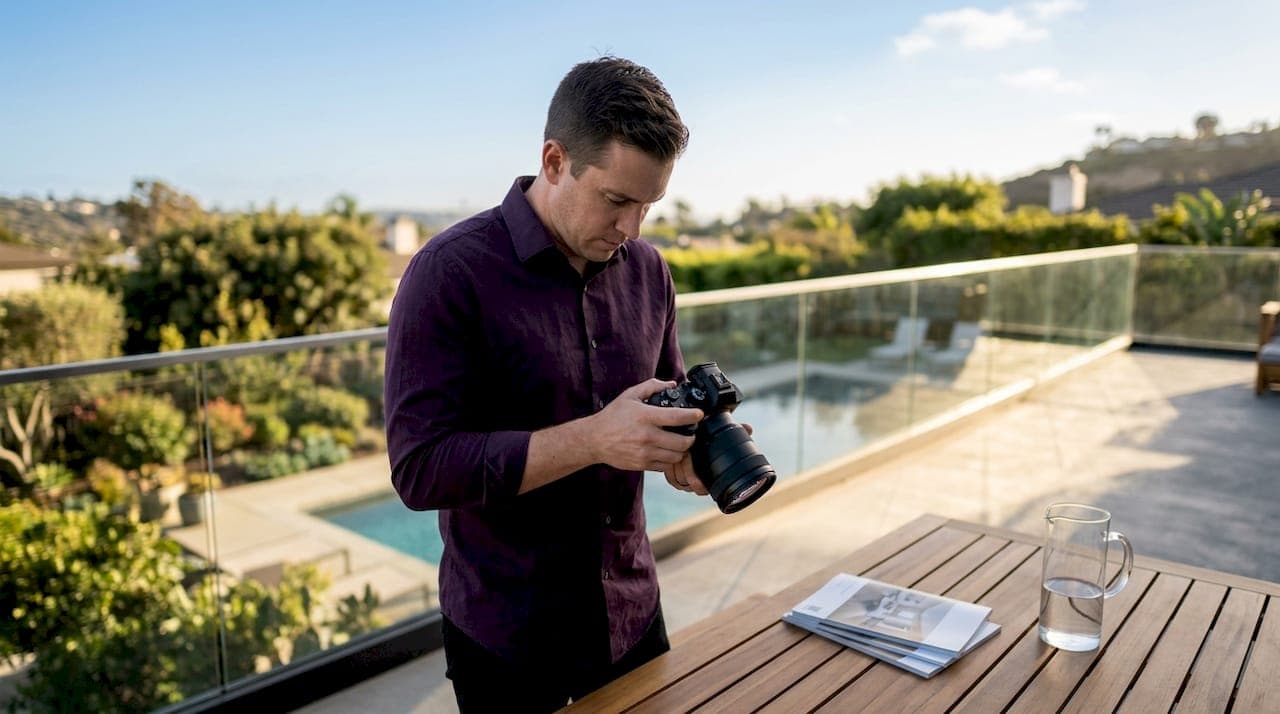
Marketing strategies for homes are the targeted promotion and presentation techniques homeowners and real estate investors use to attract qualified buyers and sell properties at the best possible price. In San Diego's competitive market, the difference between a listing that sits and one that sells fast comes down to execution across three core pillars: professional presentation, digital reach, and direct outreach. Listings with video receive 403% more inquiries, and the first week a home is listed drives the strongest viewership and offer activity. Get these fundamentals right from day one, and you control the outcome.
1. How does professional photography and pricing impact home sales?
The marketing triad for home sales is professional photography, competitive pricing, and active agent promotion. These three elements work together, and skipping any one of them costs you buyers before they ever schedule a showing.

Professional photos generate 3–5 times more views than amateur images. That gap translates directly into more showings, more offers, and faster closings. Buyers scroll through dozens of listings in minutes, and blurry or poorly lit photos signal a property that is not worth their time.
Pricing is the most searched filter on every MLS portal and real estate platform. An overpriced listing ranks lower in search results and sits on the market longer, which creates a stigma that is hard to reverse. Price it right from the start, and you generate competition. Competition drives offers above asking.
- Professional photography: Hire a photographer who shoots with wide-angle lenses and uses natural light staging.
- Twilight shots: Exterior photos taken at dusk create emotional appeal that daytime shots rarely match.
- Aerial drone photography: Especially effective for San Diego properties with ocean views, large lots, or unique locations.
- Accurate pricing: Pull comparable sales from the last 90 days within a half-mile radius before setting your list price.
Pro Tip: Request a pre-listing home valuation from Jeffsellssandiego before you set your price. A free home valuation removes the guesswork and grounds your pricing in current San Diego market data.
2. What role does video marketing play in selling homes?
Video is the highest-impact content format in residential real estate today. Agents who use video grow revenue 49% faster than those who do not. That gap exists because video communicates space, flow, and lifestyle in ways that photos simply cannot.
The most effective video types for home sales include:
- Property walkthrough tours: A 2–3 minute cinematic walk through the home, shot with stabilized camera equipment.
- Neighborhood guides: Short videos showcasing nearby parks, restaurants, schools, and transit options. San Diego buyers care deeply about lifestyle, and neighborhood content sells the zip code as much as the property.
- Market update videos: Short weekly or monthly clips that position you as the local authority and keep your audience engaged between listings.
- Instagram Reels and TikTok clips: 30–60 second highlight reels that reach buyers who are not yet actively searching but are open to the idea of moving.
Virtual 3D tours serve a different but equally valuable purpose. Google Business profiles with embedded virtual tours receive up to 30% more clicks. Virtual tours also reduce wasted showings by helping buyers self-qualify before they visit in person. Serious buyers arrive already emotionally invested. Read more about virtual tours in real estate and how they convert browsers into buyers.
Pro Tip: Post your property walkthrough video on YouTube with a keyword-rich title like "3-bedroom home for sale in Mission Hills San Diego." YouTube is the second largest search engine, and buyers search it directly.
3. How can digital marketing, including SEO and paid ads, enhance home promotion?
Digital marketing for homes covers a wide range of channels, each with a distinct role in the buyer's decision process. The most effective programs combine organic search, paid advertising, and social media into a coordinated campaign.
Local SEO captures buyers and sellers who are already searching with intent. Neighborhood-specific landing pages, local market reports, and blog content targeting phrases like "homes for sale in La Jolla" or "San Diego real estate market 2026" pull in traffic that converts at a higher rate than broad campaigns. This is long-term infrastructure that compounds over time.
Google Ads delivers immediate visibility. A well-structured Google Ads campaign targeting motivated buyers and sellers in specific San Diego zip codes puts your listing or service in front of people who are actively searching right now. The average real estate cost per lead ranges from $10 to over $100, with a blended cost per lead of $342 across digital channels in 2026. That number underscores why targeting precision matters more than raw ad spend.
Facebook and Instagram ads use demographic, interest, and life event targeting to reach buyers before they start their formal search. Life event triggers like "recently engaged," "expecting a child," or "new job" identify people who are likely to move soon. This is prospecting, not just retargeting.
85% of homebuyers in 2026 expect personalized digital experiences, which makes generic, one-size-fits-all ads increasingly ineffective. Personalized ad copy that references the specific neighborhood, price range, or lifestyle benefit outperforms generic listings every time.
| Channel | Best Use | Timeline |
|---|---|---|
| Local SEO | Long-term organic lead generation | 3–6 months to rank |
| Google Ads | Immediate buyer and seller leads | Days to launch |
| Facebook/Instagram ads | Lifestyle and life-event targeting | 1–2 weeks to optimize |
| YouTube video | Brand authority and listing exposure | Ongoing |
4. What offline and grassroots marketing tactics complement digital efforts?
Digital campaigns get the attention. Offline tactics close the gap between online interest and in-person commitment. The most effective real estate promotion ideas combine both without treating them as separate strategies.
- Open houses as events: A well-staged open house in San Diego generates foot traffic from neighbors, buyers' agents, and curious locals who become referral sources. Treat it as a neighborhood event, not just a showing.
- Direct mail campaigns: Direct mail remains one of the most reliable marketing channels for real estate investors. A targeted postcard campaign to homeowners within a half-mile radius of your listing reaches people who already want to live in that neighborhood.
- Yard signs and directional signs: A well-placed yard sign with a QR code linking to the listing video captures drive-by interest that no digital ad can replicate. Directional signs on nearby corners multiply foot traffic on open house days.
- Door knocking and flyers: Canvassing the immediate neighborhood before a listing goes live builds buzz and often surfaces off-market buyers who have been waiting for a home on that specific street.
- "Coming Soon" campaigns: Building pre-launch awareness through behind-the-scenes content and neighborhood outreach creates psychological ownership among prospective buyers before the listing is even live.
Pro Tip: Mail a "Just Listed" postcard to every home within a quarter-mile of your new listing. Neighbors frequently know someone who wants to move into the area, and a personal referral from a neighbor carries more weight than any paid ad.
Balanced budget allocation matters here. Directing the majority of your marketing budget toward organic content and direct mail, with the remainder going to paid ads, produces the strongest return on investment across most San Diego price points.
5. Which marketing automation and lead nurturing techniques boost conversion rates?
Most buyers and sellers take weeks or months to make a decision. The agents who win are the ones who stay present throughout that entire timeline without burning out their contacts. Automation makes that possible.
Automated email campaigns increase real estate lead conversion by 30%. That lift comes from consistent, relevant communication that keeps your name at the top of a prospect's mind when they are ready to act. A single follow-up email is easy to ignore. A well-timed sequence of five or six emails over 30 days is much harder to forget.
Effective automation sequences include:
- Buyer drip campaigns: New listing alerts, neighborhood market reports, and mortgage rate updates sent on a weekly cadence.
- Seller nurture sequences: Home value updates, recent comparable sales, and market timing insights sent monthly to homeowners who are not yet ready to list.
- Open house follow-up: A same-day thank-you email followed by a 48-hour follow-up with additional photos, the disclosure package, and a call-to-action to schedule a private showing.
- Past client campaigns: Quarterly check-ins with local market data keep past clients engaged and generate referrals.
IDX-enabled websites capture lead data automatically when buyers search listings, register for alerts, or save favorites. That behavioral data tells you exactly what a buyer is looking for, which lets you send them content that is actually relevant. Explore buyer strategies from real estate investors to understand how the most active buyers in San Diego approach their search. Personal branding consistently outperforms brokerage branding for lead generation in most markets, which means your automation should always feel like it is coming from a person, not a company.
6. How does home staging support your overall marketing plan?
Home staging is not decoration. It is a marketing tool that controls how buyers perceive value the moment they walk through the door or view a photo online. A staged home photographs better, shows better, and sells faster than an empty or cluttered one.
Staging works because buyers buy emotionally and justify logically. A well-staged living room tells a buyer, "I can see my life here." That emotional connection accelerates the decision timeline. Review these staging tips for sellers to understand which rooms deliver the highest return on staging investment.
The rooms that move the needle most are the kitchen, the primary bedroom, and the main living area. These are the spaces buyers photograph, share with their partners, and return to mentally after the showing. Neutral colors, clean lines, and strategic furniture placement make rooms feel larger and more functional.
Staging also feeds directly into your photography and video content. A staged home gives your photographer and videographer the raw material to create compelling content. Without staging, even the best photographer is working against the property.
Key Takeaways
The most effective marketing strategies for homes combine professional presentation, targeted digital campaigns, and consistent lead nurturing to attract qualified buyers and close faster at higher prices.
| Point | Details |
|---|---|
| Professional photography and pricing | Listings with professional photos generate 3–5x more views and price accuracy controls search visibility. |
| Video drives inquiries | Listings with video receive 403% more inquiries, making it the highest-ROI content format. |
| Digital channels require personalization | 85% of 2026 buyers expect personalized experiences, making generic ads ineffective. |
| Automation increases conversions | Automated email sequences increase lead conversion by 30% by maintaining consistent contact. |
| Offline tactics amplify digital reach | Direct mail, open houses, and yard signs capture buyers that digital ads miss entirely. |
What I've learned about marketing homes in San Diego
Most sellers focus on the listing. The real work happens before the listing goes live.
The agents and homeowners who get the best results in San Diego treat the first week on market like a product launch. They have the photography done, the video edited, the email campaign queued, and the direct mail in the pipeline before the MLS goes live. That preparation is what creates the perception of demand, and perception of demand is what drives multiple offers.
The single biggest mistake I see is sellers who rely on one channel. They post on the MLS and wait. Or they run Facebook ads and ignore their email list. Or they do a great open house but have no follow-up system. Each of those tactics works. None of them works well in isolation.
San Diego is also a neighborhood-driven market. A buyer looking in North Park has completely different motivations than a buyer looking in Rancho Bernardo. Generic marketing that does not speak to the specific lifestyle of a neighborhood leaves money on the table. The more localized your content, the more it resonates with the right buyer.
The other thing I have found is that consistency beats intensity. A seller who sends one big email blast gets a spike and then silence. A seller whose agent maintains a steady cadence of market updates, new content, and personalized follow-up over 60 days builds a pipeline that produces results long after the initial launch energy fades.
— Jeff
Jeffsellssandiego puts these strategies to work for you
Selling a home in San Diego takes more than a listing. It takes a coordinated plan built around your property, your neighborhood, and your timeline.
Jeffsellssandiego combines professional photography, targeted digital campaigns, and direct outreach into a single, personalized marketing plan for every seller. Browse San Diego home listings to see how professionally marketed properties present in this market. Ready to know what your home is worth before you list? Start with a free home valuation and get a data-backed number grounded in current San Diego comparable sales. When you are ready to talk strategy, Jeffsellssandiego is ready to build your plan.
FAQ
How do professional photos affect home sale prices?
Professional photos generate 3–5 times more views than amateur images, which drives more showings and stronger offer competition. More competing buyers typically results in a higher final sale price.
What is the best digital marketing channel for selling a home?
Video delivers the highest single-channel impact, with listings receiving 403% more inquiries when video is included. Combining video with local SEO and targeted social ads produces the strongest overall results.
How much does real estate digital marketing cost per lead?
The average real estate cost per lead ranges from $10 to over $100, with a blended digital cost per lead of $342 in 2026. Precise audience targeting reduces wasted spend and brings that average down significantly.
Does direct mail still work for real estate marketing?
Direct mail remains one of the most reliable channels for reaching motivated sellers and local buyers, particularly in established San Diego neighborhoods. It works best when combined with a digital follow-up sequence.
When should I start marketing my home?
Marketing should begin before the listing goes live. The first week on market drives the strongest viewership and offer activity, so having photography, video, and outreach campaigns ready at launch maximizes that critical window.