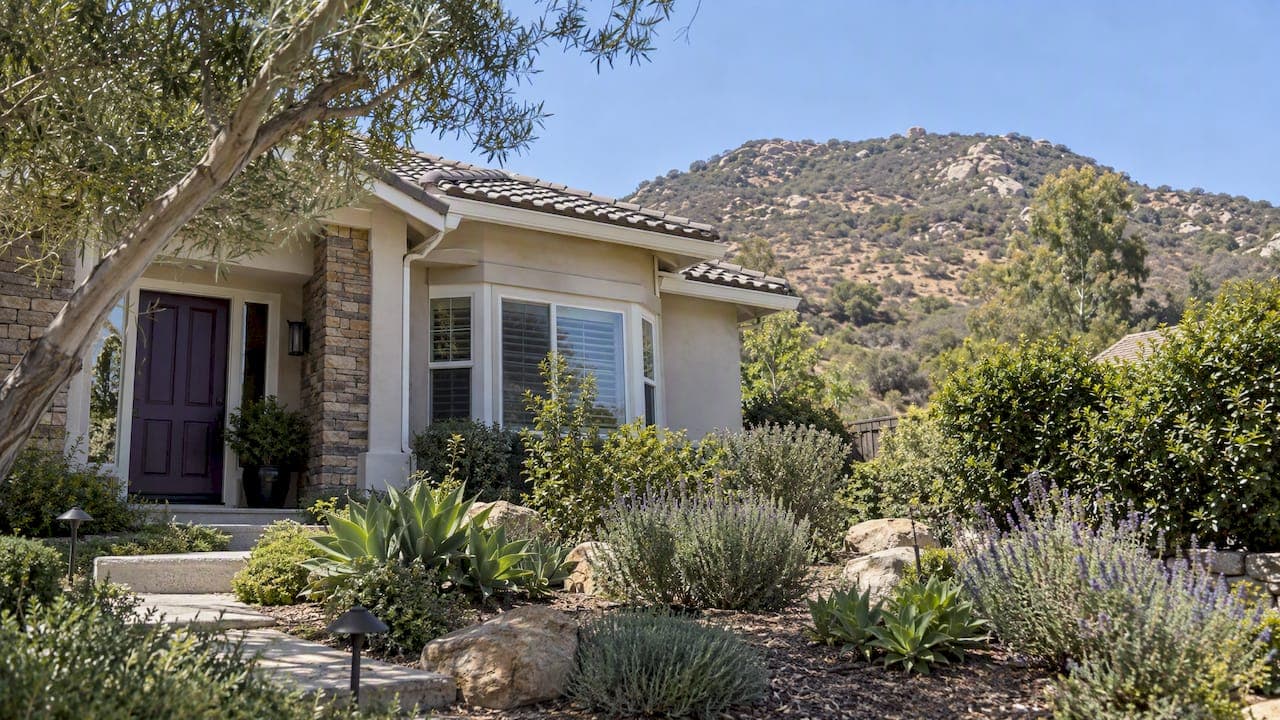
Poway is a good place to live if you want a suburban home with space, trails and top-rated schools, and you can live with a higher price tag and a car-dependent routine. It sits in inland San Diego County, calls itself "The City in the Country," and draws families who want room to breathe without leaving the region's job centers. Below is what daily life looks like, what homes cost, where the trade-offs are, and how to tell whether it fits you.
TL;DR
- Poway is a quiet, family-oriented suburb with a large amount of preserved open space, parks and trails.
- The housing stock is mostly single-family homes, and the city's zoning keeps it that way, so choices for condos and apartments are limited.
- Census figures show a median household income of $148,359 and a median owner-occupied home value of $1,034,800 for 2020 to 2024. Current sale prices run higher than that older average.
- Average commute time is about 25 minutes, and most errands mean driving.
- It fits buyers who want space, schools and calm. It fits less well if you want walkable nightlife or a lower entry price.
Table of Contents
- What Poway feels like day to day
- Homes and neighborhoods in Poway
- What homes cost in Poway
- Schools and everyday amenities
- Commute and getting around
- Safety in Poway
- The trade-offs to weigh
- Is Poway right for you?
- Our perspective on Poway
- Ready to buy or sell in Poway?
- FAQ
- Sources
What Poway feels like day to day
Poway's official community profile describes a city of 39.4 square miles where more than half of the land is preserved as open space, with 78 miles of trails, plus parks, a community library, dining and shopping. The Census Bureau estimated the population at 49,180 as of July 1, 2025, so it is a small city by San Diego standards. People tend to know their neighbors, and community events fill the calendar.

The social center is Old Poway Park. According to San Diego Magazine, it hosts a weekly farmers market, a working historic steam train and community events through the year. The same guide notes that Lake Poway is a warm-weather favorite for family campouts and music in the park, and that the city's Fourth of July fireworks can be seen across the valley.

A typical weekday looks like this: school drop-off, a commute that often involves Interstate 15 or State Route 56, an evening walk or hike nearby, and weekend trips to the park, the lake or the farmers market. It is an outdoorsy, low-key rhythm. If your idea of a great Saturday night is a short walk to a dozen bars, you will probably want to look at urban neighborhoods instead. If your idea is a barbecue and a trail run in the morning, Poway delivers.
Homes and neighborhoods in Poway
Poway is built mostly around detached houses. KPBS describes the city as a paradise of single-family zoning and protected open space, and reports that this long-standing commitment limits higher-density growth. For a buyer, that means two things. The suburban feel is likely to hold, and there are fewer low-priced entry points such as new apartments or townhomes.
The census data backs up the owner-occupied character of the city: a homeownership rate of 75.2% for 2020 to 2024. Renters exist, but this is a market of people who put down roots.
Neighborhoods differ more by lot size, age of home and setting than by anything else. Broadly, you will see:
- Old Poway: the historic core around Old Poway Park, with older homes, walkable pockets near the park and a village feel.
- Established tract neighborhoods: the bulk of Poway, with single-story and two-story family homes on moderate lots, close to schools and parks.
- Larger-lot and hillside areas: more privacy, more land, more views and, usually, higher prices and more upkeep.
- Adjacent areas: buyers priced out of Poway often look at nearby communities such as Rancho Peñasquitos, Scripps Ranch or Rancho Bernardo, which have a similar suburban feel.
Because every street is a little different, the best way to sort them is to drive them at the times you would actually use them: school pickup, early evening, a Saturday morning. Our guide to the perks of San Diego communities for homebuyers shows how we think about matching a neighborhood to a lifestyle.
Older homes are also a point to plan for. A house with a few decades behind it can need a roof, windows or HVAC work sooner than a new build. If you are buying one, budget for the roof early. Getting a look at metal roofing options in Poway can help you judge what a replacement involves before you write an offer.
What homes cost in Poway
This is the question that decides most moves. Poway is not an inexpensive city. The Census Bureau's 2020 to 2024 figure for median owner-occupied value is $1,034,800, but that number averages five years of values among current owners, including people who bought long ago. It is a floor for understanding the market, not the price you should expect to pay today.
Current sale prices have been running higher. We walked through the local data in our Poway market breakdown, which reconciles the different numbers you see online for homes near the $1.2 million range. Those numbers differ because they measure different things: all home types versus detached houses only, asking prices versus closed sales, and different time windows.
Here is how to read any Poway price figure you come across:
- Check the property type. Condos and townhomes sell far below detached houses, so a blended median hides a big gap.
- Check lot size. Poway has many larger lots, and acreage pushes prices well above the typical house.
- Check whether it is asking or sold. Listing prices can sit well above what closes.
- Check the date range. A 12-month median moves slowly. A one-month median can jump around.
The income side helps explain the pricing. The same Census source reports a median household income of $148,359 and that 54.2% of adults hold a bachelor's degree or higher. So yes, Poway is generally a higher-income area, which answers a question many people search. It is not uniformly wealthy block by block, but the city skews well above typical.
A useful budgeting habit: take the price of the home you are considering and run the full monthly cost, not just the mortgage. Property taxes, homeowners insurance, any HOA dues and maintenance on a larger lot all add up. Ask a lender for a real payment estimate on a specific home before you decide a neighborhood is in range.
Schools and everyday amenities
Most families who move here are moving for the schools. The city's profile says Poway is served by the Poway Unified School District, which it calls outstanding. If a specific school matters to you, do not rely on a district-level reputation. Attendance boundaries are set by address, so confirm the assigned school for any home with the district directly before you make an offer.
Beyond schools, the everyday picture is straightforward:
- Parks and recreation: Lake Poway, Old Poway Park, neighborhood parks and a trail network that locals use constantly.
- Shopping and dining: enough for daily needs inside the city, with larger retail and restaurant options a short drive away in neighboring communities.
- Library and civic life: the city lists a community library and a steady schedule of events.
- Public transportation: the city lists public transit, though most residents will still rely on a car.
In other words, you can handle everyday life locally, but you will drive to do it.
Commute and getting around
The Census Bureau estimates mean travel time to work for Poway residents at 25.3 minutes (2020 to 2024). That is a moderate number for San Diego County, and it is an average. Your own commute depends on where you work and when you leave. Someone heading to Sorrento Valley or Kearny Mesa at 7:30 a.m. has a different drive than someone working from home three days a week.
Before you commit to a home, do the test drive. Make the commute at your real hours on a Tuesday or Wednesday, not on a quiet Sunday. It takes an hour and can save you years of regret.
Safety in Poway
Poway has a reputation as one of the safer cities in the county, and published crime statistics generally support the idea that its violent and property crime rates run below national averages. Treat any single website's number with some caution. Different sites calculate rates differently, and a city-wide figure says little about one street.
A better approach for a buyer:
- Look at recent incident data for the specific address using the sheriff's public crime map.
- Visit the area in the evening and on weekends.
- Talk to neighbors if you can. People who live on a street will tell you things no statistic will.
If you are comparing Poway to a neighborhood in the city of San Diego, compare like for like: the same kind of data, for the same time period.
The trade-offs to weigh
No place is for everyone. Here is where Poway pushes back:
- Price: you pay a premium for the schools, space and calm.
- Limited housing variety: the single-family focus means fewer condos, townhomes and apartments, which narrows options for first-time buyers or downsizers.
- Car dependence: you will drive for almost everything.
- Inland heat: summers are warmer than at the coast, and the city's open space means you should ask about fire risk and insurance on any home near open land.
- Quiet: a plus for many, a drawback if you want nightlife and a younger scene.
And where it wins: space, parks, a tight-knit community feel, schools families seek out, and a lot of home for the money compared with the coast.
Is Poway right for you?
Poway tends to suit you if:
- You want a detached home with a yard and room to grow.
- School quality is a main driver of your move.
- You like trails, parks and weekend community events.
- You are comfortable driving and have a commute under 30 minutes in mind.
It may not suit you if:
- You want to walk to restaurants and bars. Our guide to walkable living in Mission Hills and Hillcrest covers a very different kind of San Diego neighborhood.
- You need a lower purchase price or want a condo.
- You want to be near the beach.
If you are outgrowing a smaller home and Poway is on your list, this look at whether it is time to upsize can help you plan the move.
Our perspective on Poway
We have worked with buyers and sellers across San Diego County for more than two decades, and Poway comes up often with families who want more space. What we tell them is simple: Poway rewards the buyer who knows exactly what they want.
The buyers who are happiest here usually decided on three things first: the school boundary they wanted, the commute they could tolerate, and the lot size they needed. Buyers who start with a price and hope the rest falls into place tend to feel stretched. Poway also moves fast on well-priced, well-presented homes, and the difference between a smart offer and a hasty one is usually local knowledge: which streets sell quickly, which homes are priced on hope, and what the data says about that house's real value.
For sellers, our advice is the mirror image. Poway buyers are informed. They compare lot sizes, updates and school zones, so pricing and presentation need to be right from day one. A home priced off a blended median instead of true comparable sales will sit.
Whichever side you are on, we believe in calm, precise guidance from the first showing through closing.
— Jeff
Ready to buy or sell in Poway?
If Poway looks like your next move, we can help. Our VIP Home Search sends you personalized listings that match your criteria, and our Buy With Confidence service walks you through every step from first showing to closing. Selling instead? Start with a home valuation built on local comparable sales, not a generic online estimate.
FAQ
Is Poway a good place to live?
For many families, yes. It offers a large amount of preserved open space, 78 miles of trails, parks, family events and a well-regarded school district. The main costs are higher home prices and a car-dependent lifestyle.
Is Poway a wealthy area?
It is above average. The Census Bureau reports a median household income of $148,359 and a median owner-occupied home value of $1,034,800 for 2020 to 2024. Incomes and home values vary by neighborhood, so check the specific area you are considering.
What is Poway known for?
Poway calls itself "The City in the Country" because of its open space and rural-feeling character. Old Poway Park, with its farmers market and historic steam train, and Lake Poway are the best-known gathering places.
How long is the commute from Poway?
The Census Bureau's 2020 to 2024 estimate for average travel time to work is 25.3 minutes. Your own commute depends on your destination and hours, so test it at rush hour before you buy.
Are homes in Poway affordable?
Not by most standards. The city's single-family character and demand from families keep prices high compared with much of the county. Look at sold prices for the property type and lot size you want, and get a lender estimate of the full monthly cost.
Sources
- Community Profile, City of Poway
- The Locals' Guide to Visiting Poway, San Diego Magazine
- Poway is a paradise of single-family zoning and protected open space, KPBS
- U.S. Census Bureau QuickFacts: Poway city, California