
A move-in ready home is immediately habitable and functional — but that label carries no legal weight. It is a marketing term, not a certified condition. Before you schedule movers, verify these on day one:
- All utilities are active (gas, electric, water, internet service)
- HVAC heats and cools to the thermostat setting
- Appliances included in the sale actually run
- Locks, deadbolts, and garage doors operate correctly
- Smoke detectors and carbon monoxide alarms are present and functional
According to Angi's buyer research, roof condition and HVAC are consistently the top priorities buyers cite when evaluating a home. Chase reports the average time to close on a house runs around 43 days, so understanding what "ready" actually means before you go under contract saves you from expensive surprises at the finish line.
Key Takeaways
Move-in readiness is a marketing term, not a legal guarantee, and verifying it requires inspections, receipts, and written contingencies, not just a walkthrough.
| Point | Details |
|---|---|
| Definition is not standardized | "Move-in ready" has no legal meaning; clarify which definition applies to every listing you consider. |
| Big-ticket systems drive real risk | Roof, HVAC, plumbing, and electrical are the four systems that determine long-term cost, per Angi's buyer research. |
| Verification requires documentation | Request inspection reports, repair receipts, contractor warranties, and permit records before removing contingencies. |
| Closing averages 43 days | Per Chase, the average close takes around 43 days; repair negotiations after inspection can extend that timeline. |
| Jeffsellssandiego vets listings for buyers | Jeffsellssandiego coordinates inspections, reviews disclosures, and negotiates credits for San Diego buyers. |
Table of Contents
- What does "move-in ready" actually mean?
- What should a move-in ready home include?
- What "move-in ready" does not guarantee
- How do you confirm a home is truly move-in ready?
- How does move-in readiness affect price and negotiation?
- Your pre-move and first-30-days checklist
- How a buyer's agent vets a move-in ready listing
- The part buyers consistently underestimate
- Work with a buyer's agent who verifies, not just tours
- Sources
What does "move-in ready" actually mean?
Real estate professionals interpret the phrase at least four different ways, according to Apartment Therapy's agent survey: "no major renovations needed," "aesthetically updated," "simply habitable," or "pre-closing walk-through items completed." None of those definitions is wrong, and none is legally binding.
The term has no universal standard in U.S. real estate law. A listing agent can call a 1970s ranch house "move-in ready" because the roof doesn't leak and the furnace runs, while another agent uses the same phrase only for homes with fresh paint, new appliances, and updated bathrooms. Both are technically accurate.
Common variations you'll see in listings:
- Turnkey: Implies aesthetic updates in addition to functional systems. Usually means the home needs nothing before you move in.
- Move-in ready: Functional systems, basic cleanliness, no structural red flags. Cosmetic updates may still be needed.
- Habitable: The minimum legal threshold. Plumbing works, structure is sound, no immediate safety hazards.
- Rental move-in standard: Condition documented at possession, with a 48–72 hour window to report issues (a practice TurboTenant's move-in checklist formalizes for landlords and tenants).
The gap between "turnkey" and "habitable" can represent tens of thousands of dollars in work. Clarify which definition applies to any listing you're seriously considering.
What should a move-in ready home include?
Use this checklist when touring a home or reviewing a listing. The items are grouped by how much they cost to fix if something goes wrong.
Big-ticket systems (highest long-term cost risk):
- Roof: no missing shingles, no active leaks, no visible sagging. A roof inspection checklist covers the specific red flags to look for.
- HVAC: system heats and cools, filters are accessible, age is documented
- Plumbing: no visible leaks, adequate water pressure, drains flow without backing up
- Electrical: panel is properly labeled, no double-tapped breakers, GFCI outlets in wet areas
- Foundation and structure: no significant cracks, no evidence of water intrusion in the basement or crawl space
Interior essentials:
- Kitchen appliances (if included in the sale) are operational
- Bathrooms: toilets flush, faucets run hot and cold, no evidence of mold around tubs or under sinks
- Flooring is in usable condition, no trip hazards or major damage
- Paint and cleaning: walls are clean and presentable, no odors indicating mold or pest activity
- Windows and exterior doors open, close, and lock properly
Angi's research specifically flags roof and HVAC as the items buyers most often wish they had scrutinized more carefully before closing. Buyers who skipped specialist inspections on those two systems reported the highest rates of post-move regret.
What "move-in ready" does not guarantee
The biggest misconception is that "move-in ready" means "new." It does not. A home can be 40 years old, have a roof with five years of life remaining, and still be marketed as move-in ready. The label says nothing about how much life is left in any system.
Other common misunderstandings:
- Furniture is not included unless the purchase contract explicitly lists it. Staging furniture belongs to the stager.
- Appliances may or may not be included. Confirm in writing which appliances convey with the sale.
- Cosmetic staging can mask deferred maintenance. Fresh paint and new light fixtures do not mean the plumbing is sound. Apartment Therapy's agent reporting specifically warns that staging is designed to sell, not to disclose.
- System age is not disclosed by the label. A "move-in ready" home could have an HVAC unit in its final season of reliable operation.
- No legal certification is implied. The phrase is marketing language. A certificate of occupancy (where required) is a separate document that confirms minimum code compliance, not overall condition.
Pro Tip: Any time a listing uses "move-in ready" as a selling point, convert that claim into contract language. Ask for receipts, warranties, and inspection reports. If the seller can't produce them, make your offer contingent on inspections that verify the claim.
How do you confirm a home is truly move-in ready?
Verification happens in stages, starting before you make an offer and continuing through closing.
Before the offer:
- Compare listing photos to in-person condition. Discrepancies between photos and reality are a signal.
- Request the seller's property disclosure form. In most U.S. states, sellers are legally required to disclose known material defects.
- Ask your agent to pull permit history. Unpermitted work is a liability that transfers to you at closing.
During the inspection period:
- Hire a licensed general home inspector. Their report covers all major systems and gives you a written record.
- Order specialist inspections when the general inspector flags concerns or when the home's age warrants it: roof inspector, HVAC technician, pest inspector, and sewer scope are the four most common.
- Request maintenance and repair receipts from the seller. A seller who has maintained the home will have them.
- Ask specifically: How old is the roof? When was the HVAC last serviced? Are there any open permits? Were any repairs made without a licensed contractor?
Documents to collect before closing:
- Home inspection report (general and any specialist reports)
- Seller property disclosure form
- Repair receipts and contractor warranties
- Permit records for any additions or major work
- Certificate of occupancy (where applicable)
- Appliance manuals and warranty cards
Freddie Mac's moving guidance recommends verifying utility setup and completing a move-in inspection before taking possession. Adapting that practice to a home purchase means doing a final walk-through within 24 hours of closing to confirm the property's condition matches what you agreed to buy.
The Province of British Columbia's move-in condition inspection guidance offers a useful model: both parties document condition, sign the record, and keep copies. Buyers can apply the same logic at possession, photographing every room and noting anything that changed since the inspection.

Pro Tip: Document defects in your inspection contingency, not just in a verbal conversation. Written contingencies preserve your right to negotiate credits or repairs. A verbal agreement about a leaky faucet disappears at closing.
How does move-in readiness affect price and negotiation?
Move-in ready homes typically command a price premium. Buyers pay for the convenience of not managing contractors before they can sleep in the house. Angi's data shows buyers consistently prefer move-in ready properties and that roof and HVAC condition are the two factors most likely to influence willingness to pay.
Chase's closing timeline data puts the average close at around 43 days. When a home needs repairs negotiated after inspection, that timeline can stretch. If you're on a tight schedule, a genuinely move-in ready home reduces the risk of delays caused by repair re-inspections or contractor scheduling.
Negotiation tactics worth discussing with your agent:
- Request a credit at closing for any system with documented remaining life under five years (roof, HVAC, water heater). A credit lets you manage the replacement on your own timeline.
- Ask for an escrow holdback if a repair is agreed to but not yet completed before closing. Funds are held until the work is verified.
- Include an inspection contingency that specifies which systems must be in working order, not just "satisfactory condition."
- Request transferable warranties on any recent work. A roof replaced two years ago should still carry a contractor warranty.
Pro Tip: A home priced $15,000 below market with a roof that needs replacement in two years is not necessarily a bargain. Get a licensed roofer's estimate before you decide the math works.
Your pre-move and first-30-days checklist
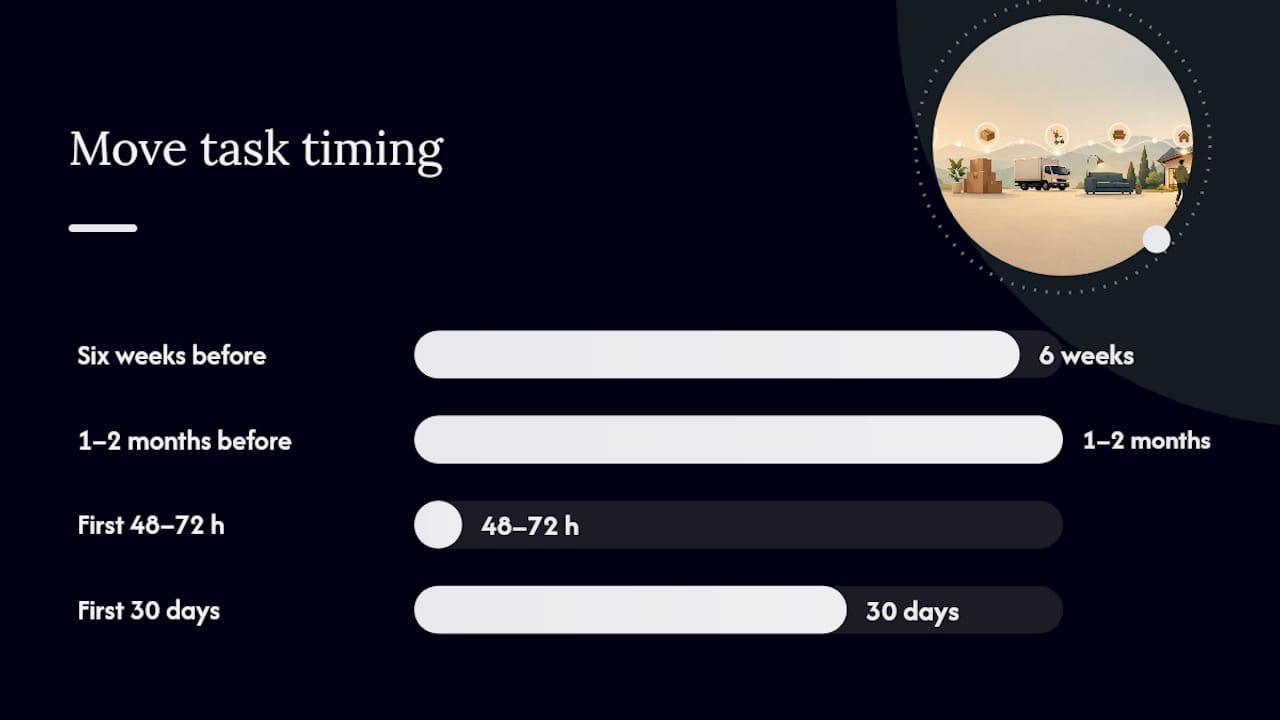
A move-in ready home still requires logistics. Here is a practical sequence:
Six weeks before closing:
- Reserve movers. Movers Near Me advises starting about six weeks out, especially during peak season (May through September).
- Submit a change of address with USPS.
- Schedule utility transfers to activate on closing day.
- Confirm building or HOA move-in rules (elevator reservations, move-in windows, certificate of insurance requirements).
One to two months before moving:
- Start packing non-essentials by room. Wirecutter's moving checklist recommends beginning 1–2 months ahead and donating unwanted items before packing begins.
- Gather all documents: inspection reports, warranties, receipts, and the seller disclosure form.
First 48–72 hours after possession:
- Complete a full walk-through and photograph every room, every appliance, and any pre-existing damage.
- Verify all utilities are active and functioning.
- Confirm that any repairs agreed to in the contract were completed.
- Document any issues in writing and notify your agent immediately. TurboTenant's move-in checklist practice gives tenants 48–72 hours to report issues — apply the same window as a buyer.
First 30 days:
- Register all appliance warranties and HVAC service contracts.
- Schedule any non-urgent upgrades you planned (painting, flooring) before furniture fills the rooms.
- Set up a home maintenance calendar for filter changes, gutter cleaning, and annual HVAC service.
- Set aside a homeowner contingency fund. Angi recommends budgeting for non-cosmetic defects that surface after move-in, such as slow drains or HVAC stress failures that only appear under real load.
How a buyer's agent vets a move-in ready listing
A good buyer's agent does not take "move-in ready" at face value. The vetting process starts before you tour the home and continues through the final walk-through.
Standard agent steps:
- Pull the permit history through the county assessor or building department. Unpermitted additions, garage conversions, or electrical work are common in San Diego's older neighborhoods.
- Review the seller disclosure form line by line and flag any "unknown" answers on major systems, which often signal deferred maintenance.
- Request all available inspection reports, repair receipts, and contractor warranties upfront, before the offer is written.
- Recommend specialist inspections based on the home's age and construction type. In San Diego, older homes in coastal neighborhoods often warrant a sewer scope and a thorough check of wood-framed structures for moisture intrusion.
Local San Diego considerations matter. Coastal properties face salt-air corrosion on HVAC components and exterior hardware. Homes in hillside neighborhoods may have drainage and retaining wall issues that a general inspector notes but a structural engineer needs to evaluate. Seasonal timing also plays a role: scheduling a roof inspection during or just after the rainy season (roughly November through March) gives you the clearest picture of how the roof actually performs under stress.
Gutters and drainage are frequently overlooked during inspections but can reveal roof and foundation vulnerabilities that aren't visible from the street.
Pro Tip: Ask your agent to include a repair escrow clause in the purchase agreement when a known repair is agreed to but can't be completed before closing. The seller funds an escrow account; you control the release once the work is verified. It protects you if the seller's contractor doesn't show up.
For a practical list of questions to ask while touring a home, the open house question guide covers the specifics buyers often forget to ask in the moment.
The part buyers consistently underestimate
Most buyers focus on what they can see during a tour: the kitchen finishes, the flooring, the paint colors. That is exactly what a well-staged home is designed to direct your attention toward.
The real risk is what you cannot see without documentation. A roof that looks fine from the street may have two years of life left. An HVAC system that runs during the showing may be running on borrowed time. Cosmetic staging is not deception, but it is not disclosure either.
The habit that protects buyers most consistently is simple: ask for receipts. Not just inspection reports, but the actual contractor invoices and warranty documents for any work done in the last five to seven years. A seller who has maintained the home will have them. A seller who hasn't will struggle to produce them, and that gap tells you something important before you remove your contingencies.
One buyer I worked with in San Diego received a credit at closing after the inspection revealed the HVAC unit was 18 years old and showing signs of refrigerant loss. The listing was marketed as move-in ready, and technically it was. The system ran. But the specialist inspection gave us the documentation to negotiate a $6,000 credit, which covered a replacement unit with money left over. That outcome was only possible because the inspection contingency was written to include HVAC condition specifically, not just "major systems in working order."
Work with a buyer's agent who verifies, not just tours
Buying a home marketed as move-in ready in San Diego is not the same as buying a home that has been verified as move-in ready. The difference is documentation: inspection reports, receipts, warranties, and a buyer's agent who knows what to request and when to push back.
Jeffsellssandiego works with buyers across San Diego County to vet listings before offers go in, coordinate specialist inspections, and negotiate credits or repairs when the condition doesn't match the marketing. The goal is to get you into a home that is genuinely ready, with no surprises in the first year.

Start your San Diego home search to see current listings, or visit the buyer's guide to learn how Jeffsellssandiego structures the buying process from first tour to closing day.
Sources
- Is "Move-In Ready" a Myth? What Homebuyers Wish They Knew | Angi
- What Does Move-In Ready Mean? A Real Estate Agent Answers | Apartment Therapy
- Move-In Checklist | TurboTenant
- Things to do before moving into your new apartment | Freddie Mac MyHome
- How Long Does It Take to Close on a House? Full Timeline | Chase
This article is general information, not a substitute for advice from a qualified financial advisor. Consult a qualified financial professional about your own circumstances before acting on anything here.