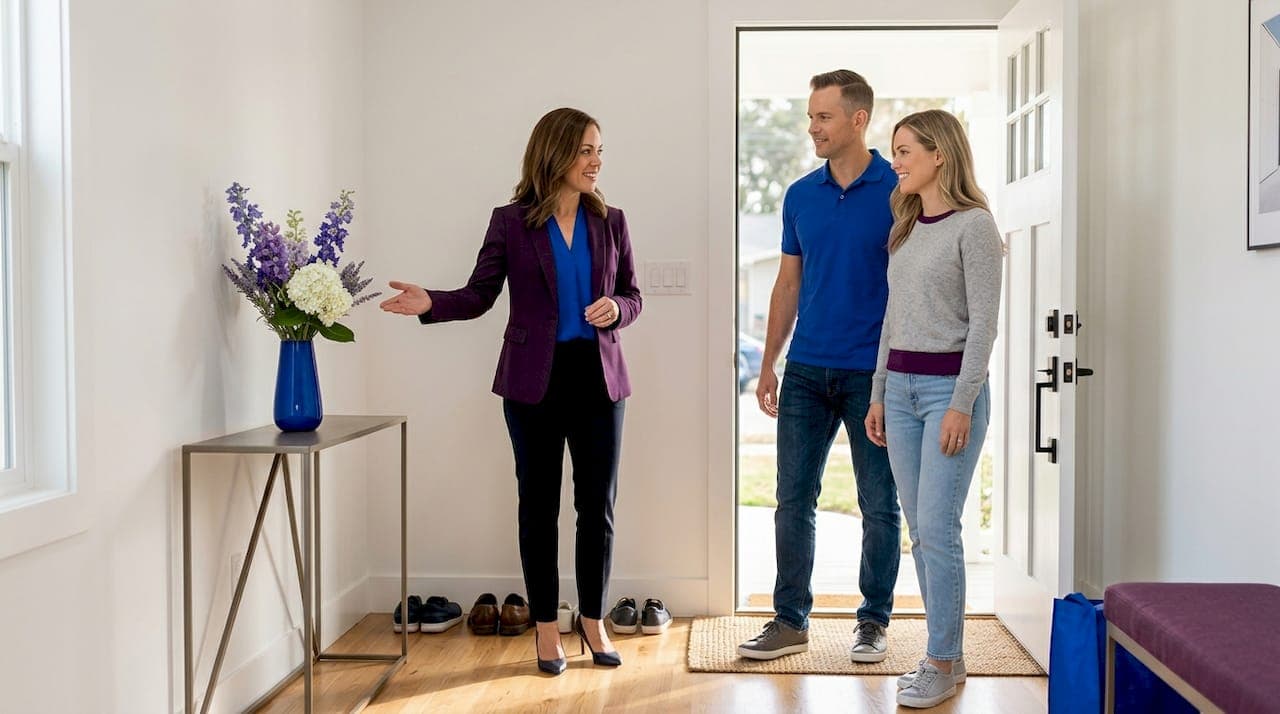
Open houses are one of the most misunderstood events in real estate. Most people think they're casual Saturday afternoon strolls through someone else's living room. In reality, they're carefully staged, strategically timed marketing events that can make or break a sale in San Diego's competitive housing market. Whether you're scouting for your next home or preparing to list your property, knowing how open houses actually work gives you a real advantage over everyone else walking through that front door.
Table of Contents
- What is an open house?
- How open houses benefit buyers and sellers
- Etiquette and safety: What makes a successful open house?
- Open house preparation: Tips for sellers
- A fresh perspective: Beyond the open house basics
- Next steps: Explore San Diego homes and resources
- Frequently asked questions
Key Takeaways
| Point | Details |
|---|---|
| Open house definition | An open house is a scheduled event where buyers can view a property in person without an appointment. |
| Mutual benefits | Both buyers and sellers gain from open houses—buyers evaluate homes conveniently and sellers attract more offers. |
| Etiquette matters | Respectful behavior and safety practices ensure a positive open house experience for everyone involved. |
| Preparation is key | Staging, repairs, and strategic presentation help sellers make a lasting impression during open houses. |
What is an open house?
An open house is a scheduled window of time, typically one to three hours, when a property for sale is available for anyone to visit without a private appointment. Buyers can walk through the home, ask questions, and get a feel for the layout and condition. The listing agent is usually present to answer questions and gather feedback.
In San Diego real estate, open houses typically happen on weekends, most often on Sunday afternoons. They're announced through online San Diego home listings, yard signs, and social media promotion. The goal is to drive as many potential buyers through the door as possible in a short amount of time, creating natural competition and interest.
What many buyers don't realize is that there are actually two distinct types of open houses. The first is the standard public open house, which is open to anyone. The second is the broker's open house (also called a broker's preview), which is an exclusive event held specifically for real estate agents and industry professionals. As Investopedia explains, broker's open houses are for industry professionals, not buyers. These events give agents a chance to preview the home before recommending it to their clients.
Here's a quick comparison of the two types:
| Feature | Public open house | Broker's open house |
|---|---|---|
| Who attends | General public and buyers | Real estate agents only |
| Typical timing | Weekends | Weekday mornings |
| Purpose | Generate buyer interest | Agent preview and referrals |
| Food or refreshments | Sometimes | Often provided |
| Listing feedback | Informal | Professional and structured |
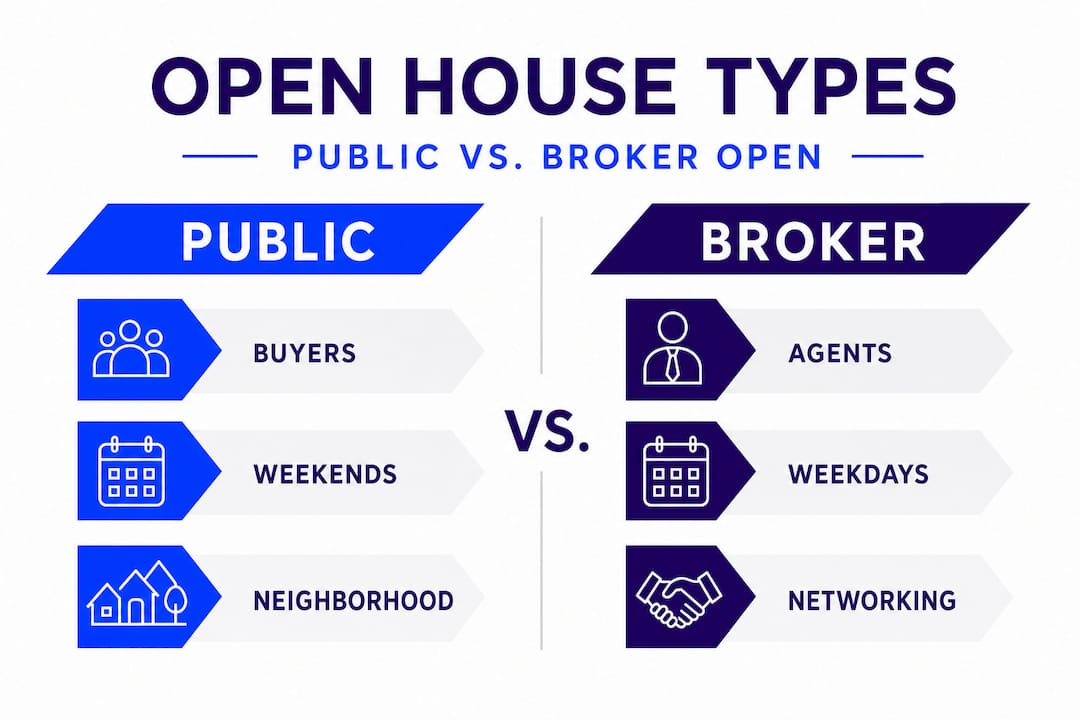
Understanding this distinction helps both buyers and sellers set the right expectations. A broker's open house that draws twenty agents can translate directly into twenty potential buyer referrals within days.
How open houses benefit buyers and sellers
Open houses create mutual value for both sides of a real estate transaction, though in very different ways.
For buyers, open houses provide a low-pressure environment to explore a home at your own pace. There's no agent hovering over you with a personal appointment, no schedule pressure, and no obligation. You can open closet doors, linger in the kitchen, and get a true feel for whether the space works for your life. You can also observe things you might rush past in a private showing, like how the natural light moves through the rooms, or how close the neighbors actually are.
For sellers, the open house is a visibility engine. It pulls in buyers who may not have otherwise scheduled a private tour, including people who are still in the early stages of their search. More foot traffic means more eyes on the property, which increases the odds of receiving multiple offers. Sellers also benefit from real-time feedback. When multiple visitors comment that the master bedroom feels small, or that the kitchen needs updating, that information helps the seller and agent make fast adjustments to pricing or staging.
Open houses can also accelerate the sales timeline. A well-attended open house in a neighborhood like North Park or Mission Hills can generate offer activity within 24 to 48 hours after the event. In a competitive market, that speed matters enormously.
Benefits for buyers at a glance:
- Visit multiple homes in a single afternoon without scheduling conflicts
- Observe the neighborhood and street activity firsthand
- Ask the listing agent direct questions without intermediary delays
- Compare finishes, layouts, and square footage across multiple properties easily
- Gauge true market demand by watching how many other buyers show up
Pro Tip: Attend three to five open houses in the same neighborhood on the same day. You'll build a sharp mental comparison of value, condition, and pricing that no online listing can give you. Check out these open house question tips to walk in prepared.
Sellers who invest time in preparing your home for sale before hosting an open house consistently see better turnout and stronger offers. First impressions are formed in seconds, and a well-staged home tells a buyer "this place is cared for" before they even reach the kitchen.
Etiquette and safety: What makes a successful open house?
Open houses are professional events, not casual showings among friends. Both buyers and sellers benefit when everyone follows clear, respectful norms. The rules aren't complicated, but breaking them creates awkward situations and can even damage a sale.
Here are the core etiquette steps every open house visitor should follow:
- Remove your shoes at the entry if asked, or follow the agent's guidance. This is especially common in homes with light-colored carpet or hardwood floors.
- Do not eat or drink inside the property unless the agent has specifically offered refreshments in a designated area.
- Keep your voice and conversations respectful. Sellers sometimes remain nearby, and negative comments made out loud can be overheard.
- Do not take photos or videos without asking. Many sellers are sensitive about unauthorized images of their home's interior being shared.
- Sign in when requested. Agents ask for names and contact information for both safety and follow-up purposes.
- Stay in the designated areas. If a room is closed off, do not open that door.
"The National Association of Realtors emphasizes professional conduct at open houses, including removing shoes, refraining from eating or drinking inside, and maintaining respectful behavior at all times." NAR Pathways to Professionalism
Safety is a topic that doesn't get nearly enough attention. Open houses involve strangers entering private property, and as NAR has outlined, this creates legitimate safety concerns for both agents and sellers. Agents are encouraged to verify visitor identities, avoid showing occupied homes alone, and stay aware of anyone who lingers unusually long.
For sellers with occupied homes, this means removing prescription medications, locking away jewelry and valuables, and securing personal documents before anyone walks through the door. Occupied home open houses carry the most risk, and the preparation required goes beyond just cleaning the countertops.
If you're a buyer attending open houses and eventually planning a move, these moving tips for homebuyers can help you plan ahead once you find the right property.
Open house preparation: Tips for sellers
A successful open house starts days before the event, not the morning of. Sellers who treat preparation as a checklist rather than an afterthought consistently outperform their competition.
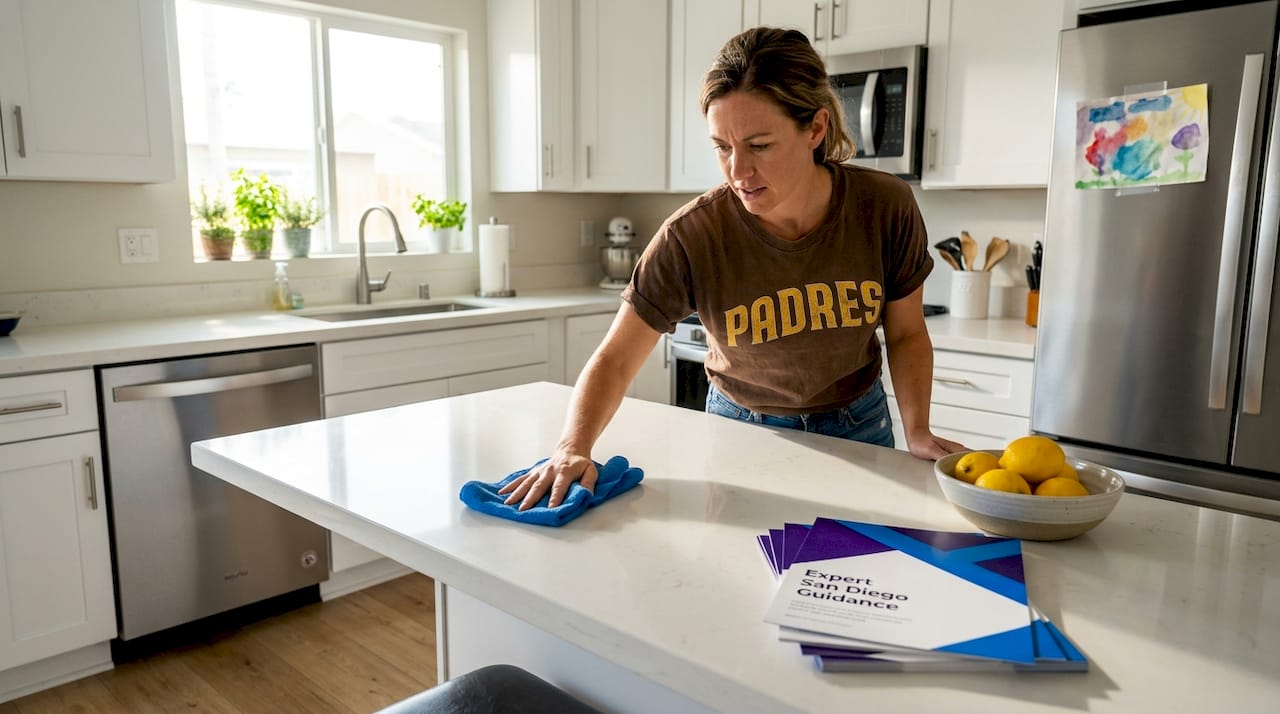
Here's what matters most, ranked by buyer impact:
| Preparation task | Impact on buyer impression | Effort level |
|---|---|---|
| Deep cleaning throughout | Very high | Moderate |
| Decluttering and depersonalizing | Very high | Moderate |
| Fresh paint in neutral tones | High | Moderate to high |
| Curb appeal improvements | High | Low to moderate |
| Minor repairs (leaky faucets, squeaky doors) | High | Low |
| Professional staging | Very high | Low (if rented) |
| Scent and lighting optimization | Medium to high | Low |
Starting with home repair before listing is one of the smartest moves a seller can make. Small, visible defects like cracked outlet covers, dripping faucets, or peeling caulk signal neglect to buyers, even when the home is otherwise solid.
Key preparation steps every seller should take:
- Remove at least 30% of furniture to make rooms feel larger and easier to navigate
- Replace burned-out bulbs and add lighting in any dim corners or hallways
- Clean windows inside and out to maximize the natural light buyers love
- Pressure wash driveways and walkways for strong curb appeal
- Set the thermostat to a comfortable temperature the day of the event
- Add fresh flowers or potted plants near the entry for a welcoming feel
Pro Tip: Natural light is one of the most underrated selling tools in real estate. Open every curtain, blind, and window treatment before buyers arrive. Natural light raises home value and creates a positive emotional response that even great staging cannot replace.
If your budget allows, explore budget-friendly renovation ideas that deliver real visual impact without massive expense. And always make sure your price is right before the doors open. An overpriced home with a packed open house still won't generate offers. Review home pricing accuracy before you set your number.
A fresh perspective: Beyond the open house basics
Here's something most real estate guides won't tell you: more open houses don't always produce better results. In San Diego's high-demand market, sellers sometimes fall into the trap of hosting weekly open houses for months, mistaking foot traffic for genuine interest. The reality is that a home sitting on the market through five or six open houses often signals to buyers that something is wrong, whether that's pricing, condition, or location concerns.
The most effective open houses happen early in the listing period, ideally the first weekend after going live. That's when buyer interest peaks and serious shoppers are most active. A first weekend open house in neighborhoods like La Jolla, North Park, or Clairemont often draws the most qualified buyers before the listing gets "stale" in the eyes of the market.
Virtual open houses have also changed the landscape since 2020. Many San Diego buyers now expect a 3D walkthrough or video tour alongside the in-person event. These digital options serve out-of-state buyers, investors, and anyone with a tight schedule. But virtual tours don't replace the live experience. Buyers still make emotional decisions in person, and the energy of a well-attended open house creates urgency that no video can replicate.
Another overlooked truth: staged homes and honest pricing consistently outperform elaborate catering and marketing spend. I've seen sellers spend hundreds of dollars on refreshments and professional signage while ignoring a dated bathroom or an awkward furniture arrangement. Buyers don't care about the sparkling water on the counter. They care about whether they can picture their life in the home. Focus your preparation energy there first.
For buyers, the best advice I can offer is to use open houses as research tools, not just shopping trips. Visit homes outside your target price range too. You'll quickly learn what features are worth paying for and what's just cosmetic. Use the San Diego buyer's guide to understand the full process, and if you're thinking about selling, the San Diego seller's guide will help you see the bigger picture before you plan your first open house.
Next steps: Explore San Diego homes and resources
If you've read this far, you're already ahead of most people entering the San Diego market. The knowledge you've built about open house strategy, etiquette, preparation, and timing is exactly what separates confident buyers and sellers from stressed ones.

Start your search or prepare your listing with the right tools. Browse current San Diego home listings to find upcoming open houses in neighborhoods that interest you. Explore the San Diego neighborhood guide to understand what different communities offer before you spend your weekends driving around. And if you're considering selling, get a fast and accurate read on your property's current worth with the home valuation tool. Every great real estate decision starts with the right information, and these resources put it all in one place.
Frequently asked questions
How does a broker's open house differ from a standard open house?
A broker's open house is held exclusively for real estate professionals to preview the property, while a standard open house is open to the general public and potential buyers. As Investopedia notes, broker's open houses are specifically designed for industry professionals, not buyers.
Is it safe to attend an open house?
Most open houses follow established safety protocols and are hosted by licensed agents who monitor visitors throughout the event. NAR advises agents to use identity verification and stay aware of visitor behavior to keep events safe for everyone.
What etiquette should I follow at an open house?
Remove your shoes when asked, avoid eating or drinking inside, refrain from taking unauthorized photos, and respect all private or closed areas of the home. NAR's professionalism guidelines specifically call out these behaviors as the standard for open house visitors.
Can I ask questions about the home during the open house?
Absolutely. Agents are present specifically to answer questions about the home's features, price, history, and neighborhood, so don't hesitate to engage them directly.
How should sellers prepare for an open house?
Focus on deep cleaning, decluttering, completing minor repairs, and staging the home to feel spacious and welcoming before any buyers arrive.